Eski Pano
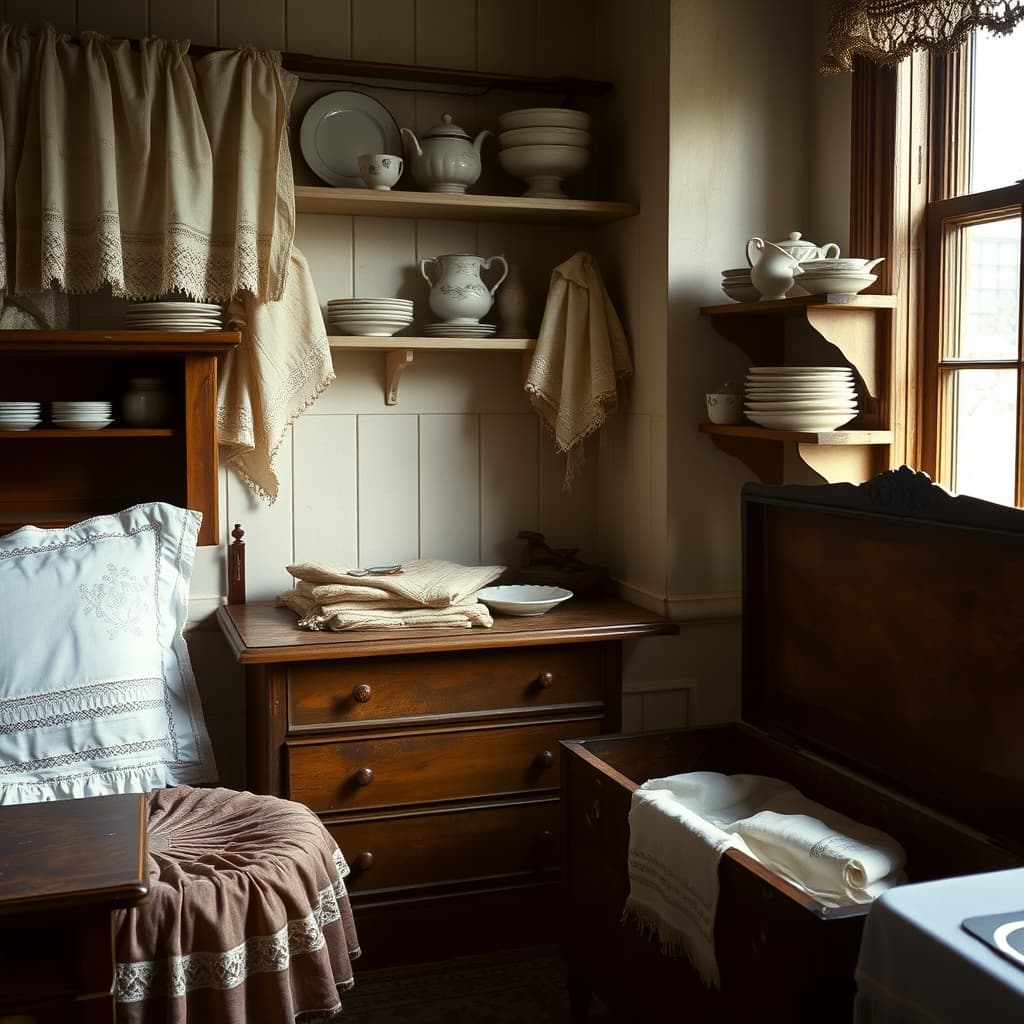
There was a time when the most elegant things in a house did not always stand in the most visible corner. Some forms of beauty were kept not in display cabinets, but inside a pillow chest, behind a kitchen shelf, or beneath a lace cover. The embroidered pillowcase was one of them. It did not sit at the center of daily use, yet when the time came it was brought out with care, aired, ironed, and made to accompany the quiet grace of guest days or holiday visits. Porcelain lined along kitchen shelves, carved trays, embroidered cloths, and hand-sewn fabric bags carried a similar splendor. It was never a loud kind of richness. It was a glow settled into the order of the house, into labor, and into the feeling of attentiveness within the family.
Seen through the lens of object stories, the embroidered pillowcase and the items preserved on shelves were never merely useful objects. They were fragments of memory through which domestic aesthetics moved from one generation to the next. In earlier decades, the order inside a home was understood not only as cleanliness, but also as proof of discipline and care. The pattern on a pillowcase could carry at once the trousseau preparations of a young woman, the patience of a mother, the practiced hand of a grandmother, and the family’s sense of taste. Objects carefully kept on kitchen shelves resembled silent archives inside daily life. Which plate had been used at a wedding, which cloth had first been spread on a holiday table, which pillow face had been reserved for the guest room, all of this was preserved not only in spoken memory but in the memory of things.
The reason this quiet splendor turned into family inheritance is that such objects gained value not only from their appearance, but from the stories gathering around them. Even a small tear on the edge of a pillowcase could open the door to a sentence like, “your mother embroidered this while waiting for you.” A yellowed but still sturdy fabric, when taken from a cupboard unopened for years, was not seen merely as an old item. It was handled like tangible proof of time lived together. Children first assumed these were “unused things,” then, as they grew older, began to understand why they were preserved with such care. Within a family, some objects were kept less for use than for remembrance. Hand-worked patterns, ironing marks, the scent of soap, and the cool shade of the shelves gave them a wordless dignity.
The role of kitchen shelves in this story is especially important, because the kitchen is both one of the most ordinary and one of the most memory-filled spaces of a house. A tea set, an enamel bowl, an embroidered cloth, or a glass candy dish bought around the time of a wedding was never only an aesthetic choice. It told how the home had been built, what the taste of that era looked like, and through whose labor it had reached the present. The embroidered pillowcase adds another emotional layer because it belongs to the more intimate side of the room. It stands between the face a home shows to the outside and the tenderness it protects within. It carries a double meaning: ornament and labor, use and memory. That is why families rarely let it go. Even when it grows old they keep it, even when worn they do not throw it away, and sometimes they pass it on so that its meaning can continue.
What is seen in these objects today is not simply an old decorative taste. What is truly visible is how labor becomes value over time and how domestic aesthetics create their own language of memory. Perhaps this is exactly what quiet splendor means: a worth that settles in without raising its voice, gathers respect without seeking display, and deepens as it remains hidden within the house. For that reason, the embroidered pillowcase and the carefully preserved objects on kitchen shelves stand among the most genuine examples that come to mind when one speaks of family inheritance. They do not merely tell the past. Through their fabric, scent, marks, and silent grace, they carry it into the present.
The Quiet Splendor Hidden in an Embroidered Pillowcase and on Kitchen Shelves: How Did It Turn into a Family Inheritance?