Eski Pano
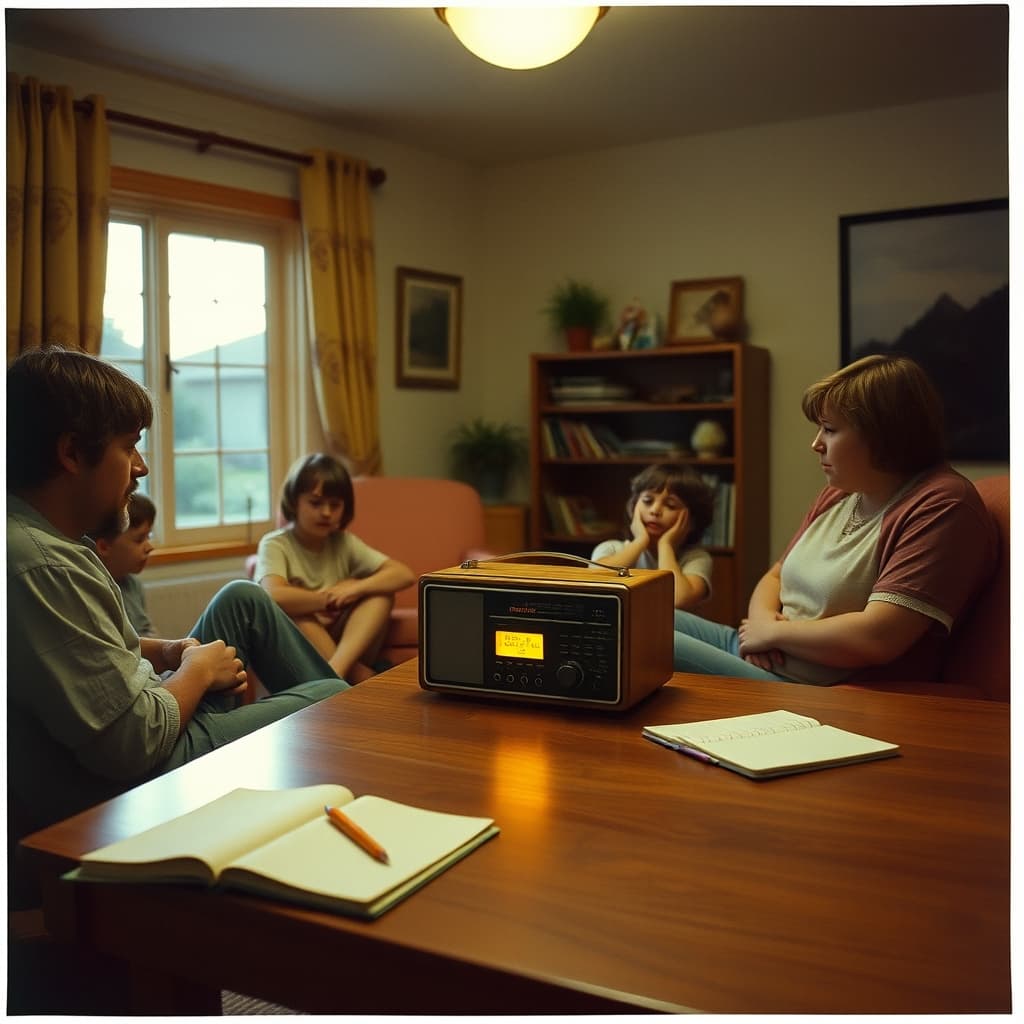
There was a time when, after dinner had been cleared away, the tray of tea had been placed on the coffee table, and the curtains had been drawn halfway, the mood in some living rooms changed all at once. The amateur radio set resting on a side table near the window or on top of the cabinet carried a different weight even among ordinary household objects. The faint friction of turning the knobs, the trembling movement of the dial, the static rising from the speaker, and a distant voice suddenly breaking through brought the family to the edge of an unseen world. Outside, the neighborhood continued in its own familiar sound: children shouting over a street game, dishes clattering in the apartment next door, a minibus horn far away. Yet inside the room everyone grew a little quieter, leaned a little closer, and waited with shared curiosity, as if entering the same old photograph.
As technological heritage, amateur radio was not merely a communication device. It was one of the rare objects of the analog age where engineering and emotion touched each other directly. Technology in those years was not as invisible as it is today. You could understand that it was working, feel its settings, and hear the effort inside its sound. Finding the right frequency required patience, the direction of the antenna mattered, and even the weather could change the tone of a connection. For that reason, the person using the radio seemed not only to operate a device, but to mediate between visible life and unseen distance. For children, this felt like a miracle that stretched from the living room to places beyond the neighborhood, sometimes beyond the country. For adults, it was a measured and dignified window opening onto the wider world from within the narrow frame of daily life.
Families gathered in the living room not only because of technical curiosity. Radio sessions arranged time inside the home differently. People checked the clock, wondered whether a contact would happen that evening, and turned together toward the set when a call sign was heard. The excitement was never loud. It was more like the collective attention of a house that had lowered its voice. Sometimes the conversation came through clearly, sometimes words dissolved into static, and sometimes no connection happened at all. Yet even unsuccessful evenings did not diminish the fascination. Part of the unforgettable thrill of the analog age came precisely from the fact that certainty was small and possibility was large. Every sweep across the frequencies felt like opening a hidden door. A stranger’s voice could suddenly fall into the middle of the room and make the walls of the house carry the air of another city for a few minutes.
The way neighborhood sounds mingled with the voice of the radio is what makes the memory feel today like a forgotten photograph. On one side, the rhythm of ordinary life continued: the downstairs neighbor shut a door, the grocer’s helper delivered the last order, the streetlamp flickered on, mothers called from balconies. On the other side, coded greetings, fractured voices, and short exchanges arriving through the speaker added invisible distance to that familiar rhythm. In that way, amateur radio widened neighborhood life without disturbing it. Technology entered the home not like a foreign guest, but like a careful neighbor quietly finding a place in the room. The notebook beside the radio, the pencil, the spare cable, and the carefully kept operating notes were all part of that same attentiveness.
Perhaps this excitement remains unforgettable because technology once invited people not into haste, but into attention. Amateur radio required patience, the courtesy of listening, and an understanding that silence and empty space were also part of communication. That is why the quiet excitement of families gathered in the living room is remembered not only as technical interest, but as the memory of being able to focus together. Just as a forgotten photograph reveals new details each time one looks at it, amateur radio remains in memory in the same way: a voice shining through static, a far-off world mixing with the evening sounds of the neighborhood, and the careful tempo of the analog age still close to the heart. For that reason, these devices are remembered today not only as nostalgic objects, but as an older and valuable form of building connection by listening.
Amateur Radio: Within the Quiet Excitement of Families Gathered in the Living Room, It Tells the Unforgotten Thrill of the Analog Age Like a Forgotten Photograph Among Neighborhood Sounds