 Eski Pano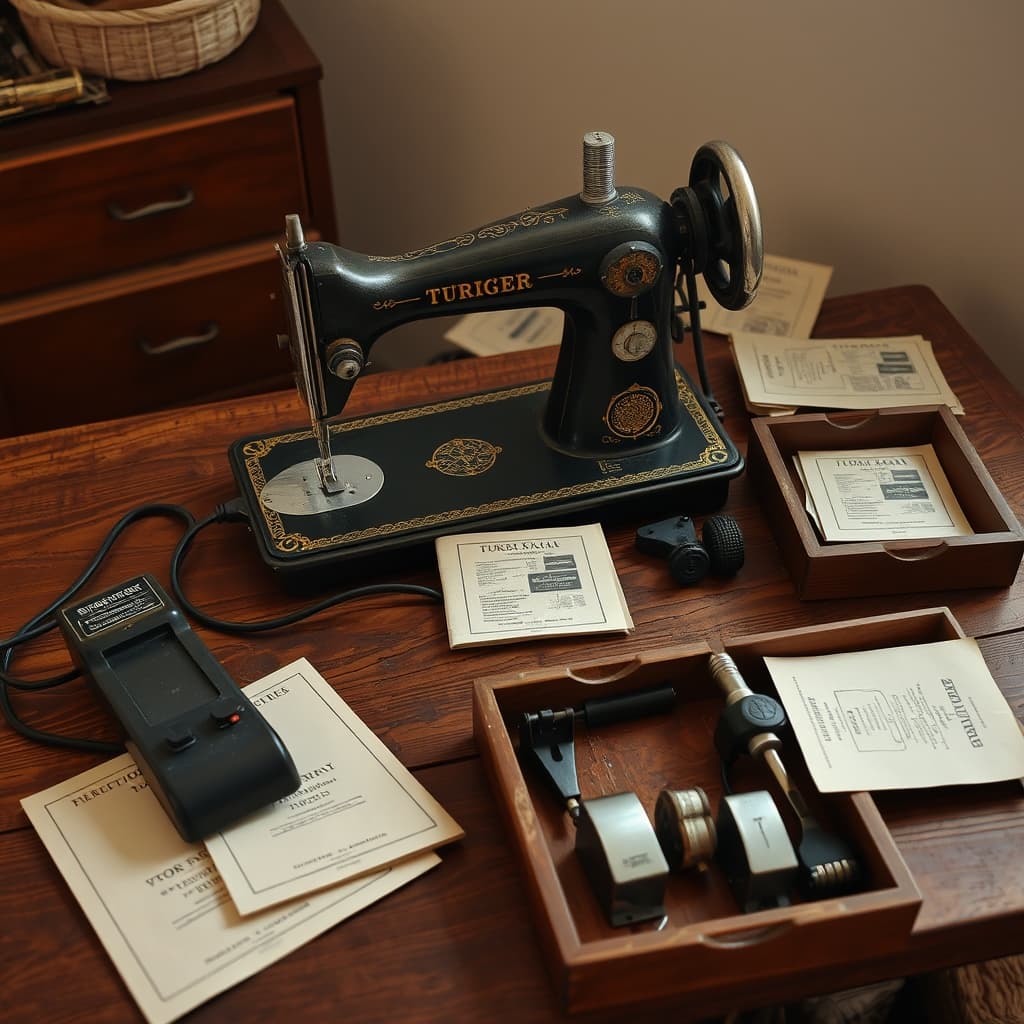
The phrase sewing-machine foot can describe three very different objects: the cast-iron treadle operated by both feet, an electric speed controller pressed by one foot, or the small presser foot holding fabric near the needle. Collectors can misidentify parts when family vocabulary moves between generations. Correct naming is the first step toward safe use and meaningful provenance.
Machines vary by maker, model, production date, shank system, drive type, cabinet, motor, voltage, attachment standard, and market. A treadle base, motor pedal, buttonholer, zipper foot, hemming foot, and decorative accessory are not interchangeable. Serial numbers, catalogues, manuals, patents, advertisements, parts lists, and family photographs support identification.
Form Reveals the Kind of Foot
A treadle is a broad plate linked by rods and a pitman to a flywheel beneath a table. An electric controller is a separate housing with cable and plug. A presser foot is a small metal or plastic piece mounted close to the needle. Dimensions, mounting points, mechanical linkages, and wear patterns help distinguish them.
Maker names cast into a base may identify the stand rather than the sewing head now installed above it. Cabinets and machines were swapped, repaired, or assembled from several donors. A matching paint colour or family story is useful evidence but not proof that every component left the factory together.
Compatibility Must Be Demonstrated
Presser feet depend on shank height, attachment method, needle position, feed system, and machine clearance. The wrong foot can strike the needle, damage fabric, or interfere with feeding. Turn the handwheel slowly with power disconnected to check clearance, following the manual. Do not force an attachment because it appears nearly correct.
Electric foot controls must match the machine and supply. A connector that fits physically does not prove correct voltage, resistance, current rating, grounding, or internal condition. Cracked cases, hot smells, brittle cables, exposed conductors, and amateur splices require a qualified electrical repairer before use.
Restoration Should Preserve Evidence
Treadle joints, bearings, belts, flywheels, guards, and cast iron need inspection before movement. Fingers, hair, clothing, and children must stay clear of wheels and linkages. Cleaning should not erase decals, machining marks, old finishes, or repair evidence. Aggressive blasting and repainting can destroy information collectors are trying to understand.
Repurposing a treadle base as a table can keep it visible, but cutting, welding, drilling, or discarding the head may remove historical context. Record all components first and favour reversible additions. Heavy glass tops, unstable floors, sharp edges, and moving pedals require structural and household safety assessment.
A useful catalogue records object name, maker, model association, dimensions, material, markings, photographs, mounting system, condition, wear, repairs, donor, purchase, compatibility evidence, and storage location. Small presser feet need labelled containers so they are not mixed. Electrical controls should be stored disconnected and protected from cable strain.
A Digital Nostalgia Archive can link each sewing-machine foot to the machine, cabinet, manual, patent, user, garment work, repair, restoration choice, and confidence of identification. The object shines for collectors because a worn surface records repeated movement. Naming that movement accurately prevents a decorative treadle, live electrical control, and precision presser foot from collapsing into one vague nostalgic label.