Eski Pano
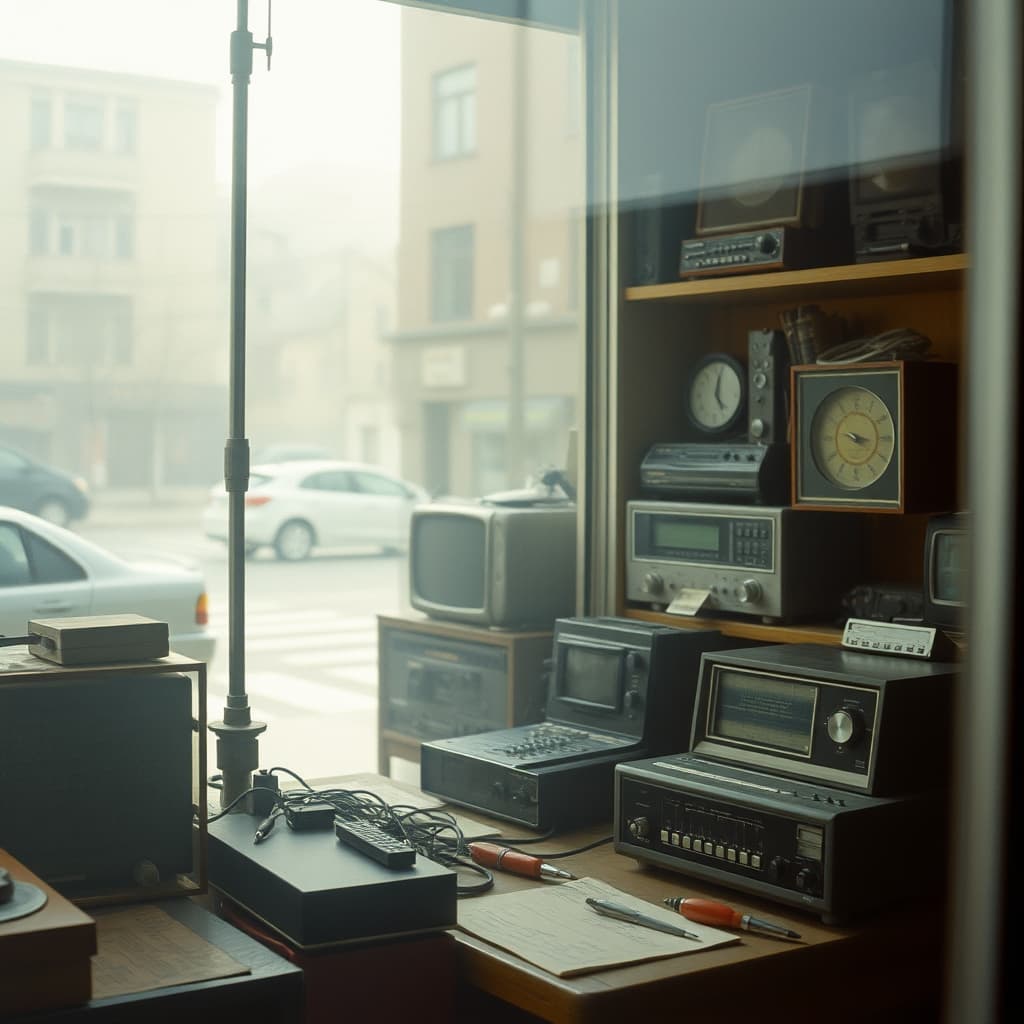
There was a time when, on winter mornings, the windows of electronics repair shops fogged from the inside, leaving a thin veil between the street and the workshop. Behind that misted glass, antennas, reels, cassette covers, and tiny screwdrivers could be seen, and they seemed to belong not only to broken devices but to a world that repaired the fragile expectations of everyday life. Just as hope became clearer when an antenna was turned and a station slowly emerged from static, a voice recorder preserved songs, family voices, cherished recollections, and sometimes the shock of hearing one's own sound for the first time. That is why such devices finding a second life in the hands of repairmen meant more than simple technical necessity. The old technology absorbed into the memory of the streets survived not merely because a new one could not be bought, but because the emotional labor built around it was not easily abandoned.
From the perspective of technological heritage, the radio antenna and the voice recorder represented two neighboring feelings of the analog age: catching a sound from outside and preserving a sound formed inside. Turning the antenna taught patience in the search for a signal hidden inside interference. After a veil of crackle, a news bulletin, a beloved song, or an announcement from a distant city would emerge, and the silence of the house changed at once. The voice recorder, by contrast, captured a child's recitation, a grandfather's advice, the music of a wedding, or the nervous rehearsal of young people trying out a song. When these devices broke, the issue was never purely mechanical. Something in the rhythm of the home had faltered. That is why repairmen were more than craftsmen; they were caretakers of the neighborhood's acoustic memory.
The workbenches visible through fogged glass also reflected the patient labor culture of the old city. Drawers held resistors, tape, needles, bulbs, and the familiar smell of solder; on the wall there might hang a yellowed calendar page or a half-finished circuit sketch. A master repairman did not instantly condemn a radio or recorder to the scrap pile. He listened first, then opened the case, then tried to understand where exactly the fault was hiding. Customers often did not simply drop off the machine and leave. They lingered, spoke of similar breakdowns, and sometimes joined conversations with others passing through the shop. In this way the repair shop became more than a service point. It turned into a small social place where neighborhood news, practical experience, and technical curiosity met. What we call a second life was made possible largely through this renewed circle of human attention around the device.
The phrase hope becoming clearer as the antenna was turned carries force for a reason. In the years when radios and tape machines shaped domestic life, clarity meant not only better sound but the sense that a desired world had come a little closer to home. Music from distant cities, football broadcasts, late-night programs, or a family conversation recorded on tape opened small yet meaningful windows beyond routine life. When a device failed, it could feel as if that window had closed. The moment when the repairman soldered a joint, changed a belt, or strengthened the antenna connection was therefore not only a technical intervention, but an effort to restore the flow of life itself. Many families kept old devices for years because those machines also carried the sounds of their own past. The return of a familiar voice, even through a little static, could bring more joy than buying something entirely new.
Today, in the speed of the digital world, old radios and voice recorders may seem slow, delicate, and inconvenient. Yet that is precisely why they matter. They remind us that sound was once found with effort, stored with care, and considered worthy of repair when damaged. The devices that found a second life in the hands of repairmen carry the traces of a culture built more on continuity than on disposal. The fogged shop windows may be rarer now, but the smell of solder, static, and magnetic tape that entered the memory of the streets does not disappear easily. Because this story is not only about old technology. It is also about how a society kept hope alive by turning an antenna millimeter by millimeter, and by entrusting its own voice to a small strip of tape so it would not be lost.
Hope Becoming Clearer as the Antenna Was Turned and the Voice Recorder: Explaining Why It Found a Second Life in the Hands of Repairmen While Sinking into the Memory of the Streets Behind Fogged Glass