Eski Pano
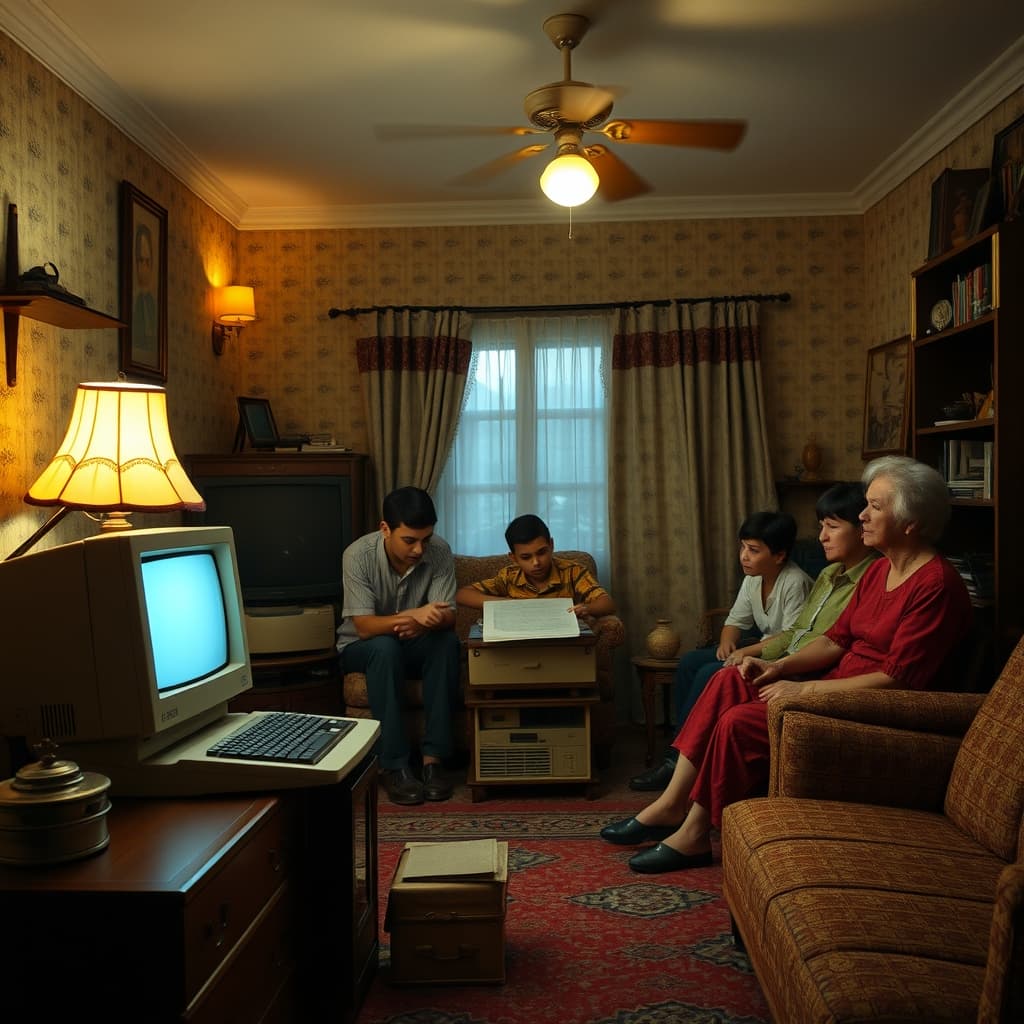
There was a time when the moment a dot-matrix printer began to work felt like a small household ceremony. Unlike today’s flawless prints produced at the touch of a button, in those years the sound of the printer mattered as much as the text it produced. Set beside the computer on a corner table in the living room, the printer pulled the paper forward through the perforated holes on both sides, and as the print head struck from left to right a rhythmic clatter spread through the house. Children approached with curiosity, adults checked whether the paper was feeding straight, and no one felt like speaking loudly. The machine was not only printing a page; it was carrying into the home the sound of a new relationship with technology. That quiet excitement was often completed by colorful floppy disks bought from the bazaar, the first computer desk brought home after long contemplation in shop windows, and the glow of a screen that still looked foreign yet fascinating.
From the perspective of technological heritage, the days of dot-matrix printers represent a period when families met the digital world with caution but also with eagerness. When computers were not in every home, and in the homes that had them they were treated almost like honored guests, a printout from the machine created a tangible feeling of progress. A homework assignment, a letter, an invitation, or even a few lines printed only for practice could become important within the family. As the perforated side strips of the paper were torn away, it felt as if tiny proofs of a new age were emerging from the machine. This habit came not only from practical need, but from the desire to watch technology settle into domestic life step by step. Printer ribbons, cartridges, and continuous stationery hanging between the stationery shop and the electronics store in the crowded bazaar formed part of the visual world of that new era.
The quiet excitement of families gathering in the living room also came from the fact that the machine was a shared spectacle. It was not like a television watched from afar. Everyone came close, straightened the paper, bent down to read the emerging lines, and exchanged glances when a character printed incorrectly. Even seeing a child’s name printed by computer for the first time was enough to create amazement. Every strike of the printer made people feel that the letters were being physically inscribed onto the page; for that reason, printing was not yet an invisible process. In neighborhoods where only a few houses had computers, those homes sometimes printed homework for neighbors’ children, prepared a petition for a civil servant, or typed a clean version of a letter to a son doing military service. In this way the dot-matrix printer stopped being a private household item and became an object of semi-public usefulness. Technology began in the living room and extended all the way into neighborhood relations.
Another reason the habit has not been forgotten is that the pages themselves turned into keepsakes. Sometimes the ink spread slightly, sometimes a line shifted, and sometimes the perforated side strips left thin white curls on the table after being torn away. Yet those imperfections were exactly what made the printout personal and of its time. A school poem, an early computer letter, a family list, or a holiday greeting could remain tucked in drawers for years. The feeling hidden as if on the back of a postcard in the crowd of the bazaar was precisely this: the supposedly cold face of new technology was actually remembered together with very warm household scenes. Loud, slow, and demanding patience, the printer was one of the most tangible forms of digital excitement before the age of speed.
Today the sound of a dot-matrix printer may feel distant to many people, yet for those who remember the atmosphere of homes in those years, that clatter is still familiar. What remains unforgettable is not only the device itself, but the posture of the people gathered around it. In the living room, on a late afternoon when the light had dimmed a little and everyone waited for the printout to finish, one could witness a rare moment in which technology became domesticated. That is why the days of dot-matrix printers remain in memory: they were years when the sound of a machine and the hush of a family existed together, and when a novelty brought home from the bazaar turned into a memory as personal as a postcard.
The Days of Dot-Matrix Printers: Why Was a Habit That Grew with the Quiet Excitement of Families Gathering in the Living Room Never Forgotten, as If Hidden on the Back of a Postcard in the Bazaar Crowd