 Eski Pano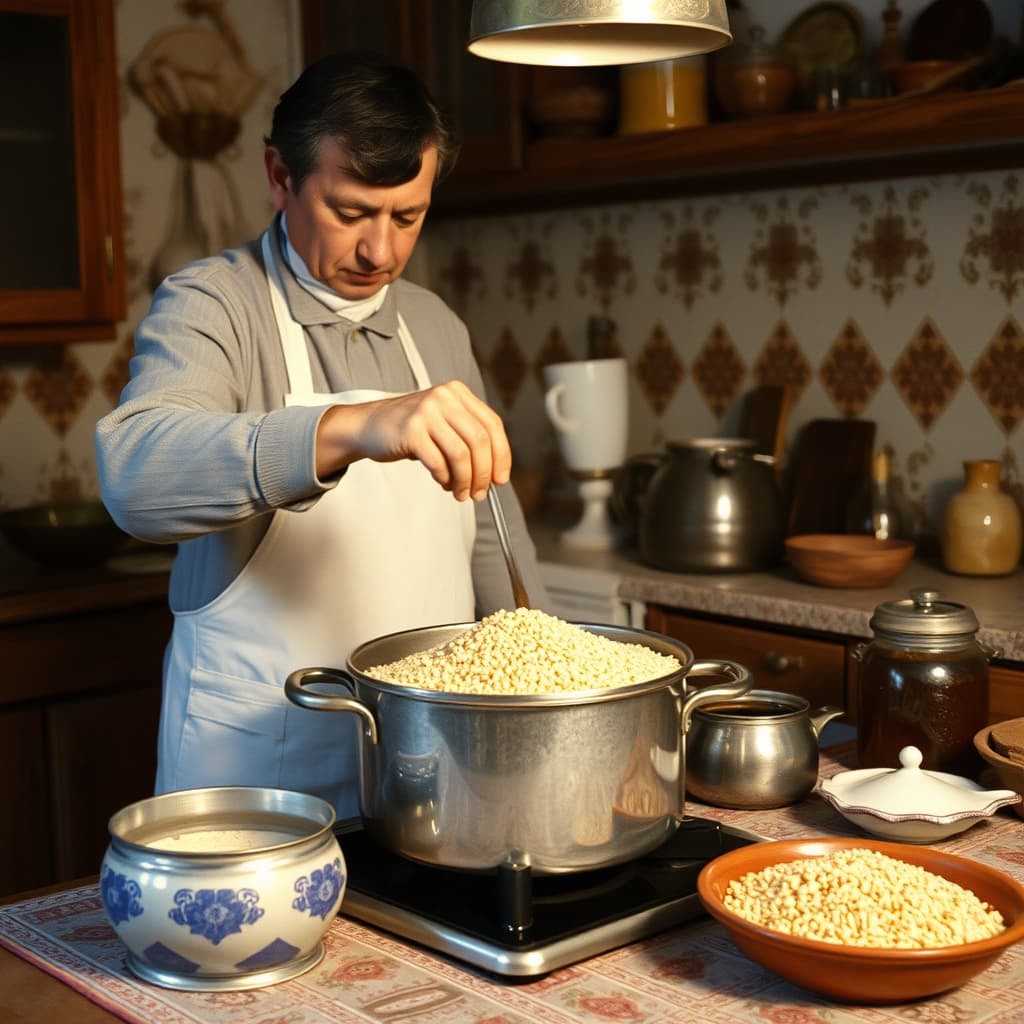
Semolina helva can fill a house before it reaches the table because its aroma is produced during a long, warm transformation. Dry grain meets fat, surfaces toast, moisture changes, nuts brown, syrup releases steam, and the mixture rests while heat continues moving through the pot. The familiar scent is not a mysterious property of one ingredient; it is evidence of time, temperature, and skilled control.
Helva varies by region, household, semolina granulation, fat, liquid, sugar, nuts, spices, colour, texture, and occasion. Butter, clarified butter, oil, milk, water, pine nuts, almonds, pistachios, cinnamon, or other additions may appear. A family recipe should record actual ingredients, weights, pot, heat source, yield, and method rather than present one version as universal.
Grain Size and Fat Set the Toasting Rhythm
Fine and coarse semolina absorb fat and heat differently. A wide heavy pot spreads heat more evenly than a thin small one, while batch depth affects how quickly moisture and colour change. Too little stirring can scorch the base; frantic stirring may not compensate for excessive heat. The cook watches aroma, colour, sound, grain movement, and the behaviour of fat together.
Browning develops complex flavours as grain and any nuts heat, but dark colour is not automatically deeper quality. Burnt particles create bitterness and can dominate the batch. Pot material, burner size, stirring tool, and residual heat matter. Recording approximate time and heat helps teach the process, while sensory judgement remains important.
Adding Syrup Is the Most Hazardous Moment
Hot grain and fat can make liquid boil violently. Steam expands quickly, syrup splashes, and sticky sugar clings to skin. Recipes differ on whether syrup is hot, warm, or cool, but every method requires a stable pot, long-handled tool, clear workspace, controlled pouring, face and hands away from steam, and children outside the immediate area.
Adding milk introduces protein, sugar, and perishability; water-only versions behave differently. The liquid amount controls swelling and final texture. After absorption, resting under a lid redistributes moisture, but trapped steam remains hot. The lid should be lifted away from the face, and the pot should stand securely where nobody can pull it down.
The Aroma Came with Work and Responsibility
Shopping, measuring, shelling nuts, stirring a heavy batch, managing heat, serving, and washing the oily pot are all labour. The person at the stove may stand in heat for a long time while others enjoy the scent. Family history should name contributors and include cleanup rather than turning skill into an effortless maternal instinct.
Semolina is made from wheat and contains gluten. Butter or milk adds dairy; pine nuts, almonds, pistachios, or other nuts must be identified specifically. Shared spoons, grinders, pans, and storage can create cross-contact. Ingredient information should match the actual batch, particularly at funerals, religious gatherings, school events, or community service.
Portion size matters because helva is energy-dense and sweet. Cultural importance does not make one portion suitable for every person. People with allergies, diabetes, swallowing difficulty, or other medical needs require appropriate individual guidance. Serving warm food to children and older people also demands attention to temperature and choking risk from nuts.
A Digital Nostalgia Archive can connect the bowl with semolina type, ingredient labels, pot, heat source, timing notes, stirring technique, contributor names, occasion, allergen record, portion practice, and storage method. The house filled with one scent because controlled browning and steam carried the work beyond the kitchen. Preserving that memory responsibly means keeping aroma beside measurement, burn prevention, named labour, accurate allergens, appropriate portions, and safe handling of leftovers.