 Eski Pano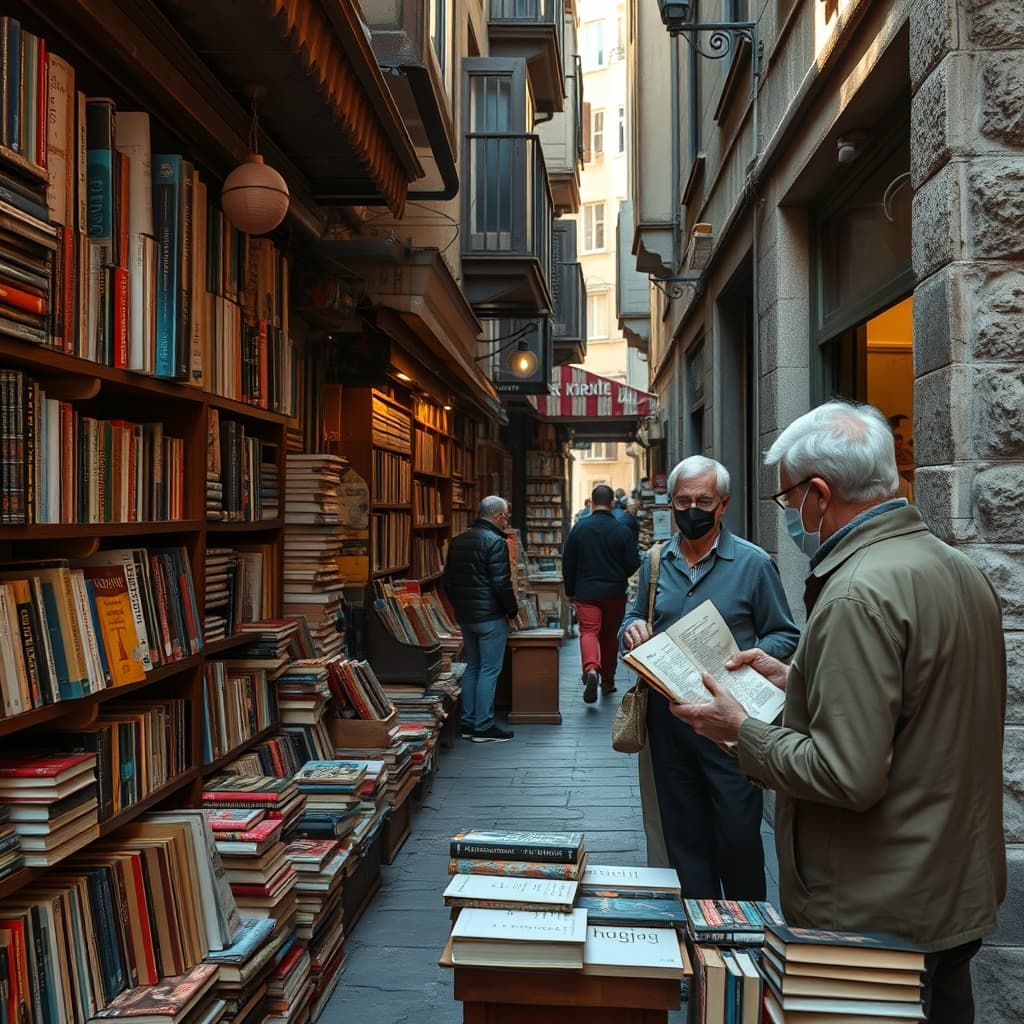
A second-hand book market invited visitors to move at the pace of shelves rather than clocks. On a warm afternoon, light entered narrow shopfronts, reached stacks placed near the door and faded before touching the deepest rows. A person could arrive looking for one title and leave having followed an unfamiliar name, a missing volume or a bookseller's suggestion. The pleasure came from search, but also from accepting that the desired book might not be there.
Organisation was often more precise than it first appeared. Books filled cases, tables, boxes and upper shelves according to subject, language, format, price or the memory of the person running the shop. A visitor saw crowded surfaces; the sahaf might know which pile contained a particular edition. This knowledge was practical inventory, built through buying collections, sorting mixed lots and remembering conversations with regular customers.
A Used Book Arrived With More Than Its Printed Text
Second-hand copies carried evidence of previous use. A pencilled line, dated inscription, pressed leaf, bookseller's stamp or repaired binding could add context, although none should be turned into an invented biography. Marks reveal that someone handled the object; they rarely reveal a complete life. Careful readers distinguished between damage that threatened the book and traces that documented its journey.
Browsing created a quiet form of public exchange. Students compared prices, collectors asked about editions and casual visitors opened books they had never intended to read. Advice could be generous, but the market was still commercial. Rent, storage, damp, insects, fluctuating demand and the cost of purchasing collections shaped what could survive on a shelf. Romantic images of endless dusty abundance conceal the work needed to catalogue, clean and sell.
The Bookseller Connected Memory With Availability
A skilled sahaf did more than point to a shelf. Questions about subject, publisher, period or budget narrowed the search. A requested title might be noted for a later visit. Trust grew when condition was described honestly and rarity was not exaggerated. Disagreement also belonged to the trade: buyer and seller could value the same copy differently, especially when sentiment and market demand pulled in opposite directions.
The surrounding street extended the experience. Tea, footsteps on warm stone, neighbouring workshops and parcels carried between shops placed books inside an urban routine. Friends separated to search and met again to compare finds. A purchase was discussed before it was read. The market gathered curious people not because everyone shared the same taste, but because many forms of curiosity could occupy adjoining rooms.
Online catalogues make titles easier to locate and compare, while many sahaf shops also use digital channels. Search efficiency does not replace the encounter with an unplanned spine or the bookseller's contextual knowledge. The second-hand book market belongs in a Digital Nostalgia Archive because it preserved circulation rather than stillness. Books moved between homes, shelves and readers; notes and repairs accumulated; knowledge passed through conversation. The stone street seems bright in memory because discovery was distributed across objects, people and the patient act of looking.