 Eski Pano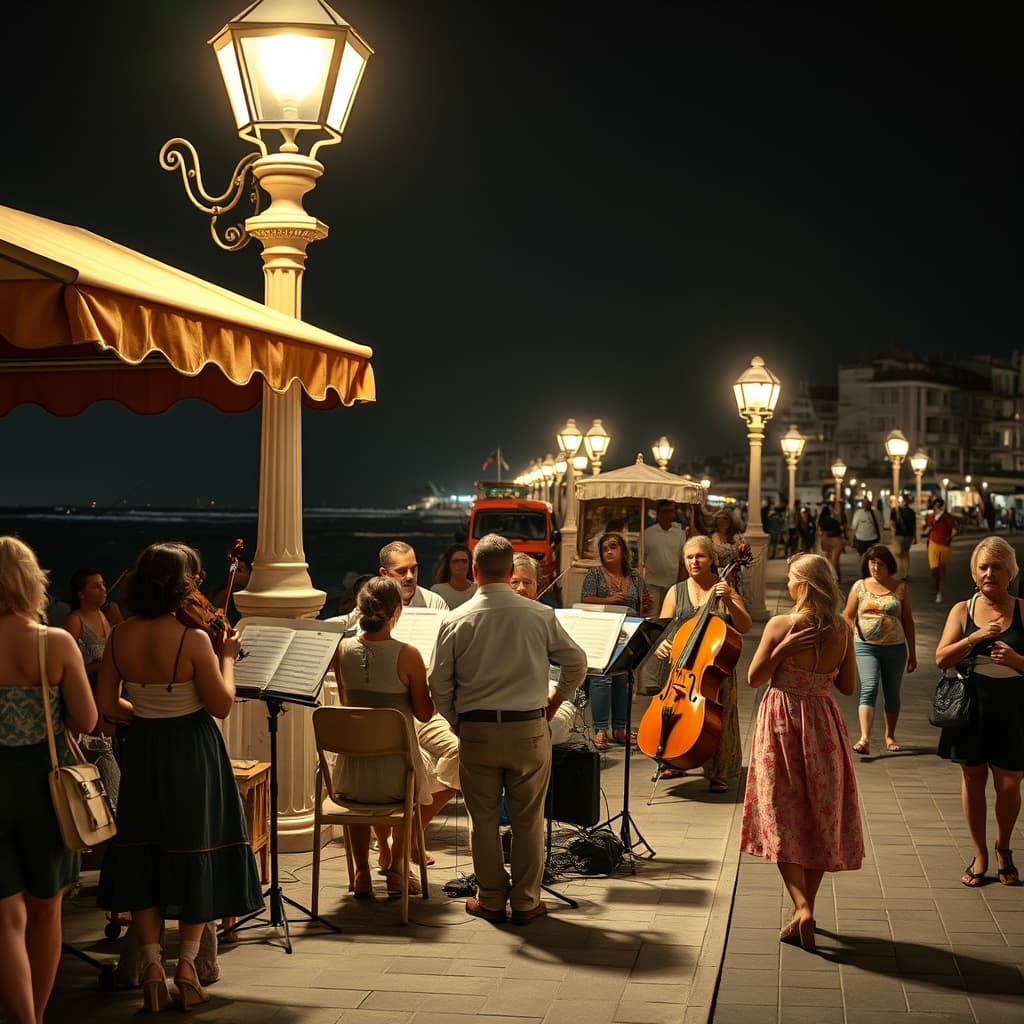
On a summer night by the shore, an orchestra could change the pace of an entire promenade. Music travelled beyond the immediate seating area, reaching walkers, nearby tables and people who paused at the railings without formally joining the audience. The water, evening breeze and changing street noise became part of the listening conditions. A familiar melody might arrive clearly, disappear beneath conversation and return as the crowd shifted.
These performances took different forms according to town, venue and period. Some belonged to municipal programmes, hotels, gardens, clubs or seasonal entertainment businesses. The size and repertory of the ensemble varied, so one remembered scene cannot define all seaside orchestras. What many shared was a public threshold: listeners could participate with different degrees of attention, from seated concentration to a brief stop during an evening walk.
The Promenade Became Part Of The Auditorium
People prepared for the evening in ways that made attendance visible. Families chose a meeting point, friends timed their walk and some residents dressed more carefully than for an ordinary errand. Children moved between chairs and the promenade until called back. Vendors and nearby businesses adjusted to the crowd. The concert therefore organised more than sound; it created a temporary flow of bodies, services and expectations along the shore.
Open-air music depended on practical labour. Instruments and stands had to be transported and positioned, electrical equipment protected where used, chairs arranged and the site cleaned afterwards. Wind affected sheet music and projection; humidity and salt air challenged equipment. Performers worked while audiences enjoyed the breeze. Remembering the atmosphere honestly means including technicians, attendants, cleaners and musicians whose preparation made apparent ease possible.
The Last Piece Continued On The Walk Home
When the programme ended, listeners carried fragments into the street. Someone hummed a refrain, compared the soloist with another evening or decided where to stop for a drink. Families separated at crossings and the public event dissolved into private routes. The walk home extended the performance because the city's night sounds returned gradually rather than all at once.
Access was not equal. Seating prices, venue rules, transport, work schedules and expectations about who could occupy public space shaped participation. A person listening from outside the formal area may have done so by preference or necessity. The glow of memory should not erase those boundaries. The cultural value lies partly in observing how different groups shared the same sound without sharing the same comfort.
Amplified festivals, personal headphones and changing waterfront development have transformed summer listening. Outdoor concerts remain, but their organisation and audience habits differ. Seaside orchestra nights belong in a Digital Nostalgia Archive because they reveal music acting on urban space. A performance made the shore feel temporarily coordinated: musicians held time, walkers slowed, businesses remained open and families recognised a seasonal rhythm. The deep mark came not from one perfect melody, but from many nights when sound gave the city a common direction.
Programmes and posters, when preserved, can anchor memory to a particular venue and season. They should be catalogued with dates and organisers rather than treated as decoration alone.