 Eski Pano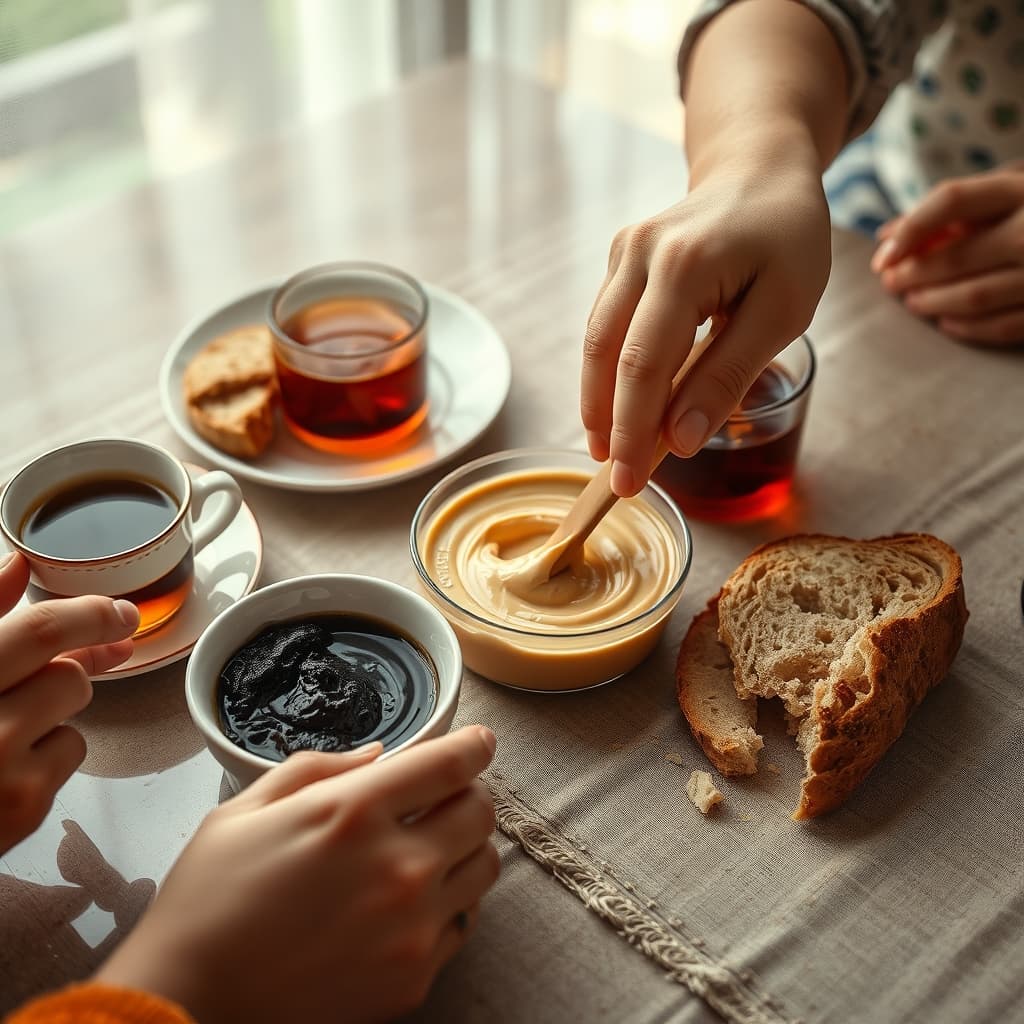
Tahini and pekmez met at the breakfast table before they became a single taste. One was pale, dense and sesame-rich; the other dark, glossy and shaped by the fruit and method from which it was made. When spooned into the same dish, they formed streaks before blending. Some households mixed them thoroughly, while others preferred visible swirls that allowed each spoonful to change.
The pairing includes considerable variation. Pekmez may be produced from grapes, mulberries, carob or other regional materials, and tahini differs in roast, grind and consistency. Ratios are matters of household preference rather than a universal formula. A thick mixture suited dipping or spreading; more pekmez changed sweetness and flow. Describing these choices is more accurate than declaring one balance authentic for every table.
The Spoon Created The Breakfast Texture
Mixing was a small but noticeable act. The spoon met resistance from settled tahini, drew dark syrup through it and gradually created a warmer colour. Oil separation in tahini could require stirring before serving. The sides of the bowl preserved lines of the process. Children might compete to mix or reach first, while an adult controlled portions to prevent the dense mixture from spreading across the table.
Bread completed the experience. A torn piece gathered the mixture differently from a thin slice. Crust offered resistance; soft crumb absorbed oil and syrup. The remembered taste therefore includes the bread available in that home, the size of the shared dish and whether tea, milk or another food followed. Tahini-pekmez rarely stood outside the larger breakfast order.
Season And Labour Sat Behind The Sweetness
The pairing is often associated with energy and colder periods, but consumption varies by family and region. Pekmez production connects the jar to fruit harvest, boiling or processing traditions and careful storage. Tahini connects it to sesame cleaning, roasting and grinding. The easy spoonful at breakfast rests on agricultural and workshop labour that should not disappear behind nostalgia.
Storage influenced quality. Clean utensils, closed containers and suitable temperature protected aroma and texture. Crystallisation, separation or thickening did not always mean spoilage, but food safety requires attention to smell, appearance, handling and producer guidance. Old habits should be preserved with present knowledge rather than repeated without judgement.
Tahini and pekmez remain widely available, and renewed interest does not require pretending the habit vanished completely. Their place in a Digital Nostalgia Archive comes from the table ritual around them. Two ingredients were measured by eye, mixed according to household taste and shared with bread. The first spoon could recall an older kitchen because flavour carried decisions—who mixed, how dark the bowl became, which pekmez was used and how the family balanced sweetness, economy and appetite at the start of the day.
The serving bowl influenced sharing. A shallow dish exposed broad swirls for several pieces of bread, while individual bowls allowed different ratios. Choosing one arrangement reflected household size, cleanliness preferences and whether breakfast was hurried or allowed to unfold slowly. The vessel was part of the remembered taste.