 Eski Pano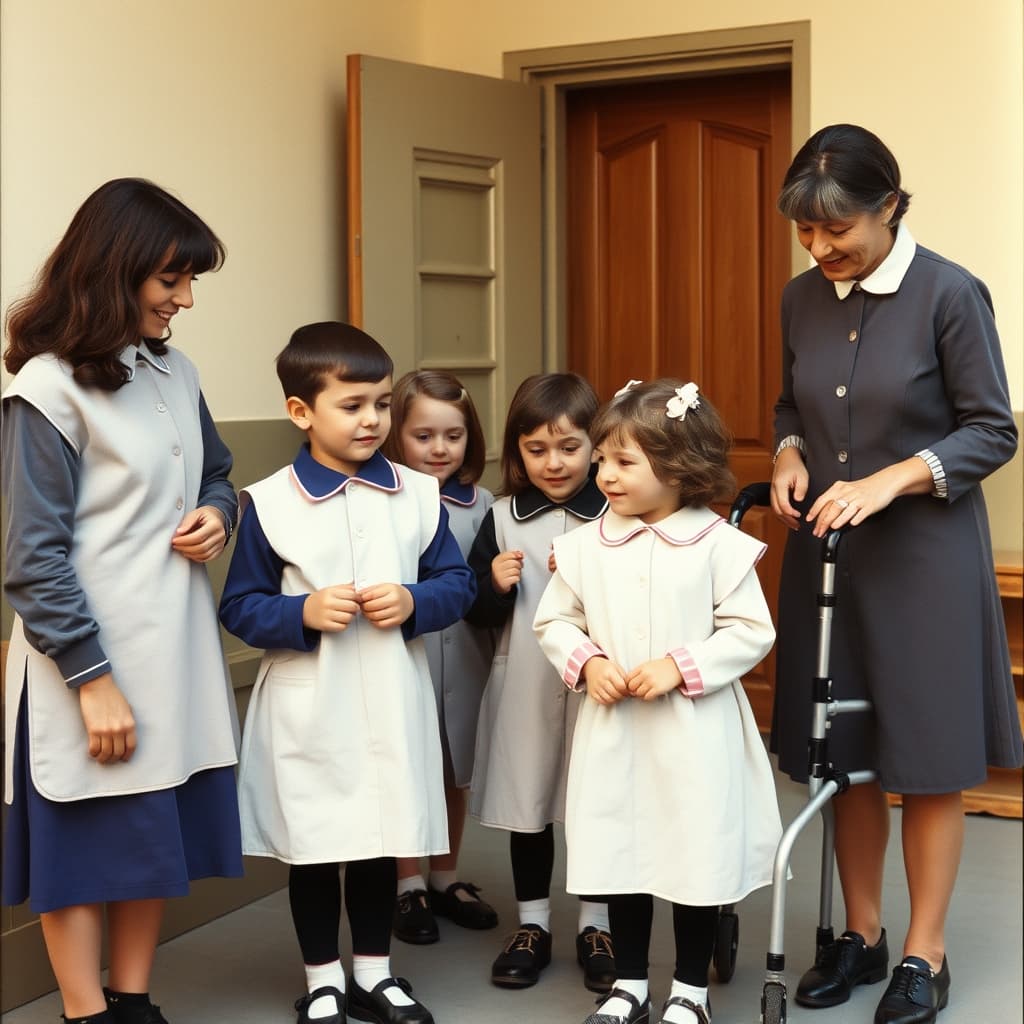
Rows of children in matching school smocks can suggest that everyone began the morning on equal terms. The appearance was powerful, but equality depended on what happened before the photograph: who could afford the garment, whether it fitted, who washed and repaired it, and whether school rules accommodated climate, disability, faith, gender expression, and family circumstances.
Uniform systems varied by country, school, decade, age, fabric, colour, supplier, and regulation. A protective classroom smock, blazer, sports kit, vocational overall, and ceremonial outfit served different purposes. School rules, supplier contracts, price lists, sewing patterns, photographs, parent correspondence, disciplinary records, and pupil testimony help define the actual system.
The Purchase Price Was Only the Beginning
Families also paid for shirts, shoes, sportswear, badges, alterations, laundering, drying, replacements, and sudden growth. A single approved supplier could simplify appearance while limiting competition and access. Fair policy should consider total annual cost, durable alternatives, second-hand schemes, grants, payment schedules, and discreet support that does not identify a child as poor.
Hand-me-downs can reduce waste and preserve family memory, but they need accurate sizing, clean condition, and voluntary exchange. Missing buttons, worn knees, weak seams, and faded labels require repair before use. Donation programmes should respect privacy and avoid turning recipients into a public lesson about charity.
A Standard Size Did Not Fit a Standard Child
Children grow at different rates and have different body shapes, sensory needs, mobility, temperature regulation, skin conditions, and dressing abilities. Tight collars, rough labels, inaccessible fasteners, restrictive skirts, heavy fabrics, or stiff shoes can interfere with learning and movement. Reasonable adjustments should be normal administrative practice rather than an exception granted after embarrassment.
Climate matters throughout the day. A dark synthetic smock may retain heat in a crowded room, while a thin garment can be inadequate at an outdoor assembly. Layering options, breathable fabrics, weather protection, hydration, ventilation, and safe storage for coats affect comfort more than a perfectly uniform silhouette.
Discipline Could Protect or Humiliate
Clear dress expectations can reduce uncertainty, but inspections of cleanliness, skirt length, hair, shoes, or badges can become public humiliation or discriminatory control. Punishment should never remove access to education because a family could not immediately replace an item. Complaints and appeals need confidential, child-centred procedures.
Religious dress, cultural practice, gender identity, disability equipment, medical needs, and protective hairstyles require lawful and respectful accommodation. Safety rules should be evidence-based and applied consistently. A school should not use uniformity to erase identity or force a pupil to disclose private health information to classmates.
Uniforms do not automatically prevent bullying. Brand differences, wear, fit, body shape, odour, repaired patches, and the absence of optional items can become targets. Schools need active safeguarding, laundry support where appropriate, inclusive teaching, and staff who respond to harassment without blaming the child's clothes or household.
A Digital Nostalgia Archive can connect a school-uniform photograph with rules, fabric, pattern, supplier, prices, family labour, repairs, climate, accessibility adjustments, disciplinary practice, second-hand exchange, and pupil voices. The same colour may have carried a shared dream, but belonging was created by material support and respectful policy. Preserving the image honestly means asking whether every child could learn comfortably, safely, and without shame.