 Eski Pano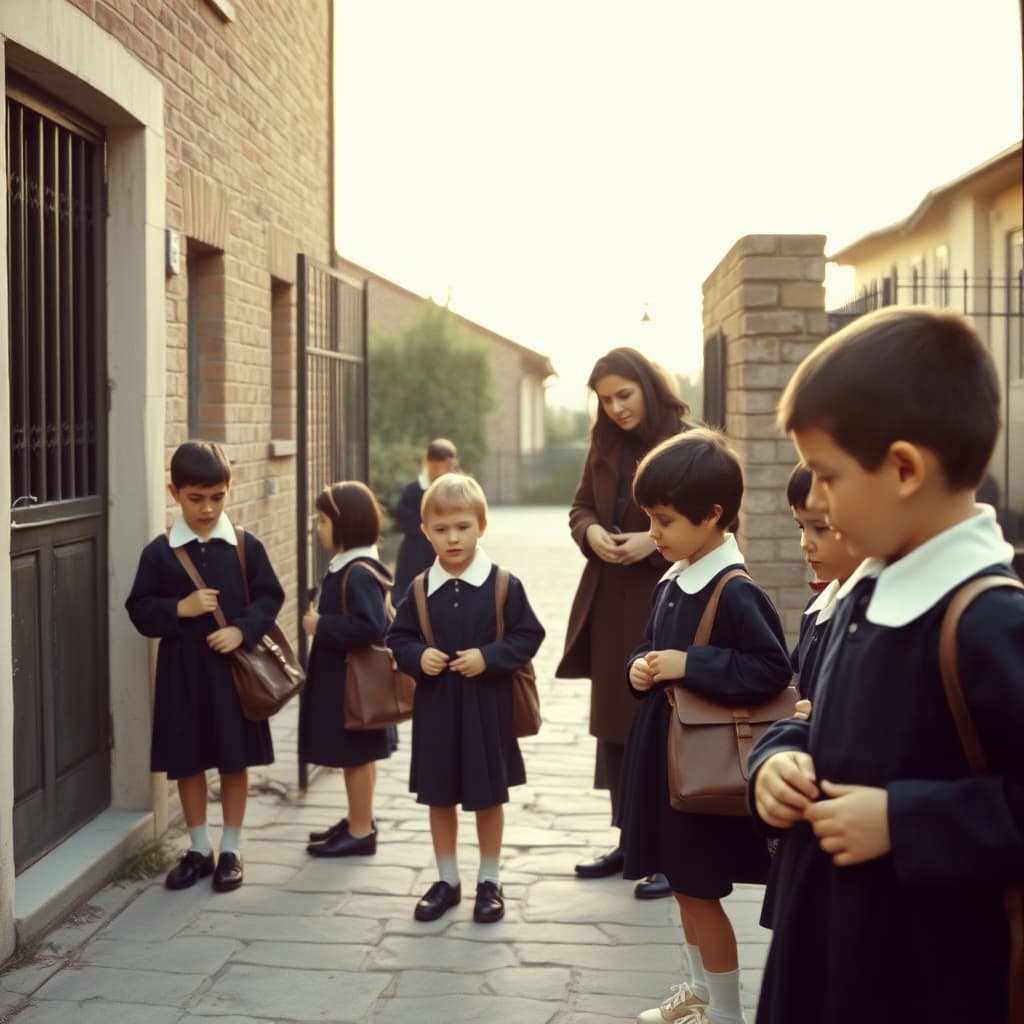
The school smock entered the morning before the lesson began. It had to be found, buttoned and checked while breakfast, books and the journey to school competed for attention. A detachable collar might need straightening; a loose button demanded a quick repair. By the time children crossed the gate, many households had already completed a small sequence of work designed to produce an orderly appearance.
Uniform styles varied across schools, decades and regions, but dark smocks and contrasting collars became a powerful visual memory in Turkey. The repeated silhouette suggested that pupils shared the same purpose. It also gave teachers a practical standard for dress. Yet identical fabric could not make home circumstances identical, and any archive of school life must hold those two truths together.
The Smock Was Maintained at Home
Daily wear placed pressure on cuffs, elbows, pockets and buttonholes. Ink, chalk, playground dust and food left marks. Washing, drying, ironing and mending were commonly added to domestic labour, often performed by women. A smock might pass to a younger sibling, with hems adjusted and worn areas reinforced. The garment therefore recorded economy as clearly as education.
Detachable white collars created another rhythm. They could be washed separately, starched or pressed and attached before school. Their brightness became a sign of care, but keeping them bright required water, soap, fuel, time and skill. A child arriving with a stained collar might be judged without anyone asking whether the household had access to those resources.
Uniformity Could Support Belonging and Conceal Difference
Shared clothing reduced some visible competition and helped create a collective classroom identity. In class photographs, rows of similar smocks draw attention to faces rather than fashion. For some pupils, the uniform offered pride and the feeling of entering a serious public institution. For others, rules about cleanliness, fit or replacement could produce anxiety and expense.
Shoes, bags, coats, nutrition and free time still revealed economic differences. Girls and boys could encounter different expectations about neatness and behaviour. Disabled pupils faced buildings and garments not designed around their needs. The democratic promise of the smock was therefore incomplete, even when sincerely valued.
The School Morning Extended Beyond the Gate
Assembly, attendance and classroom preparation reinforced the discipline begun at home. Pupils lined up, adjusted collars, shared pencils and waited for instructions. These habits taught punctuality and collective movement, but schools differed in how rigidly they enforced them. Personal memories range from comfort and friendship to embarrassment and punishment.
Preserving a school smock requires more than hanging an anonymous garment in a display. Labels, seam alterations, patches, photographs, report cards and testimony can identify who wore it, where and when. Textile storage should avoid prolonged light, unsuitable hangers and adhesive repairs. Clean handling and stable support protect fragile fibres.
A Digital Nostalgia Archive can use the smock to connect policy with intimate routine. Education regulations explain the rule; family stories explain how it was lived. The garment's enduring image comes from repetition: countless mornings of buttons fastened, collars corrected and children sent towards the same gate with different hopes and burdens. Remembered honestly, the smock is neither merely charming nor simply oppressive. It is evidence of how a public ideal was prepared, washed and repaired inside private homes.