 Eski Pano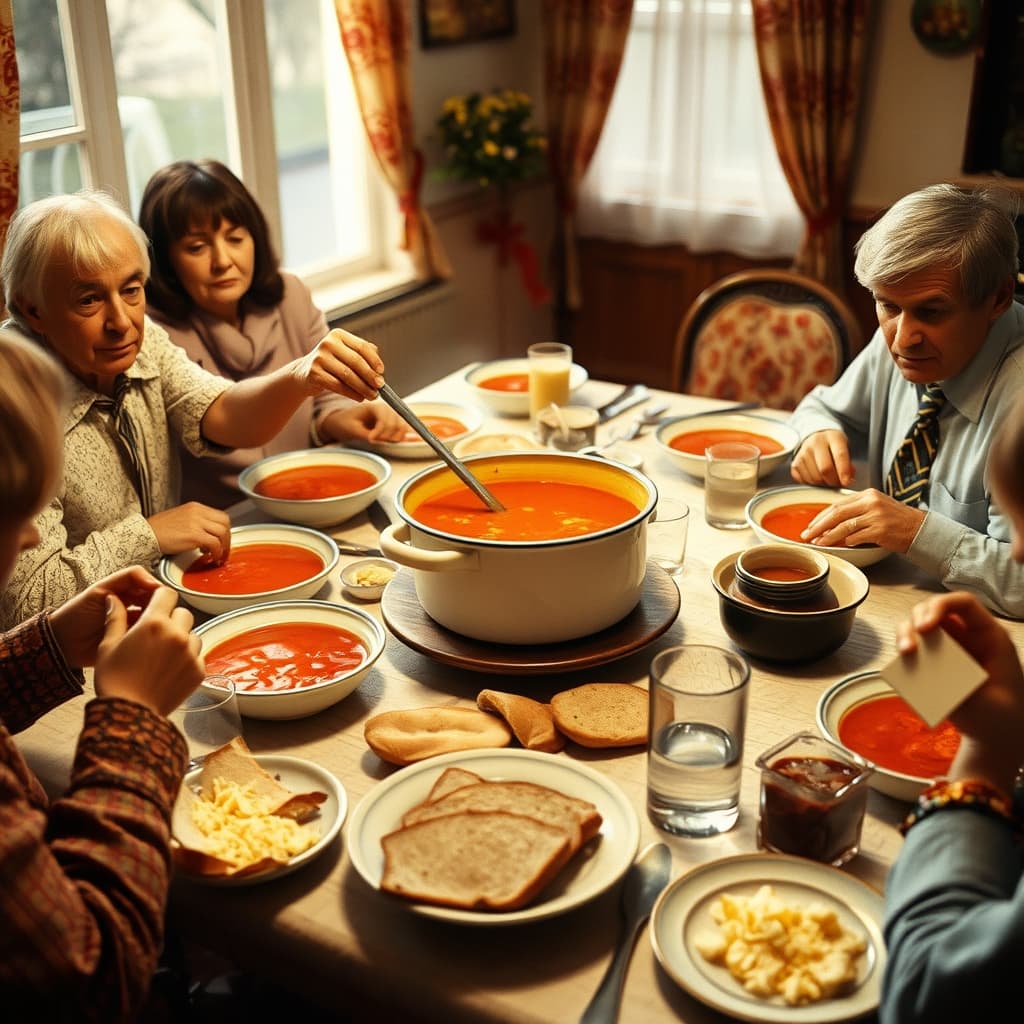
Home-style tomato soup often reached the table as the first answer to a practical question: how could one pot begin a meal for many people? Its familiar colour suggested simplicity, but flavour depended on the tomatoes, fat, thickener, stock, heat and finishing choices available that day. A crowded family table made those decisions visible through the size of the pot and the speed with which bowls were filled.
In summer, ripe tomatoes could be grated or crushed. Outside the season, bottled tomatoes, preserved purée or paste supported the kitchen. Each ingredient behaved differently. Fresh fruit brought water and acidity; concentrated paste needed cooking to soften its raw edge; a home preserve carried the salt and method of the season when it was made. Good soup came from adjustment rather than a single rigid formula.
The Base Determined Colour and Depth
Butter or oil warmed the pan before flour was sometimes added for body. The flour needed enough cooking to lose a raw taste without darkening so far that it obscured the tomato. Other households used rice, bread, starch or no thickener at all. Tomato entered gradually, followed by water or stock, with stirring to prevent lumps and sticking.
Acidity, sweetness and salt required tasting. A pinch of sugar could round a sharp batch but could not rescue spoiled or flavourless produce. Stock cubes offered convenience and predictable seasoning, while homemade stock reflected another layer of preparation. Milk or cream softened acidity in some versions, yet adding dairy too quickly or at the wrong temperature could cause separation.
Texture Was a Household Preference
Some families expected a completely smooth bowl strained through a sieve; others welcomed seeds and small pieces. A hand mill, whisk, sieve or later blender changed the labour required. Texture also depended on serving age groups. Children or older relatives might prefer a finer soup, while adults added toasted bread, grated cheese, black pepper or dried mint at the table.
Serving a large household demanded timing. Soup had to remain hot without catching on the bottom. Bowls were arranged, bread cut and portions judged so everyone received enough while the main dish stayed ready. The person at the stove often sat down last. Remembering only convivial sharing can hide the planning and repeated movement that made it possible.
Leftovers Belonged to the Recipe
A large pot could produce another meal, but cooling and storage mattered. Soup should not remain warm for long periods before refrigeration. Clean containers, prompt cooling and thorough reheating reduce risk. Dairy-based versions require particular care, and repeated reheating of the whole batch can damage both quality and safety.
The table itself carried social rules. Elders might be served first, children helped with hot bowls and extra bread stretched portions. These customs varied and could express care, hierarchy or both. Scarcity and abundance also changed the meaning of the dish. Tomato soup could be an economical beginning, a way to use preserved summer produce or simply a preferred comfort.
A Digital Nostalgia Archive should collect recipes with context: tomato variety, season, preservation method, pot, fuel, thickener, garnish and number of diners. Stains in a handwritten notebook and corrections in the margin can be as informative as the final quantities. Home-style tomato soup survives not because every household made it identically, but because it accepted adaptation. Its shared taste came from cooks repeatedly balancing what the pantry offered with what the table required.