 Eski Pano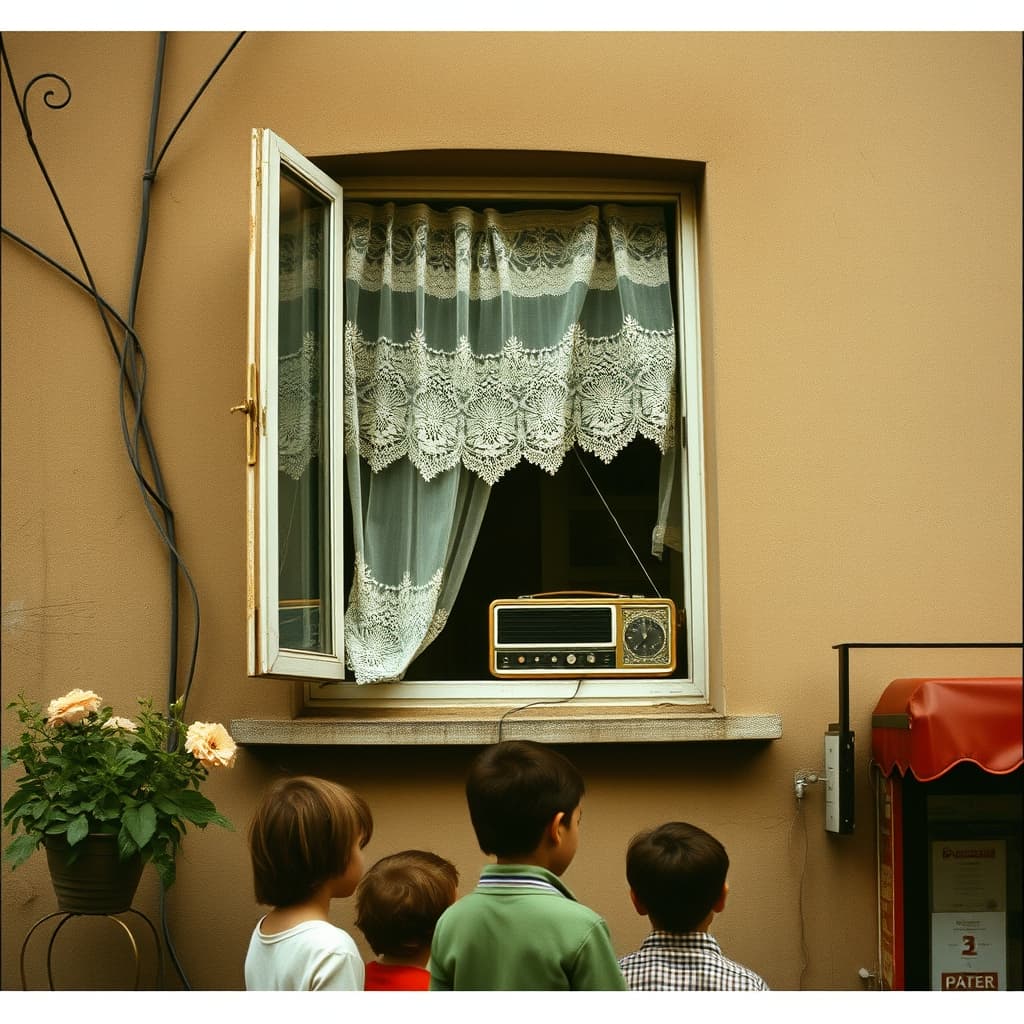
A radio playing behind an open window could become part of the street without anyone formally choosing an audience. A song crossed the sill, mixed with footsteps and vendors' calls, then weakened at the next corner. Those passing below heard only a portion, while the household inside followed the programme from beginning to end. The result was shared sound, but not quite a shared room.
Open windows served practical needs. They released cooking heat, tobacco smoke and dampness, and admitted a spring breeze into tightly arranged homes. They also made domestic life more audible. Crockery, conversation, news bulletins and music entered the public soundscape. Curtains and shutters moderated sight more easily than sound, so privacy required judgement rather than a simple barrier.
The Broadcast Schedule Marked the Hour
Regular news, drama, music and sports programmes provided audible time cues. A familiar signature tune could tell a shopkeeper or child roughly where the afternoon had reached. People did not need to own the radio in order to recognise these markers; repeated exposure from cafés, workplaces and neighbouring homes created a broad listening culture.
Reception quality varied with building materials, aerial position and interference. The volume might rise to overcome static, then remain too high when the signal improved. Valve sets generated heat, while later transistor radios could move from room to room or onto a balcony. Each design altered where listening happened and how far it travelled.
A Street Was Not a Single Household
The same song could delight one neighbour and interrupt another's sleep, study or illness. Shared sound depended on informal limits: lowering the radio at rest hours, moving it away from the window or responding when someone asked for quiet. Nostalgic descriptions of a street “becoming one home” should not erase the right to withdraw from unwanted noise.
Class, age and work patterns affected the experience. A person doing domestic labour might rely on radio companionship for hours, while a night-shift worker needed daytime silence. Children learned songs outdoors, and older listeners followed news from a chair near the window. The sound connected lives precisely because those lives remained different.
Recording a Neighbourhood Soundscape
Photographs cannot fully preserve this memory. An archive can combine radio schedules, receiver models, building plans, oral histories and carefully recreated sound maps. Interviews should ask where the set stood, which station was chosen, how volume was negotiated and whether windows faced a courtyard or main road. Copyright and personal privacy still matter when using surviving recordings.
Urban sound has since changed through traffic, air conditioning, insulated windows, headphones, streaming and personal devices. These technologies did not simply end collective listening; they rearranged it. A café playlist or telephone speaker can still spill into public space, while headphones create private rooms on crowded pavements.
The open-window radio deserves preservation because it reveals an accidental interface between home and street. Broadcasting infrastructure delivered the programme, architecture released it, and neighbourhood custom determined whether it remained welcome. For a few metres and a few minutes, a private receiver created a public fragment. Remembering the music alongside the negotiations around it gives us a richer record of how urban residents once shared air, information and attention.