 Eski Pano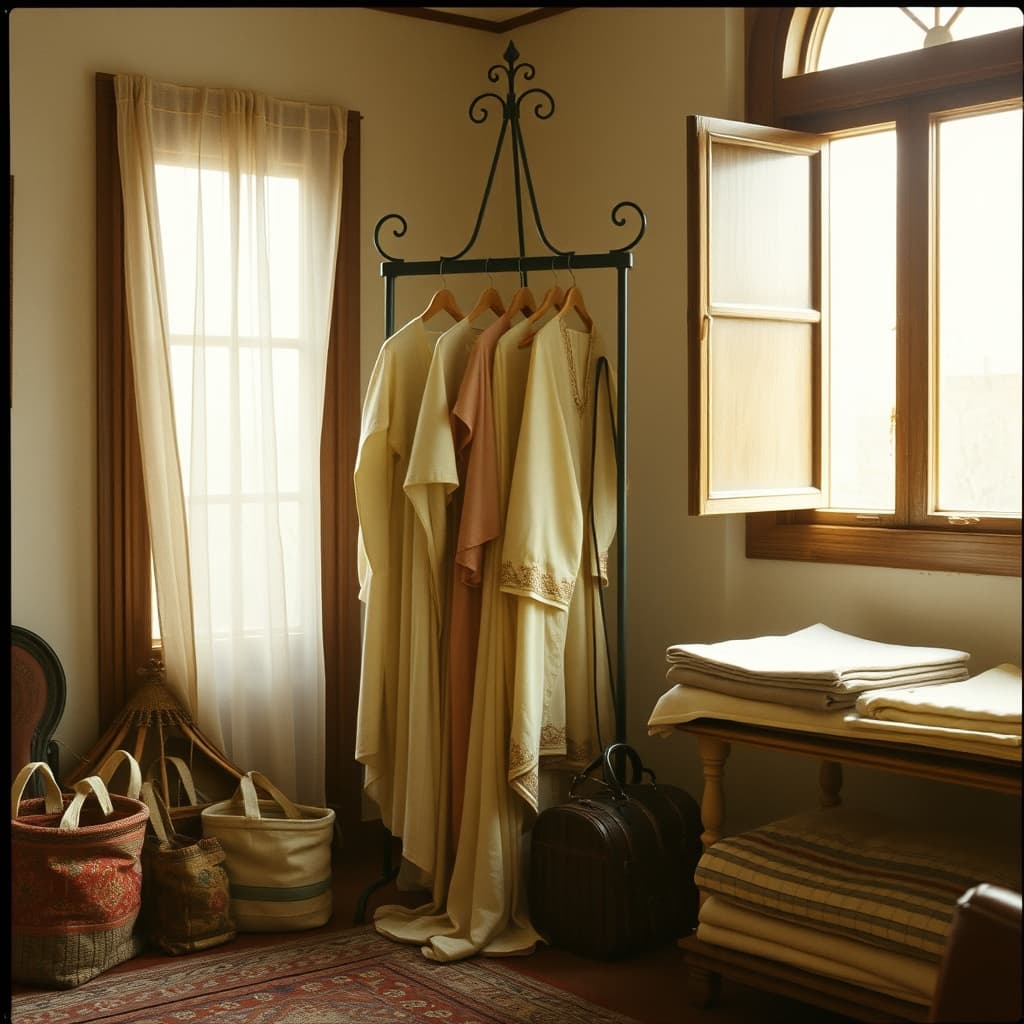
In a room set aside for a dowry, a wrought-iron coat stand performed more than one task. Its hooks lifted garments away from crowded chests, its frame displayed careful preparation, and its presence helped turn an ordinary spare room into a space oriented towards a future household. Dresses under cloth covers, embroidered bags and neatly folded textiles gave the stand a role between storage and exhibition.
The Turkish çeyiz was never a single fixed collection. Its contents changed by region, class, generation and family preference. Handworked linens might sit beside purchased appliances; clothing could be made at home or bought ready-made. A coat stand therefore should not be treated as universal evidence. It belongs to a particular household history that needs dates, names and testimony.
Ironwork Joined Strength to Ornament
Wrought or decoratively worked metal allowed slender uprights, curved feet and repeated scrolls. Hooks needed enough strength to carry layered garments without tipping the stand. A wide base improved balance, while uneven floors made stability difficult. Paint, enamel or plated details protected the surface and contributed to the room's chosen appearance.
Decoration mattered because dowry preparation was often visible to relatives and visitors. Floral curls and symmetrical lines could harmonise with bedspreads, lace and furniture. Yet the object remained functional. Overloading one side bent hooks, strained joints and increased the chance of falling. Garments also needed breathable covers rather than plastic that trapped moisture.
The Room Concentrated Time and Labour
Textiles accumulated through months or years of sewing, embroidery, saving and gift exchange. Women frequently supplied much of this labour, though participation varied. The room made that work countable and inspectable. This could generate pride and collective excitement, but it could also create financial pressure, comparison and expectations placed unequally on young women.
The coat stand embodied waiting because garments remained suspended for an event not yet completed. Dusting, airing and checking for insects kept them ready. Spring air through an open window might freshen the room, but direct sun could fade cloth and metal; humidity could encourage corrosion. Domestic preservation depended on repeated attention.
Preserving the Object Without Inventing a Story
A collector should first determine construction. True wrought iron, cast elements and later welded steel may look similar in a decorative piece. Tool marks, joints, weight, paint layers and manufacturer labels offer evidence. Oral attribution such as “from a dowry room” is valuable only when the speaker, household, place and approximate date are documented.
Loose joints and active rust require careful assessment. Dry dusting is safer than aggressive abrasion, which can strip historic paint. Textile contact points should be smooth and clean; conserved garments are best stored according to textile guidance rather than left hanging indefinitely for atmosphere. Separating object display from long-term fabric storage can protect both.
A Digital Nostalgia Archive can connect photographs of the stand with inventory lists, embroidery samples, wedding preparations and interviews about who made, bought and maintained each item. Such documentation avoids reducing the dowry room to a picturesque symbol. The iron stand then becomes a useful witness: a piece of furniture that organised cloth, revealed taste, concentrated family labour and held the complicated interval between preparation and a changing life.