Eski Pano
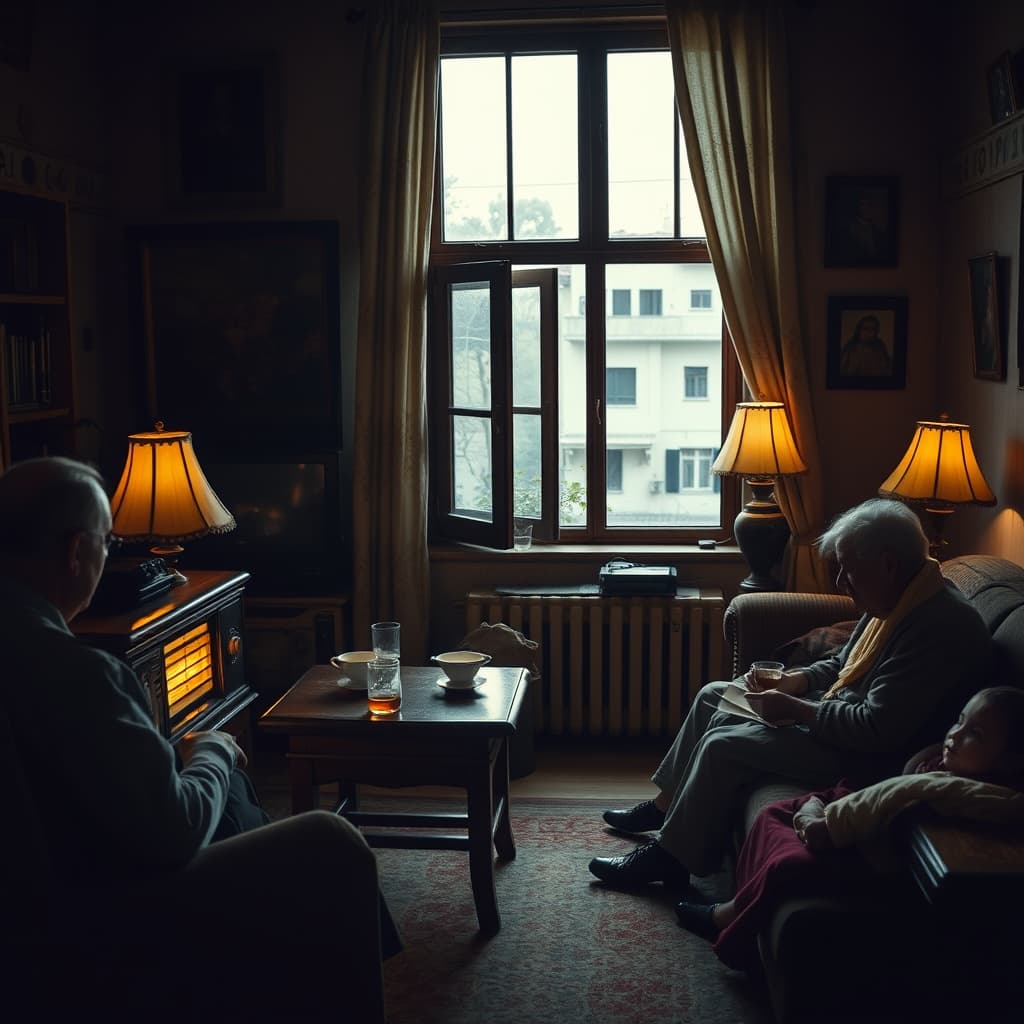
Some sounds enter a home without knocking and gently gather an entire family's evening at one point. Radio was exactly that kind of presence. Especially those radios with wooden bodies or fabric grilles placed in the best corner of the living room created a kind of respect that interrupted conversation. Dinner had just ended, tea glasses were resting on the side table, and the sounds of children in the street were beginning to fade. Then someone turned the dial, and after a slight crackle the voice of a familiar announcer spread through the room. This moment did not produce loud excitement, but a quiet and concentrated one. No one had to look at the same place, yet everyone listened to the same sound. Part of the unforgettable feeling of the analog age is hidden in that shared act of listening.
As technological heritage, radio was never just a device. It was one of the warmest tools of collective attention. What is now divided among individual screens and headphones was then a common waiting experienced in the center of the living room. When the news hour came, sentences in the room were spoken more carefully. When the radio play began, children moved a little closer while adults continued their tasks with slower hands. During music programs, the voice of a beloved singer mingled with neighborhood sounds. Footsteps from the open window, the simit seller passing outside, or the faint radio of another house became part of the same listening world. This is where the memory passed from tongue to tongue begins. Listening to the radio often created something to be repeated later: "What did he say last night?", "Did they play that folk song?", "Did you hear the news?" Once sound spread, it moved from home to home.
To understand why this device still tells the thrill of the analog age, it is enough to look at the body language gathered around it. The careful turning of the knob to clarify a station, the adjustment of the antenna, the little stir in the room just before a favorite program began, all these were parts of an invisible ritual. For a child, radio carried mystery. Voices of unseen people, songs from cities never visited, and artists known by name but not by face all fed the imagination. For adults, radio was a controlled window opening to the world without disturbing the warmth of the household. Heard together with neighborhood sounds, it became even more local and familiar. Radio never functioned as a completely foreign representation of the outside world. It was a way of bringing that world into the order of the home.
The quiet excitement of families gathering in the living room was nourished partly by the habit of being silent together. Moments in which not everyone spoke individually, yet all gave their ears to the same thing, held a special place in family memory. A brief comment after the news bulletin, someone saying "your mother loved this one too" as soon as a song ended, children imitating the announcer, or asking questions while imagining cities mentioned on air all left traces more durable than the object itself. That is why radio is not remembered merely as an item. It is recalled as a form of closeness built through sound. Even the static that came from it was not a flaw, but part of the truth of the period. Clarity was not always perfect, and for that reason it felt more precious.
This is also why it survives today like a memory passed from tongue to tongue among neighborhood sounds. Radio was less a one-way instrument delivering sound than a thin layer of listening laid over common life. A folk song heard in one house was discussed next door, the evening news was interpreted again the following morning in front of the grocer, and children turned radio slogans into games. Technology ceased to be a cold novelty and mixed into neighborhood circulation. The unforgettable thrill of the analog age may be hidden exactly there: in a half-dark room, one radio, several attentive faces, and the sounds of the neighborhood slipping in from outside. What remains in memory is not only what was heard, but how it was heard together.
Radio: Within the Quiet Excitement of Families Gathering in the Living Room, It Tells the Unforgotten Thrill of the Analog Age Like a Memory Passed from Tongue to Tongue Among Neighborhood Sounds