Eski Pano
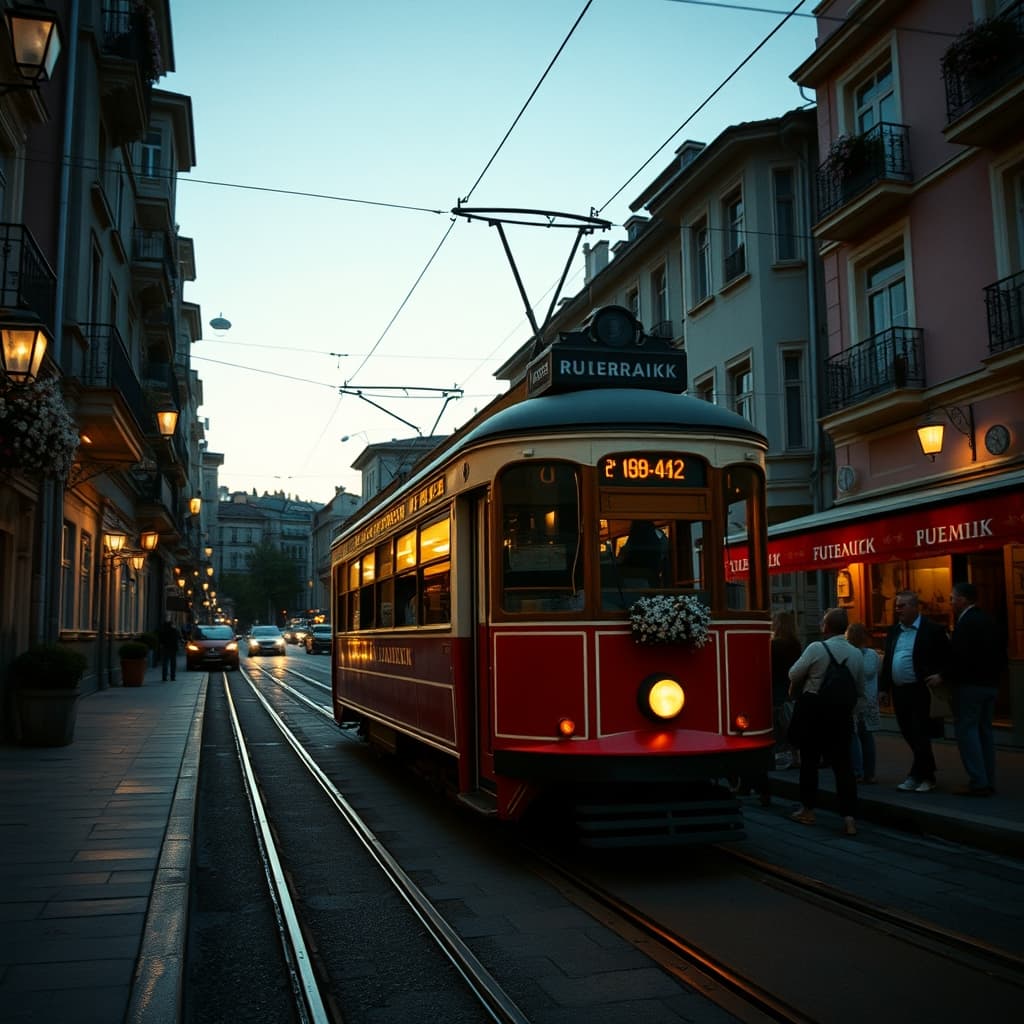
Some cities remain in memory not because of their daytime crowds, but because of the details that slowly become visible as evening falls. The years when trams gave the city its tempo are remembered in just that way. The street lamps had only just come on, the pavements still carried the dust of the day, and the scent rising from jasmine and honeysuckle in window boxes mixed with the evening coolness. The metallic vibration over the rails could be heard before the tram itself appeared. Then the carriage turning the corner carried more than passengers. It set the rhythm of the evening, the neighborhood's sense of time, and even the pace of those walking along the street. Flower-scented streets were therefore not only beautiful places. They were places that established order. One could understand what hour it was there without looking at a clock.
Seen along the path of time, the tram was never merely a means of transportation. It was a visible line that both divided daily life into parts and held those parts together. The morning commute, the noon rush, the release of school, and the return home in the evening were often linked by that sound moving over the rails. Old newspapers described the expansion of tram lines as a sign of modernization, yet for neighborhood residents the meaning was more concrete: at which stop the simit seller waited, on which corner the light felt stronger at dusk, along which line the scent of flowers was most intense. The great transformation of the city was lived through small details. A child gripping a mother's hand more tightly as the tram approached, an office worker taking a watch from his pocket and comparing it with the sound on the rails, young people waiting for one another near the stop, all these were silent pieces of the city's rhythm.
This is exactly where what we call forgotten details begins. Looking back today, we often remember only the tram itself. Yet the true memory lives in the little scenes gathered around it. Rails shining beneath the street lamp, neighbors carrying chairs out to the pavement in the cool of the evening, the faint smell of soil rising from flower beds, the conductor's brief and steady voice, the familiar glances exchanged by those waiting at the stop. These are the details that do not usually enter grand histories, yet explain the spirit of the period better than anything else. Flower-scented streets reveal not only the physical beauty of the city, but the human scale of its rhythm. The arrival of the tram did not create panic, nor did waiting around it feel wasted. It produced a sense of repetition that could carry daily life.
Even domestic life was not separate from that tempo. The hour of dinner might be arranged according to which tram the father would take home, while children watched the movement outside by following the light passing the window. In summer the balcony door stayed open, and when the tram sound entered the room it felt as though the street had paid a short visit to the sitting room. Some mothers planned the return from shopping around the tram line, and some grandfathers taught the city clock by ear to their grandchildren by saying, "it will pass in a moment." For that reason, tram memory is not only a technical past. It is also part of family order. The memories growing beneath street lamps drew some of childhood's sense of safety from this predictable urban rhythm. Even when many things changed, knowing that the familiar sound on the rails would come gave people an invisible support.
When we ask what flower-scented streets tell us today, the answer does not lie in nostalgia alone. They remind us that a city was once built through rhythm before speed. The appeal of the tram years lies not simply in their age, but in the way they left room for walking, waiting, and encounter. That is why the memories that grew beneath street lamps remain alive. In those years the city did not merely illuminate the evening. It entered people through sound, scent, and repetition. What remains unforgettable about flower-scented streets is not only the vehicle moving along the rails, but the shared life organized around it. While trams gave the city its tempo, people were able to touch one another's time more closely as well.
In the Memories Growing Beneath Street Lamps, the Years When Trams Gave the City Its Tempo: What Do Flower-Scented Streets Tell Us with Their Forgotten Details?