Eski Pano
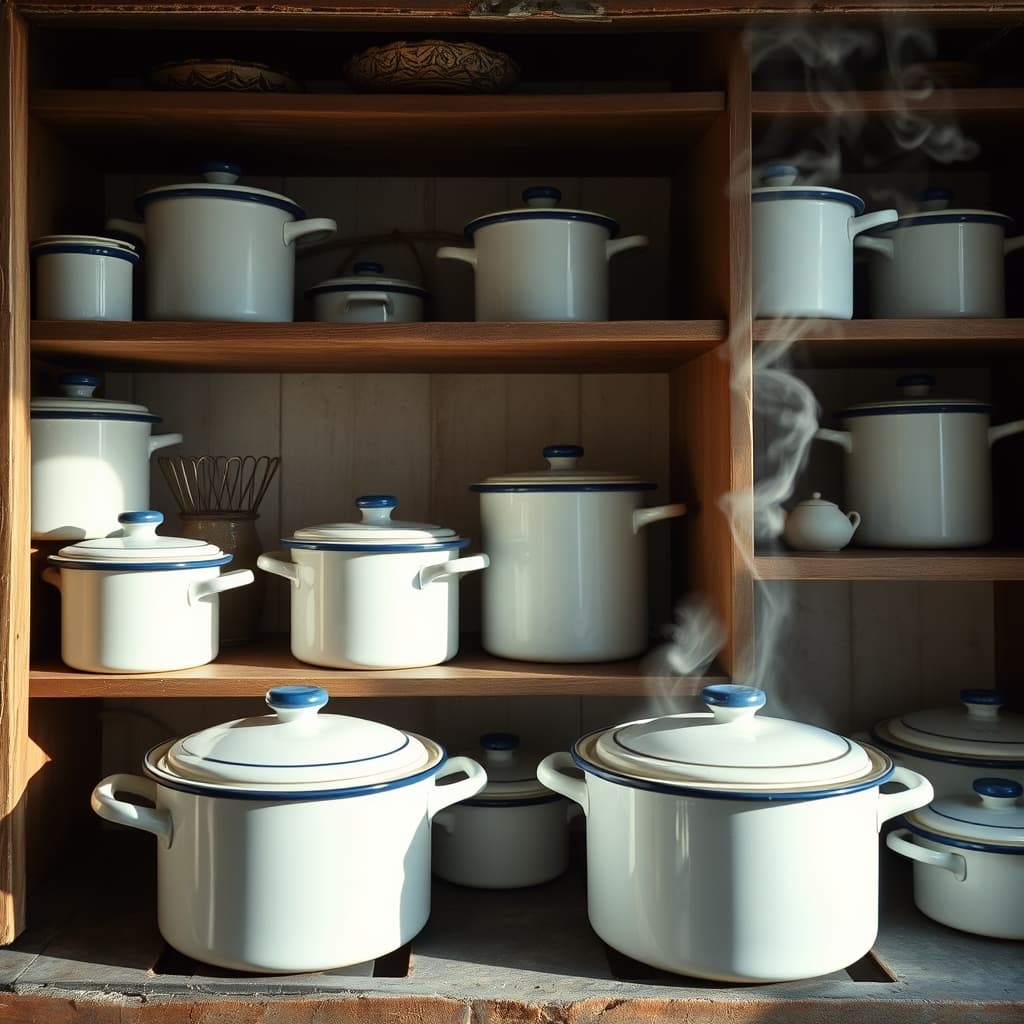
Some kitchens appear simple at first glance, yet when one looks carefully at their shelves a hidden elegance within everyday life becomes visible. Enamel pots belong to that kind of object. The one with blue lines on a white surface, the one carrying a small worn mark on the rim, the one that has quietly collected the steam of years of cooking, all of them were pieces of kitchen life that did not show off but inspired trust. Morning soup, lunch, winter compote, or tomato sauce made from summer produce could all be prepared in the same pot, and then the pot would be washed and returned to its shelf. Through that repetition, the object was not merely used. It slowly turned into part of the household's quiet splendor. Enamel was never the material of luxury. It was the material of care and long use.
As a story of objects, the enamel pot is a strong example of how kitchen design once gathered function and beauty in the same vessel. The metal body protected by enamel coating offered hygiene and durability while also giving the object a recognizable appearance. On old kitchen shelves these pots were usually arranged in clear view, because they were not things to hide but things that represented the order of the home. Part of the trace of craftsmanship begins there. The folded rim, the way the lid settled into place, the sensation left by the handle in the hand, and the way the color remained whole even after many years all recall a period in which even serial production still carried attention. The trace of patience comes from use within the kitchen itself. The enamel pot does not belong to a world asking for instant results. It gains meaning through dishes that simmer slowly.
The reason this quiet splendor remained on kitchen shelves is that it possesses a beauty that never raises its voice. It does not demand attention like a shining display piece, yet its presence is felt. Its surface catches the afternoon light softly, and when the lid is lifted it seems to come alive with the rising steam. For a child, the enamel pot is often the first sign of what is cooking. For a mother or grandmother, it is part of measured labor, repetition, and order. Lentils, rice pudding, stuffing for dolma, or jam made time and again in the same vessel eventually turn the object into more than equipment. It becomes a container of memory for certain recipes. That is why seeing one today on an old shelf or at an antique market does not bring back design alone. It recalls the smell of food simmering and the patient hours spent beside the stove.
The reason it still carries the trace of craft and patience lies not in remaining flawless, but in appearing visibly lived with. The slight dullness along the edge, the fine mark near the handle, the difference of tone formed inside the lid over time all show that the object was used, stored, and brought back to the table again and again. While many modern kitchen tools promise speed, lightness, and easy replacement, the enamel pot offers another measure. It proves durability not through dramatic claims, but by simply remaining present for years. That is why the person looking at it sees more than an old kitchen item. One sees domestic labor given shape. This is what quiet splendor means: the dignity of an object that performs its work well, modestly, and without being forgotten.
When we ask today why the enamel pot still carries a trace, we are really asking about the time sense of older kitchen culture. In that culture, food was not only a result but a process, and the shelf was not only a storage place but a stage showing the rhythm of the home. The enamel pot played both a practical and emotional role on that stage. It preserved not only the meals cooked inside it, but also the manner of cooking itself. Perhaps that is why it still appears so moving. It reminds us how visible hand labor and patience once were in the kitchen. Standing quietly on shelves, these pots continue to live as some of the most enduring witnesses in the home, never speaking loudly yet remembered for the longest time.
The Quiet Splendor Hidden in Enamel Pots and Kitchen Shelves: Why Does It Still Carry the Trace of Craft and Patience?