 Eski Pano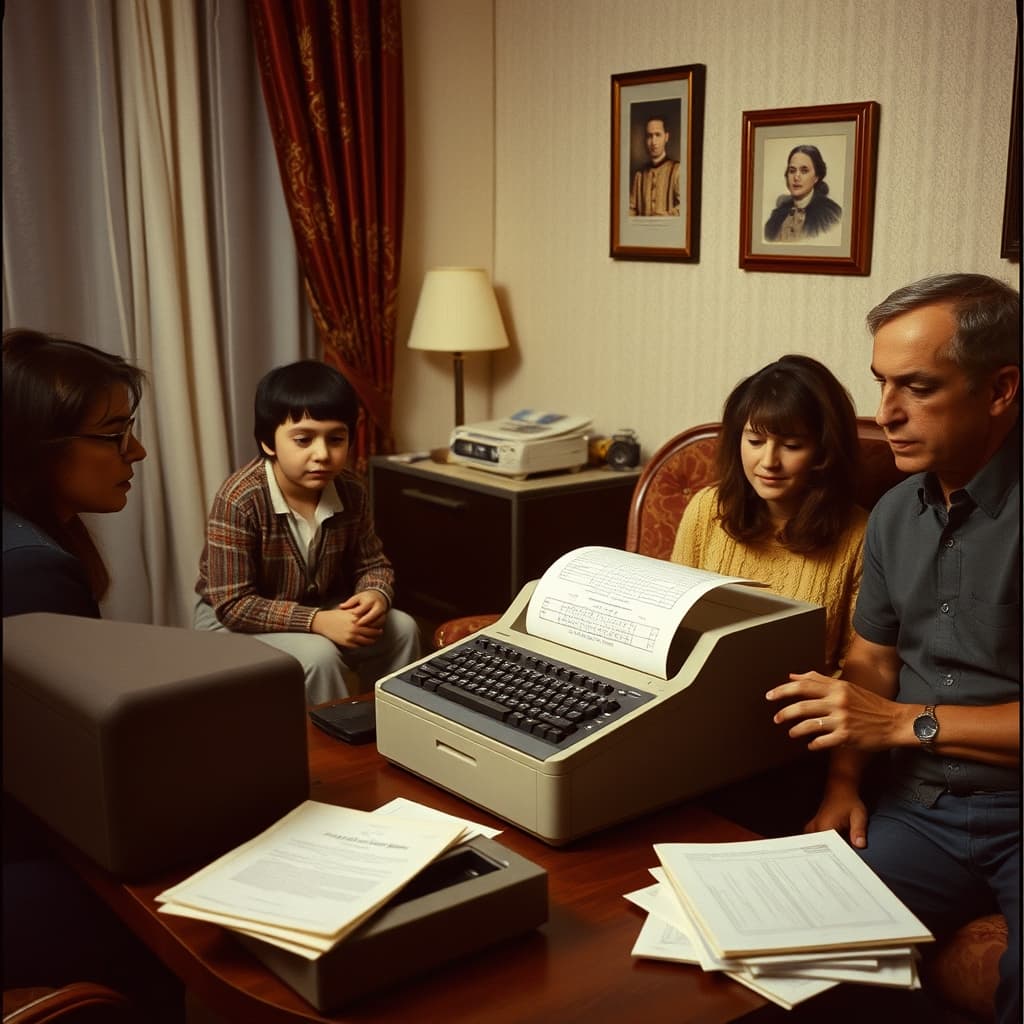
A ribbon printer rarely worked unnoticed. Once a document began, the machine filled a room with repeated impacts, the movement of a print head, and the advance of perforated paper. Family members might gather to watch a school assignment, banner, program listing, or business form appear line by line. The result was ordinary ink on paper, but the noisy process made home computing feel physical and public.
The phrase “ribbon printer” covers several technologies. Typewriters, daisy-wheel printers, dot-matrix machines, calculators, and point-of-sale devices all used inked ribbons in different ways. The familiar continuous paper with removable side perforations belonged especially to many impact printers. An accurate archive identifies model, print mechanism, interface, paper type, and period instead of using one nostalgic label for every machine.
Impact Made the Image
In a dot-matrix printer, small pins struck an inked ribbon against paper, building letters and graphics from patterns of dots. More pins could support finer output, although speed, mode, ribbon condition, and paper affected quality. Daisy-wheel machines formed letter shapes differently and often produced typewriter-like text with limited graphics. Because impact physically pressed the page, these printers could also complete multipart forms.
Continuous stationery fed through tractors engaging holes along both edges. Users aligned the first sheet, adjusted guides, set top-of-form, and watched for skew. A misaligned stack could waste many pages. Perforations allowed sheets and side strips to be removed, creating a distinctive after-print ritual. Children sometimes folded or played with the discarded strips, but moving mechanisms and sharp edges required adult supervision.
The Ribbon Was a Consumable and a Skill
A ribbon cassette carried ink past the print head. With use, output became pale or uneven. Replacing the cassette could stain fingers, and touching internal parts while powered was unsafe. Some users advanced, re-inked, or reused ribbons to save money, with mixed results and potential mess. Manuals specified compatible supplies, cleaning points, and safe procedures; improvised maintenance should be documented without presenting every old shortcut as good practice.
Paper, ribbons, cables, drivers, character sets, and software all had to cooperate. Turkish characters could expose limitations in fonts, code pages, or printer setup. Users learned control sequences, switches, and menu combinations through manuals, computer magazines, dealers, or friends. What looked like simple printing often depended on a small community of informal technical support.
Noise Reshaped the Household
The printer's sound dictated where and when it could run. A late assignment might disturb sleep; a cover or separate room reduced noise but needed ventilation and safe clearance. In small homes, the computer desk shared space with dining, conversation, and television. The entire family knew when a long document was underway. Waiting together gave the page a ceremonial quality that silent modern printing rarely reproduces.
At workplaces, impact printers served invoices, payroll, inventory, banking, tickets, and logs. Reliability and multipart output kept them useful even after quieter technologies arrived. Operators loaded heavy paper boxes, cleared jams, changed ribbons, and separated copies. Their routine labour belongs in technology history alongside processor specifications and famous software.
A Digital Nostalgia Archive can preserve printers, ribbons, cables, sample output, manuals, drivers, software disks, invoices, and oral histories. Old machines should be inspected electrically before operation, and brittle paper handled carefully. The ribbon printer matters because it made digital information audible and material. Every page announced itself through vibration, patience, and a trail of paper that the household could see growing on the floor.