 Eski Pano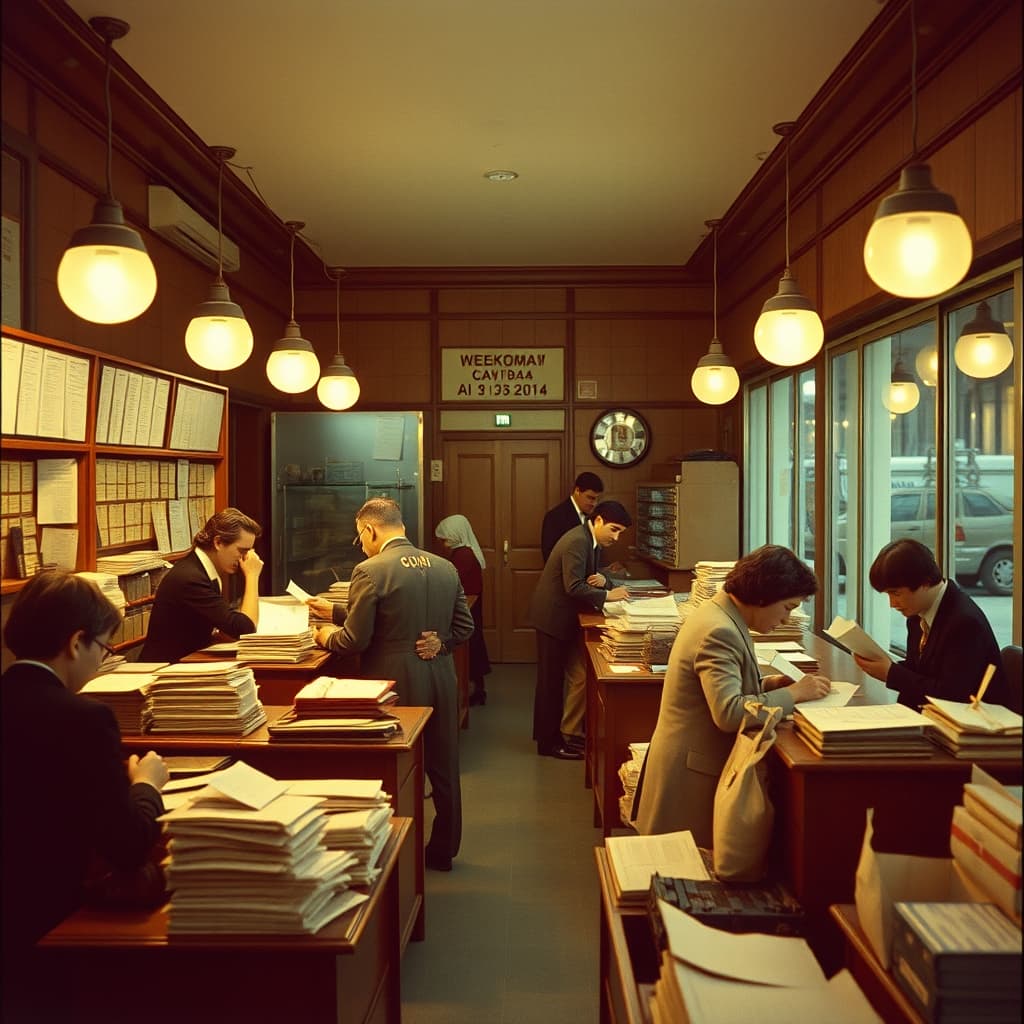
Under street lamps, an old post office could remain busy after nearby shops had begun to close. A traveller searched for the correct window, a family checked an address twice, and sacks waited behind the public counter. The building appeared calm from the pavement, yet letters, telegrams, parcels, and money orders were moving through a timed system. Distance felt smaller not because communication was instant, but because people trusted this chain to carry their words.
Postal services differed by city, decade, and institution. A central office might handle telegraphy, telephone calls, banking functions, and international mail, while a neighbourhood branch offered a narrower range. Opening hours, tariffs, and delivery routes changed. Family memory can merge the counter for a telegram with the window for stamps, so photographs, directories, receipts, and official notices help reconstruct what a particular office actually provided.
The Counter Turned Feeling into Procedure
Sending news required practical decisions. The writer chose paper, fitted emotion into an envelope, copied a complete address, and paid according to service and weight. A telegram compressed a message because each word could affect cost. A parcel demanded wrapping and string strong enough for handling. Clerks checked forms, calculated fees, cancelled stamps, and explained rules. Their procedural work translated private intention into something the network could carry.
Not everyone approached the counter with equal confidence. Literacy, language, disability, money, and familiarity with bureaucracy shaped the experience. A clerk or another customer might help someone complete a form, but assistance could expose private information. Queues brought strangers close to family addresses, financial transfers, and urgent news. Good service therefore depended on patience and discretion as much as speed.
Sorting Continued Out of Sight
After acceptance, items entered a less visible world. Workers date-stamped mail, separated destinations, tied bundles, filled sacks, recorded accountable items, and prepared dispatches for road, rail, sea, or air. Night shifts aligned post with transport schedules. One late connection could delay an entire route. The apparent silence of the office concealed repetitive lifting, close reading, deadline pressure, and responsibility for objects entrusted by strangers.
Delivery completed the journey through local knowledge. Postal workers learned street names, building entrances, businesses, and changes in household occupancy. In districts with incomplete addresses, landmarks and reputation mattered. Weather, dogs, stairs, traffic, and heavy bags affected the route. The romantic figure of the postman should not erase employment conditions, accidents, or the physical strain involved in carrying a neighbourhood's correspondence.
Urgency Had Several Speeds
A postcard could travel without secrecy and invite patient anticipation. Registered mail added proof and responsibility. Telegrams signalled urgency, while money orders moved support between relatives. Public telephones inside some offices offered another speed but still required waiting and connection. These services did not simply replace one another; families selected among cost, reliability, privacy, and emotional importance.
Envelopes and cards preserve handwriting, stamps, postmarks, censor marks, forwarding notes, and damage from travel. They also contain personal data. An archive should obtain permission before publishing addresses or intimate correspondence, and should distinguish a postmark date from the date a letter was written. Removing stamps for display can destroy the relationship between message, route, and envelope.
A Digital Nostalgia Archive can connect letters, telegram forms, scales, bags, uniforms, route maps, counter photographs, and interviews with clerks, sorters, couriers, and customers. The old post office deserves attention as infrastructure rather than a picturesque façade. On nights remembered as cool and bright under street lamps, it made distant people feel reachable through thousands of careful, ordinary acts performed before the morning delivery.