 Eski Pano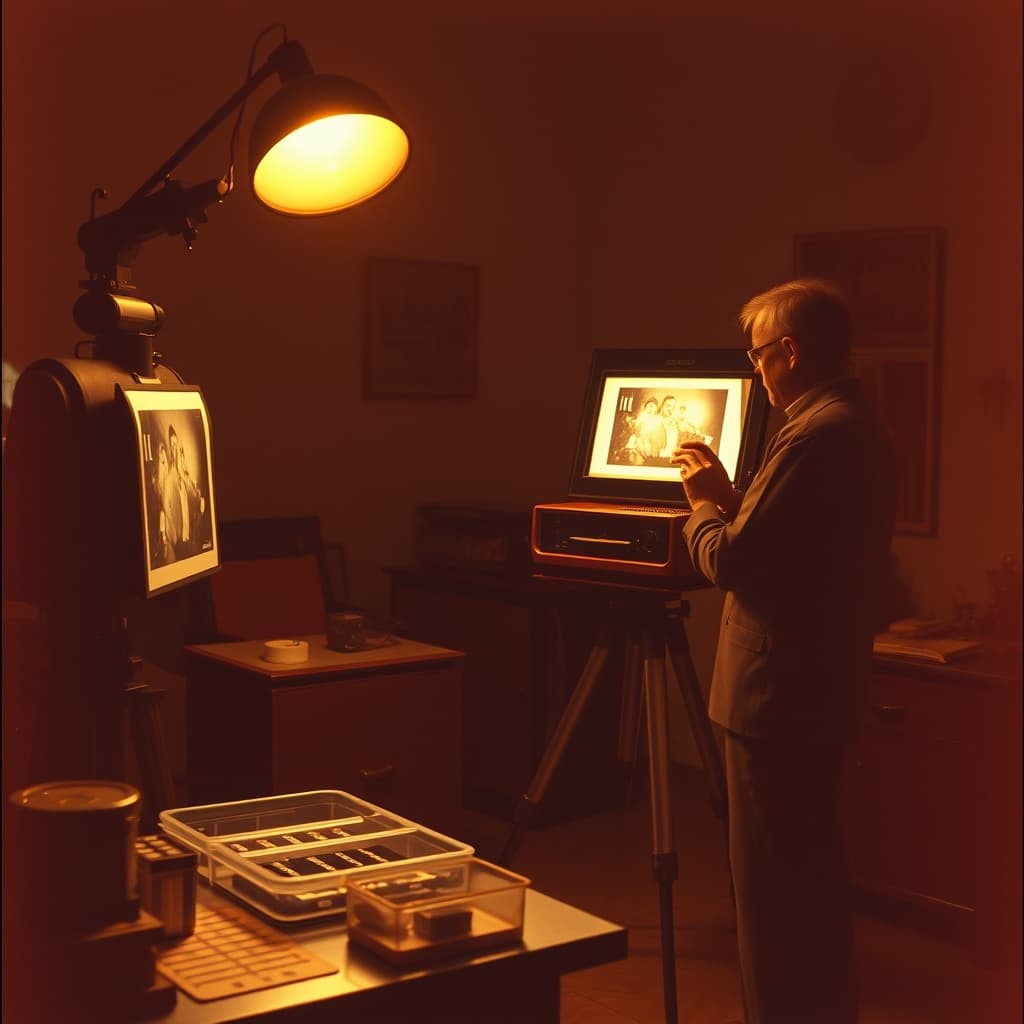
In a darkroom, a photograph did not appear with a click. It emerged through a sequence of choices made under dim safelight: which negative to print, how large to project it, where to crop, how long to expose, and when to lift the paper from each tray. The enlarger stood at the centre like a quiet instrument, turning a small negative into an image whose final form had not yet been decided.
Memories sometimes blend the enlarger's adjustments with the familiar act of turning a rooftop television antenna until a picture cleared. Both involved patient searching for an image, but the mechanisms were different. A photographic enlarger used a lamp, negative carrier, lens, head or bellows adjustment, easel, and focus control. Clarity came from optical alignment and focusing on the projected grain, not from receiving a broadcast signal.
The Negative Became a Projection
The worker placed a developed negative in its carrier, usually with careful attention to dust and orientation. Light passed through the frame and lens onto the baseboard. Raising the enlarger head increased print size but reduced light intensity, changing exposure. The easel held photographic paper flat and defined margins. Even before chemicals were involved, composition could change through cropping, rotation, and the decision to include or exclude an edge.
Precise focus required more than judging the scene from a distance. A grain focuser could magnify the projected texture of the negative, helping the printer adjust the lens or head. Test strips then compared exposure times on small sections of paper. This saved material and revealed whether shadows and highlights would separate. Notes about aperture, height, filter, and seconds allowed the result to be repeated or deliberately changed.
Hands Shaped Light During Exposure
Dodging and burning altered local brightness by holding back light or adding exposure to selected areas. Simple cards, wires, and shaped tools moved continuously to avoid hard edges. These gestures demonstrate that a darkroom print was never a neutral copy of a negative. It was an interpretation. Ethical cataloguing should distinguish between what the camera recorded and how the printer later framed, brightened, darkened, or retouched the image.
After exposure, paper passed through developer, stop bath, fixer, and washing according to the process. The first visible image in the developer tray felt dramatic, but chemistry and timing demanded discipline. Inadequate fixing or washing could cause staining and deterioration. Thermometers, timers, tongs, running water, and clean trays were not decorative accessories; they controlled consistency and the future life of the print.
The Ritual Included Risk and Waste
Darkrooms needed ventilation, labelled containers, gloves where appropriate, and separation of food from chemicals. Users had to consult product guidance rather than assume every historic formula was harmless. Spent chemistry, particularly silver-bearing fixer, should not be poured away casually. Modern archival practice considers safe collection, local disposal rules, and the health of workers whose repeated exposure was once too easily ignored.
The room also depended on electricity, water, blackout materials, and affordable supplies. Home enthusiasts improvised in bathrooms or cupboards, while studios and newspaper labs had specialised equipment and production schedules. Access differed by income, training, gender, workplace, and region. Celebrating craft should include lab assistants and print workers, not only the person credited with taking the photograph.
A Digital Nostalgia Archive can connect an enlarger to its manuals, lenses, timers, test strips, marked negatives, contact sheets, final prints, and the printer's notes. Equipment should be photographed before dismantling, and chemical residues handled professionally. The ritual remains compelling because the image was built through attention. In the quiet interval between projection and the developer tray, photography became not just a captured moment but a considered physical object.