 Eski Pano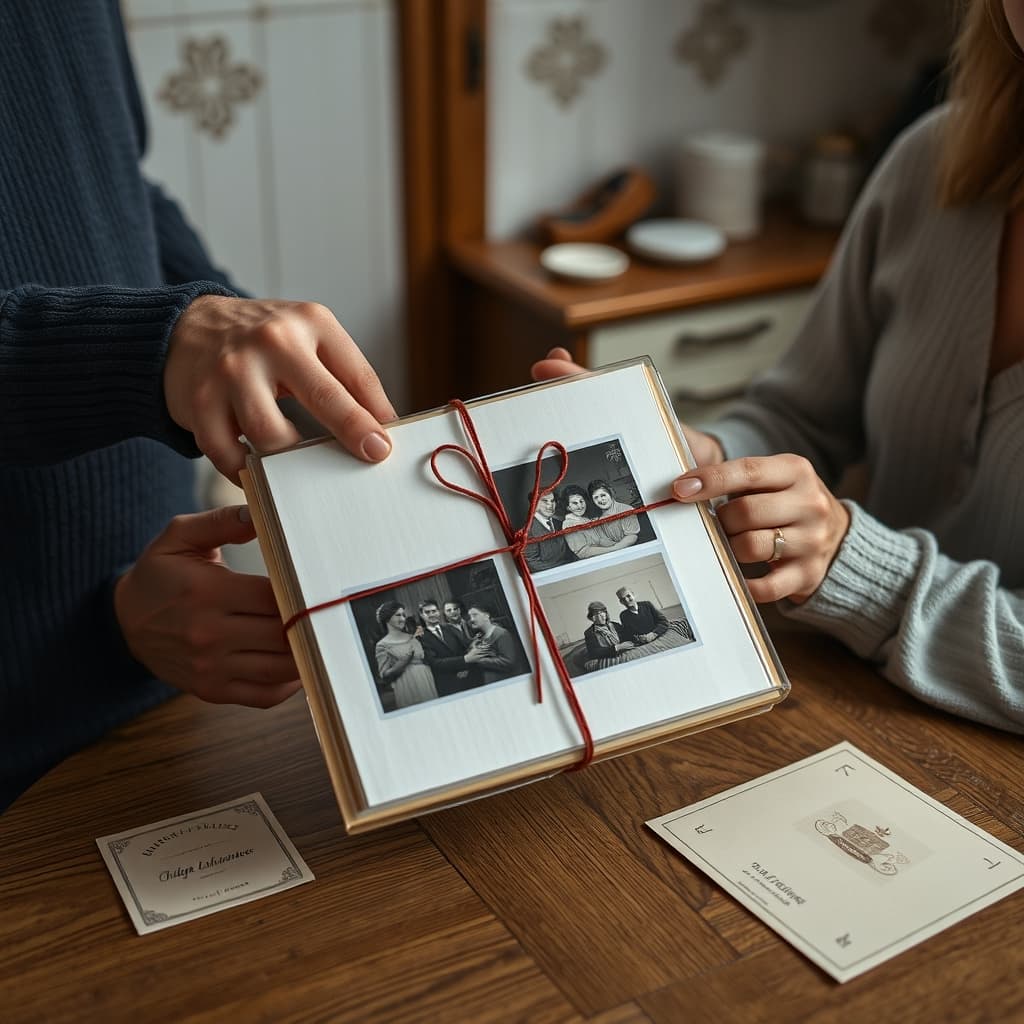
A ribbon-tied photograph album becomes a family legacy not simply because it is old, but because someone accepts responsibility for keeping it available to others. The album may have rested for years on a kitchen shelf, close enough to open during conversation. When it passes to another generation, a practical question appears: who will hold the original, and how will relatives who do not hold it remain connected to its pages?
Inheritance can scatter photographs as easily as it preserves them. One person may value the album as a complete object, another may want a portrait of a parent, and another may know names that no one else can supply. Treating custody as shared stewardship rather than silent possession helps protect both the material album and the information distributed across the family.
The Handover Needs Its Own Record
The moment an album changes hands should be documented with the date, previous keeper, new keeper and known family description. This is not proof of who originally assembled it. It is a custody record that explains where the object travelled. A simple inventory can note the cover, ribbon, page count, loose prints and existing damage without assigning unsupported dates.
The ribbon belongs in that inventory. It may be original, a later repair or a practical way of holding warped covers together. Its knot, wear and attachment should be photographed before it is loosened. Tightening it to make the album look neat can strain the binding; replacing it without keeping the old piece can remove evidence.
Sharing Does Not Require Dividing the Pages
Relatives may understandably request photographs, especially when only one print survives. Removing mounted images can tear paper, disturb captions and break the album’s sequence. A high-quality copy is often a safer first response. The digital file should identify the album and page, while the family records who received it and whether public sharing is permitted.
Copies also allow distant relatives to contribute names and corrections. Their information should be added to a separate catalogue rather than written immediately on the page. Conflicting identifications can remain side by side with the name of each contributor and the date supplied. Agreement may come later; uncertainty is more honest than a forced answer.
The Kitchen Shelf Was Part of the Story, Not the Storage Plan
Remembering the album beside cups, jars or folded cloth explains how it entered family conversation. It does not mean the object should remain near cooking heat, grease, water or changing humidity. A stable, clean and dark enclosure elsewhere can protect it while a reference copy stays accessible for conversation.
Moving the album should not erase its domestic context. Photograph the shelf and record who remembers opening it there. If the location has changed, say so. The archive can preserve the relationship between object and room without exposing vulnerable paper and photographs to the conditions of that room.
Access Rules Protect People as Well as Paper
A family album may include children, grief, migration, medical circumstances, military service or relatives who prefer privacy. Ownership of the physical album does not automatically settle consent for online publication. The steward should distinguish viewing within the family, limited research access and open digital display.
Succession also deserves planning. A note can name who should be contacted if the current keeper can no longer care for the album and where preservation files are stored. Multiple backups reduce the risk of losing digital copies, but passwords, private notes and personal data need controlled access.
The ribbon-tied album becomes an inheritance through decisions repeated over time: to keep the pages together, invite another voice, make a copy instead of removing an original and pass custody with an explanation. Its quiet splendour lies not only in the photographs. It lies in a family learning that memory can be shared without making every image public and preserved without turning one keeper into its only reader.