 Eski Pano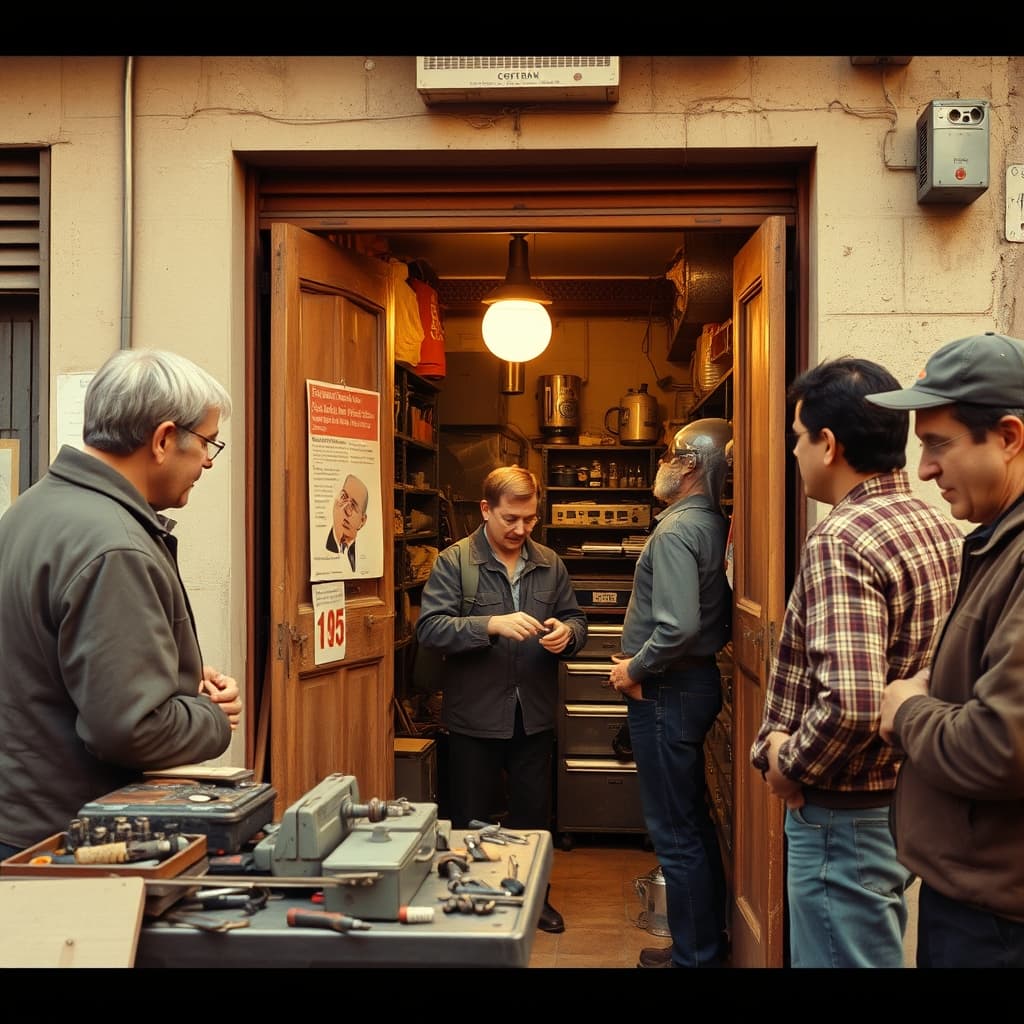
On a busy repairers’ street, customers did not arrive carrying only broken objects. They also brought descriptions: a clock stopped after warming, a radio crackled when its control moved, a bicycle clicked under weight, or a fan changed tone at one speed. The street’s practical culture taught people that a useful account of failure included when, where and under what conditions it appeared.
This vocabulary did not make every customer a technician, and a remembered symptom should never be treated as a diagnosis. Its value lay in improving the first conversation at the threshold. During a summer evening, when workshop doors stayed open and neighbours paused nearby, the language of faults could travel farther than the object being repaired.
A Sound Became Evidence Only After Questions
“It makes a noise” was a beginning. A repairer might ask whether the sound was continuous, related to movement, present when cold or accompanied by smell or heat. The answers narrowed the inspection without proving a cause. Demonstrating a fault could be useful, but unsafe electrical, pressurised, fuelled or moving equipment should not be powered merely to reproduce a memory.
Customers learned to notice sequences. What happened immediately before failure? Had the object been dropped, cleaned, stored or repaired elsewhere? Did the problem disappear and return? These questions encouraged observation while leaving measurement and dismantling to appropriate expertise.
Previous Repairs Travelled with the Object
A replaced screw, stitched seam, solder mark or handwritten label could tell the next workshop that someone had intervened. Good practice required the new repairer to distinguish an earlier modification from original construction and to explain when it limited a safe repair. Blaming an unknown predecessor without evidence did not build trust.
The customer’s account also mattered. An object described as “never opened” might contain old work unknown to the current owner. Instead of treating this as deception, the repairer could document what was found. Household objects often outlive the memory of every service they received.
Open Doorways Made Diagnosis Public
Narrow workshops frequently placed benches close to the street. A neighbour waiting outside could hear the questions, watch a cover being removed or learn the name of a part. This visibility made skill legible, but it also created boundaries. Private data, valuables and sensitive customer conversations should not become public entertainment.
Summer evenings extended social time around the shops without guaranteeing easy working conditions. Heat, dust, traffic and long hours could make concentration harder. The archive should record labour and ventilation conditions as well as the friendly exchanges remembered at the doorway.
Parts Runners Connected Several Kinds of Knowledge
Diagnosis and repair were often separated by the search for a compatible component or material. A nearby supplier, another specialist or an apprentice carrying a sample could connect the bench to the rest of the street. Compatibility had to be established through dimensions, ratings, material or model information, not visual resemblance alone.
That network helped customers understand why a repair might take time. Waiting was not always neglect; it could reflect testing, parts availability or the need for another craft. Equally, reputation did not replace a clear estimate, consent for additional work and an honest statement when repair was unsafe or uneconomical.
Archive the Conversation Before the Solution
Invoices and finished objects show outcomes, but intake notes reveal how problems were described. A digital archive can preserve anonymised fault phrases, sketches, service cards, parts envelopes and oral histories from customers, technicians and suppliers. Personal addresses, telephone numbers and device data must be protected.
Repairers’ Street strengthened neighbourhood ties partly by making technical uncertainty discussable. A fault moved from vague frustration to a sequence of observations, questions and limits. The most durable lesson was not that every object could be saved. It was that careful description allowed people to seek the right door, understand the next step and recognise the difference between confident craft and an unsupported promise.