 Eski Pano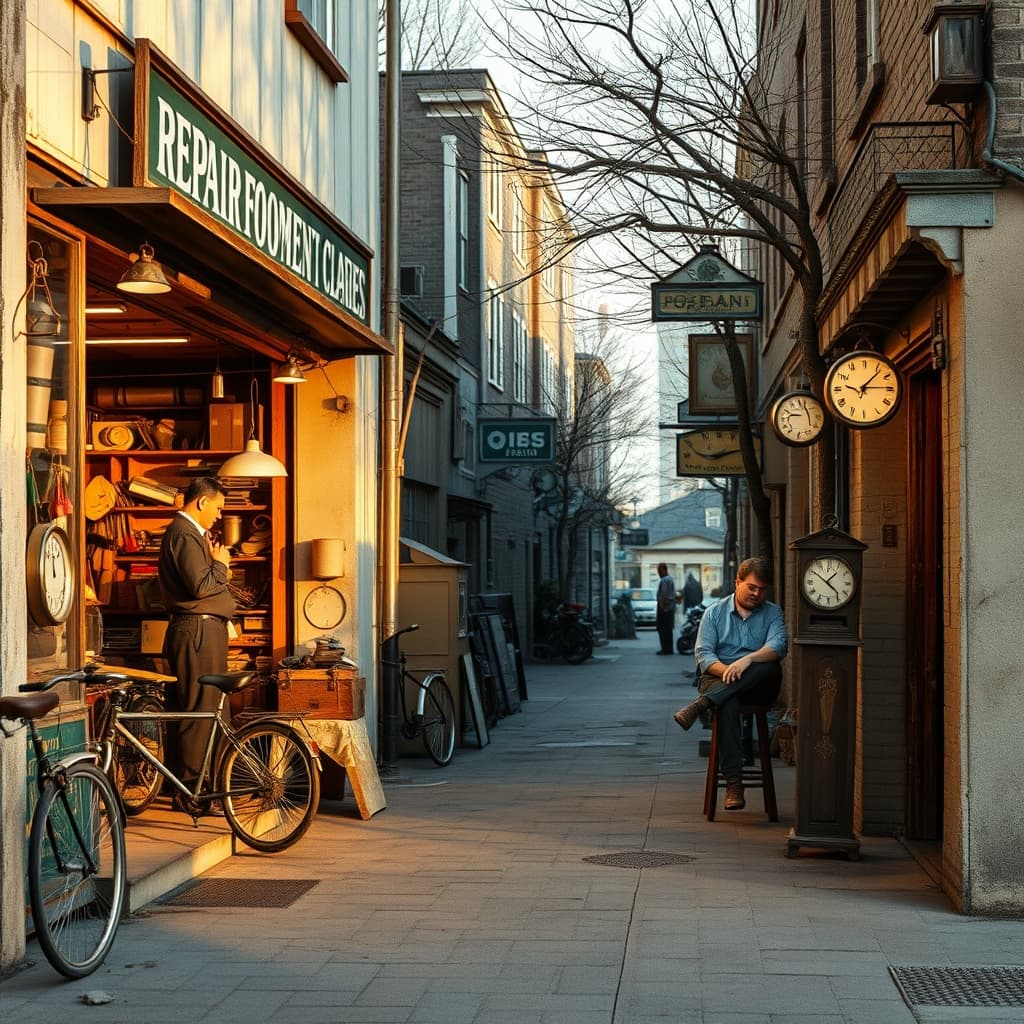
At the beginning of spring, a street lined with repair shops could become busier before the day had fully warmed. Workshop doors opened for air and light, stools moved towards the pavement, and objects waiting through winter appeared for attention: bicycles, household appliances, radios, clocks, metal fittings, or tools, depending on the trades present. The street’s familiar crowd was organised by work, but its open fronts made that work visible to neighbours and passers-by.
There was no single kind of repairmen’s street. Some concentrated related crafts; others brought mechanics, electricians, metalworkers, cobblers, and small suppliers into close proximity. Customers learned which doorway belonged to which problem and which craftsperson would decline work outside their expertise. Reputation circulated through completed repairs, fair explanations, waiting time, and the willingness to say when replacement was safer or more economical.
Spring Brought a Different Queue of Objects
Seasonal change altered demand. Bicycles were brought out, fans and cooling equipment were checked, winter devices were cleaned before storage, and home maintenance generated broken handles, hinges, cables, or fittings. The exact pattern varied with place and period, but the principle remained: changes in household routine reached the workshop as material problems. A pavement full of waiting objects became a practical record of the neighbourhood preparing for another season.
Repair rarely followed a perfectly predictable schedule. A seized screw, hidden break, unavailable part, or earlier urgent job could delay the queue. Customers returned to ask, watched a test, or waited on a chair near the entrance. Conversation grew around this uncertainty. People exchanged news and recommendations, but the shop remained a workplace. Noise, dust, solvents, heat, standing hours, and financial pressure should not disappear beneath the sociable memory.
Tools and Knowledge Crossed Doorways
Neighbouring workshops sometimes lent a tool, recommended a specialist, or helped move a heavy item. A worker might recognise a sound from the next shop and offer a suggestion without taking over the repair. This cooperation did not eliminate competition. It worked because crafts had boundaries and because repeated proximity made reliability visible. Apprentices learned not only techniques but also where to obtain a part, how to speak to a customer, and when to ask another craft for help.
The street felt like a shared home only in a limited, metaphorical sense. Doors remained commercial thresholds, tools belonged to working people, and customers did not have unrestricted access. Familiarity created trust, yet disputes over price, delay, responsibility, and unsuccessful repair were real. Neighbourhood culture was strengthened when expectations were explained, mistakes addressed, and boundaries respected—not when work was treated as informal favour.
Repair Gave the Street a Memory of Use
Each returned object carried wear from a household, while each repair added another material layer: solder, stitching, a new cable, straightened metal, replaced bearing, or cleaned contact. Documenting those interventions helps distinguish maintenance from myth. Old techniques are not automatically safe for current electrical or mechanical equipment; qualified assessment and suitable parts remain essential.
For a Digital Nostalgia Archive, the spring crowd on the repairmen’s street matters because it joins urban space to skilled maintenance. The street became familiar through repetition: an object arrived, a problem was described, work was negotiated, and someone returned to collect it. Open workshop doors made the neighbourhood’s dependence on repair visible. The warmth remembered there came not from pretending the street was literally a family, but from recognising a network of labour through which people kept useful things—and everyday relationships—in circulation.