 Eski Pano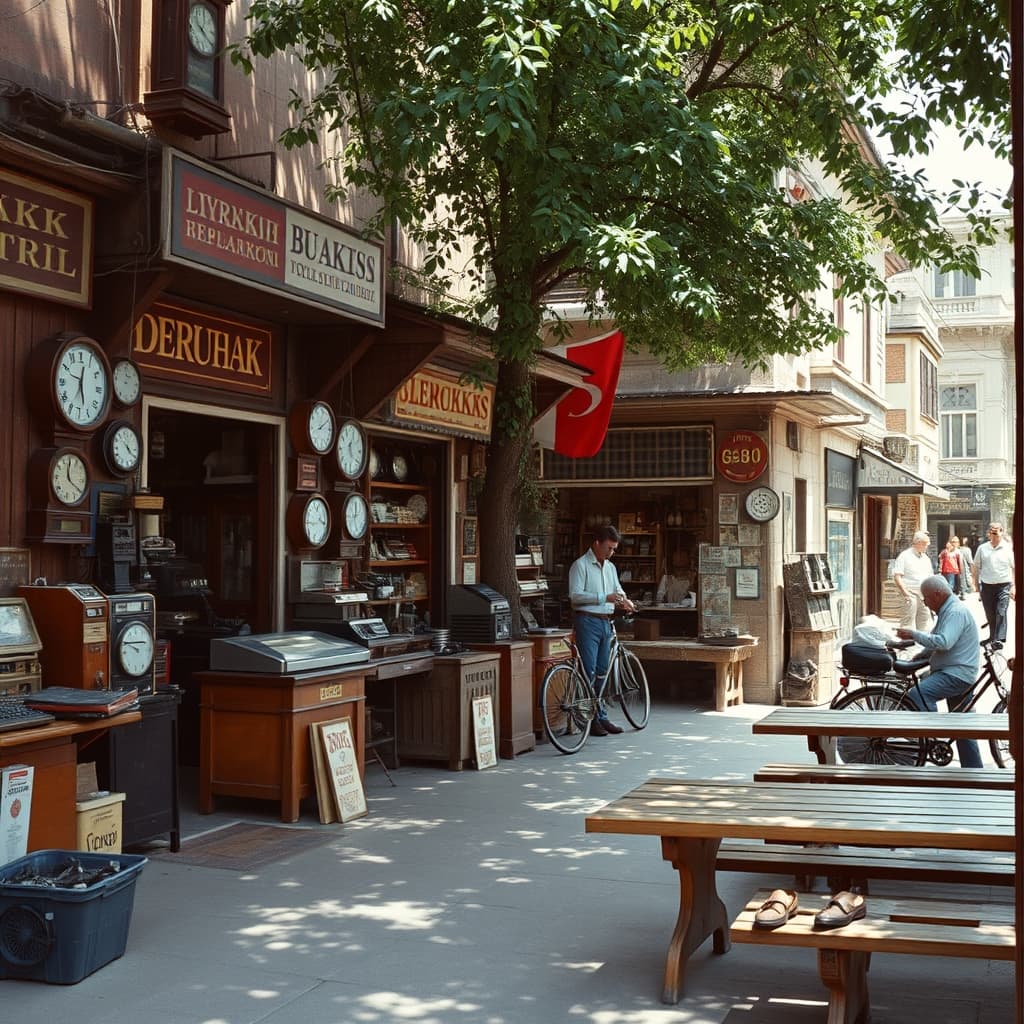
A repairers' street could remain busy even when the rest of the district slowed for a holiday. Radios, shoes, clocks, bicycles, appliances, locks, and motors moved between narrow workshops while customers carried faults from one specialist to another. Trust grew from repetition: a diagnosis was explained, a part was found nearby, and an object returned to use instead of entering the waste stream.
Such streets differed by city, trade, period, and zoning. Some formed around a market, industrial quarter, station, or parts distributor. Workshops could be formal businesses, family enterprises, apprenticeships, or informal stalls. A romantic image of unified craft should be checked against licences, leases, directories, trade associations, invoices, and worker testimony.
Specialisation Created a Network
One repairer understood clock movements, another electric motors, another leather stitching or radio circuits. They referred jobs, borrowed tools, exchanged knowledge, and directed customers toward parts. Proximity reduced search time and made comparison possible. The street functioned as a distributed workshop whose members could cooperate and compete at once.
Diagnosis was the core skill. A visible symptom did not always reveal the cause. Technicians listened, measured, dismantled selectively, and judged whether repair was safe and economical. Honest service included saying when a part was unavailable, a device was hazardous, or replacement made more sense. Trust was strengthened by limits, not only successful fixes.
Price and Responsibility Were Negotiated
Customers asked about labour, parts, time, guarantee, and whether a used component would be fitted. Written estimates and receipts protected both sides, but informal agreements were common. Familiarity could allow delayed payment or quick help, while also making it difficult to challenge poor work. Clear terms, consent before extra repairs, and documented warranties improve the relationship.
Apprentices swept, observed, fetched parts, and gradually handled tools. Apprenticeship could transmit valuable knowledge, but young workers needed schooling, fair conditions, protective equipment, and freedom from hazardous tasks. Skill should not be used to romanticise child labour, unpaid work, fumes, heavy lifting, or electrical exposure.
Repair Had Environmental and Safety Limits
Extending product life can reduce waste and preserve embodied materials. Workshops also generated oils, solvents, batteries, solder residues, broken electronics, dust, and unusable parts. Safe ventilation, fire control, electrical isolation, waste separation, and authorised recycling are essential. A crowded bench is not automatically evidence of responsible reuse.
Modern sealed devices, proprietary software, unavailable components, high rents, and redevelopment challenge repair districts. Right-to-repair policies, parts access, documentation, and training can help, while consumer safety and data privacy remain important. A phone or computer handed over for repair may contain personal information and requires explicit protection.
Holiday quiet offered another test of the street's reliability. A rotating duty shop, a neighbour who knew which shutter to knock on, or a repairer willing to examine an urgent fault could turn commercial familiarity into local reassurance. These arrangements were never universal, yet they show how opening hours, emergency help, and word-of-mouth reputation belonged to the practical infrastructure of the district.
A Digital Nostalgia Archive can connect shop signs, directories, tools, parts drawers, invoices, warranty cards, apprenticeship records, and interviews with repairers and customers. The repairers' street inspired trust because no single person needed to know everything. The neighbourhood held a network of specialised judgement, and each repaired object carried evidence that practical knowledge was shared across several doors.