 Eski Pano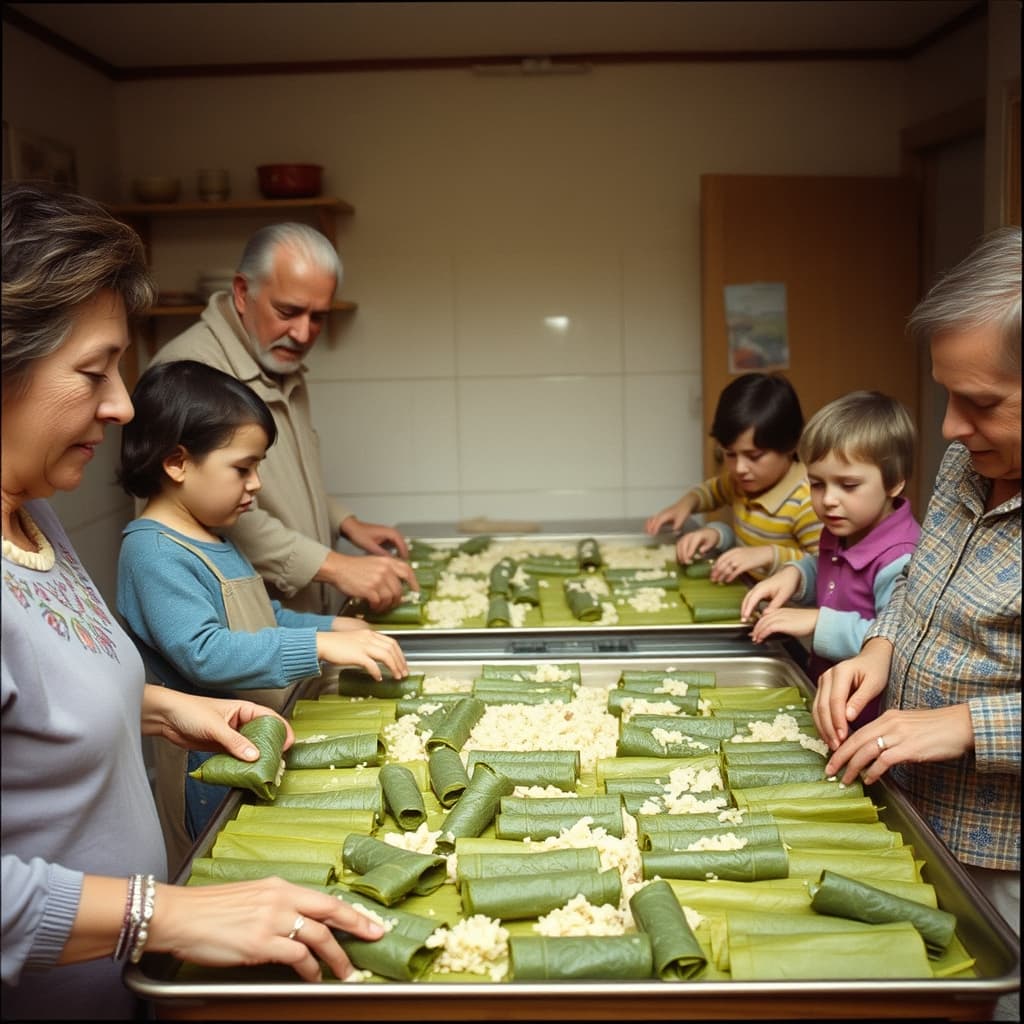
Before a holiday table filled with guests, stuffed vine leaves often began as a quieter circle around a tray. Leaves were separated, filling was portioned, and hands developed a rhythm of fold, tuck, and roll. Conversation moved faster than the finished pieces. By the time the pot was packed, the dish had already gathered several generations through shared work.
There is no single universal sarma. Vine leaves may be fresh, blanched, brined, or preserved. Fillings can include rice, onions, herbs, spices, currants, pine nuts, minced meat, bulgur, or regional ingredients. Some versions are served cool with olive oil; others hot with yogurt or sauce. Names and methods vary. A culinary archive should record the family's actual recipe and location.
The Leaf Set the Conditions
Tender leaves were chosen for flexibility and manageable veins. Fresh leaves needed identification, clean sourcing, washing, and appropriate blanching. Brined leaves could require rinsing or soaking to reduce salt according to the recipe. Foraged leaves may carry pesticide, roadside, animal, or environmental contamination; local expert guidance and known growing practices are essential.
Torn leaves were patched or used to line the pot. Thick stems were trimmed without cutting too deeply. Waste reduction came from practical knowledge rather than forcing every damaged leaf into service. Mouldy, spoiled, or suspicious preserved leaves should be discarded. Historical habit is not a substitute for safe ingredients.
Rolling Distributed Skill
A measured portion allowed the rice to expand without bursting the parcel. Tightness, size, and folding reflected household preference. Experienced rollers worked quickly while newcomers produced uneven shapes. Teasing could be affectionate, but the table should remain a place where knowledge is taught rather than guarded. Children can assist only with clean, safe, age-appropriate tasks.
Shared rolling did not make labour equal automatically. Someone purchased ingredients, prepared onions and herbs, washed leaves, managed raw meat where used, arranged the pot, watched cooking, served, and cleaned. Women often carried planning and the longest hours. Recording names and tasks prevents the final platter from appearing to have assembled itself.
The Pot Needed Food-Safety Discipline
Rice and meat fillings require careful temperature control. Raw meat must remain separated from ready-to-eat ingredients and cook thoroughly. Cooked sarma should not sit for long at unsafe room temperature; leftovers need prompt cooling and refrigeration. Large tightly packed pots cool slowly. Current local guidance should determine storage and reheating.
Allergens may include pine nuts, other nuts, dairy in accompaniments, or ingredients hidden in stock and spice mixtures. Guests need clear information. Salt can be high when brined leaves and seasoned filling combine, so rinsing and recipe adjustment matter for people following medical advice. Hospitality includes making the dish understandable and accessible, not testing whether guests know the recipe.
A Digital Nostalgia Archive can preserve recipe notebooks, leaf jars, trays, pots, market receipts, holiday photographs, and interviews with growers and cooks. Old preserved food should not be tasted as heritage. Stuffed vine leaves gathered the family because the meal began before anyone sat at the formal table. Every roll contained a repeated hand movement, a local choice, and time contributed to a shared celebration.