 Eski Pano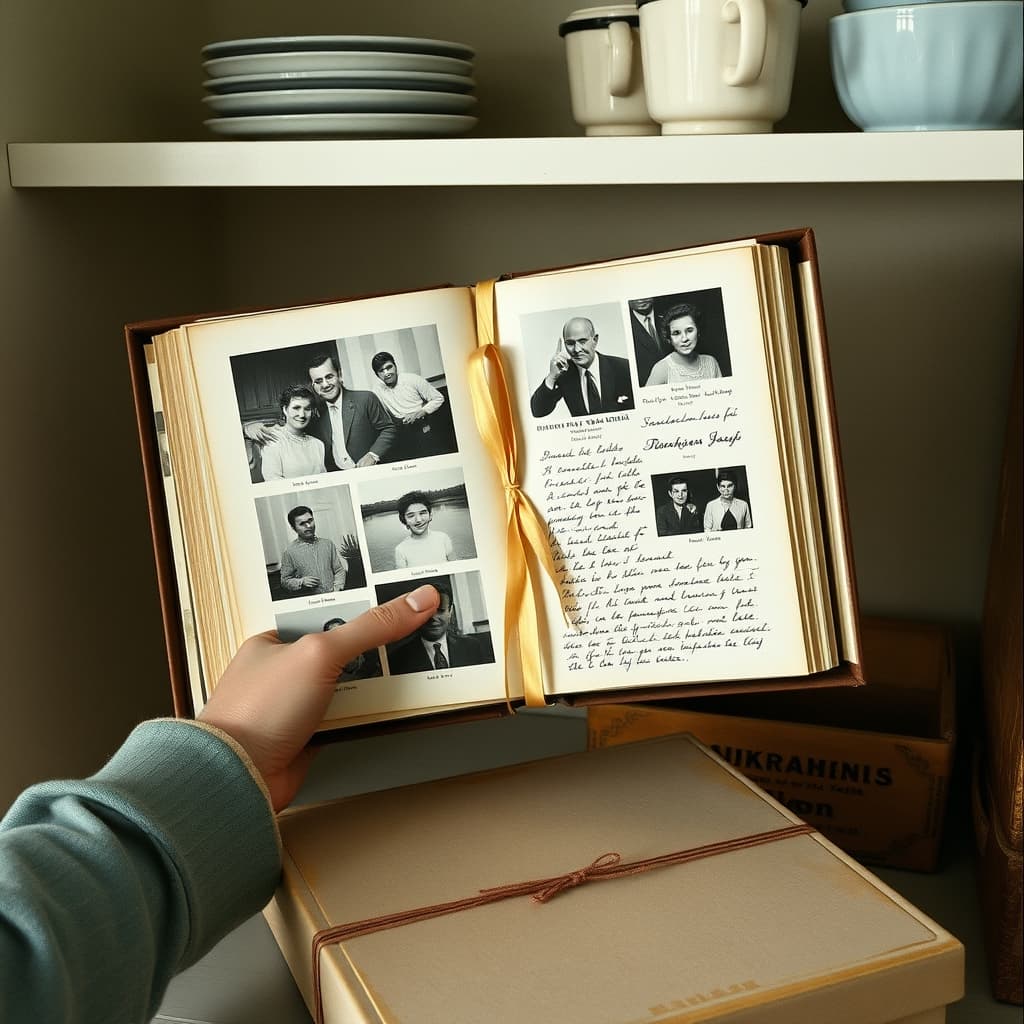
A ribbon-tied photograph album stored on a kitchen shelf could hold a quiet magnificence behind an ordinary door. The ribbon kept covers together, while inside, portraits, holidays, school days, and absent relatives formed a sequence chosen by someone in the family. The album was not a neutral container. Its order, gaps, captions, and repeated handling shaped how later generations learned the household story.
Albums vary in paper, card, binding, tissue interleaving, corner mounts, adhesive, plastic sleeves, and photographic process. Some ribbons were decorative from the beginning; others replaced a broken clasp or spine. Materials age differently and can damage one another. A date on a photograph, album page, or caption may refer to separate moments and should not be merged without evidence.
Arrangement Was a Form of Editing
The person assembling the album decided which print came first, whose name was written, and which event deserved more pages. Formal portraits could sit beside casual snapshots. A missing rectangle, torn corner, or empty mount might indicate a photograph lent, removed after conflict, copied for another relative, or simply lost. The gap is evidence, but its reason should not be invented.
Captions identify people and places while revealing handwriting, language, kinship terms, and later correction. Different inks can show that several generations added information. Writing directly on a photograph, using pressure-sensitive labels, or adding modern tape may cause damage. New identification is safer in archival notes linked to page and image numbers.
The Kitchen Shelf Was Convenient but Risky
A central shelf made the album easy to show during tea or family conversation. Kitchens also produce humidity, heat, grease, food particles, cleaning vapours, and pest attraction. These conditions accelerate staining, mould, paper distortion, adhesive failure, and photograph deterioration. The album should be moved to a stable, clean, dry, dark location rather than preserved in the exact harmful environment for the sake of atmosphere.
Mouldy albums require isolation and professional advice. Loose photographs should not be forced back under brittle corners. Stuck prints, magnetic albums, degraded plastic, and pressure-sensitive adhesive need conservator assessment. Household ironing, soaking, peeling, or solvent use can permanently destroy image layers and inscriptions.
Digitisation Needs Context
Scanning individual photographs is useful, but page-level images preserve arrangement, ribbon, captions, and gaps. Files need descriptive names, dates, people, source album, page number, colour management, backups, and migration. Digital copies do not replace physical preservation. They create another collection requiring care.
Privacy is central. Family albums may contain children, medical events, grief, military service, migration, or people who do not want public identification. Consent and appropriate access levels matter. Facial recognition should not be used casually to turn uncertain identities into public claims. A relative's suggestion can be recorded as provisional.
A Digital Nostalgia Archive can connect the album to studio marks, negatives, letters, diaries, family trees, oral histories, and the maker of the arrangement. The ribbon-tied album carries craft and patience because memory was physically edited page by page. Preserving it means keeping photographs, sequence, gaps, and voices together while moving the object away from the kitchen hazards that once surrounded its most affectionate viewings.