 Eski Pano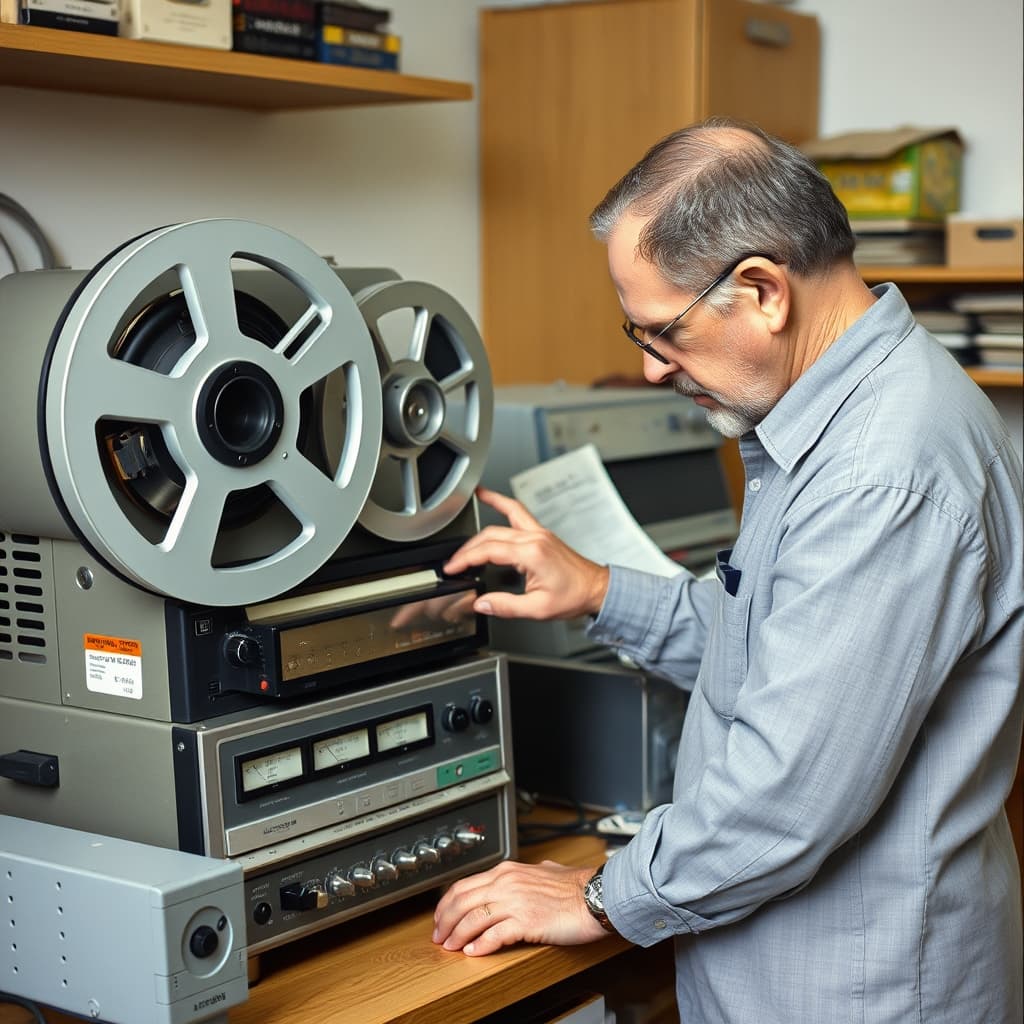
A reel-to-reel recorder on a repair bench is more than a machine waiting to play old sound. Its tape path, worn controls, replaced screws, dust pattern, and handwritten service marks reveal how recording was maintained over decades. A second life begins with diagnosis, because switching on an unknown recorder can damage both the equipment and the only surviving tape placed upon it.
Open-reel machines differ in reel size, tape width, speed, track format, head arrangement, equalisation, mains voltage, connectors, and intended use. Domestic recorders, studio decks, language-lab machines, field units, and data equipment may look related while being incompatible. Model and serial numbers, manuals, circuit diagrams, labels, and associated tapes should establish identity before repair.
The Tape Path Is a Mechanical System
Supply reel, guides, tension arms, heads, capstan, pinch roller, take-up reel, brakes, clutches, belts, and motors must work together. Hardened rubber, stretched belts, dried grease, worn bearings, dirty heads, misaligned guides, weak brakes, or incorrect reel tension can scrape, stretch, spill, or snap tape. Turning controls by force or applying household oil can worsen damage.
Playback speed and head alignment affect pitch, timing, clarity, and channel balance. A machine may run but still reproduce inaccurately. Adjustment needs reference tapes, appropriate instruments, service information, and trained judgement. Randomly changing azimuth to improve one recording can make the deck wrong for others and erase evidence of how a tape was originally recorded.
Electrical Restoration Comes before Power
Old mains wiring, capacitors, transformers, switches, fuses, rectifiers, batteries, and insulation may fail dangerously. Some components retain lethal voltage after unplugging, and metal chassis equipment can become live. Unknown devices should not be connected through improvised adaptors or energised for curiosity. A qualified technician should inspect, test, document, and repair them with correct safety procedures.
Replacement parts involve choices. A new belt may restore speed, while a substituted capacitor, modified socket, or modern power supply alters originality. Repair notes should record date, technician, symptom, measurement, part specification, removed components, reversible changes, and photographs. Keeping failed original parts when safe can support later research.
The Tape Must Be Assessed Separately
Open-reel tape can suffer mould, broken leaders, edge damage, poor winding, vinegar syndrome in acetate bases, binder deterioration, lubricant loss, print-through, stretching, and earlier splices. Smell, residue, squeal, powder, sticky surfaces, or visible growth demand specialist assessment. Mouldy tape should be isolated and not played in a domestic room where spores can spread.
Baking is a specialised treatment appropriate only for certain tape formulations and conditions; it is not a general household cure. Solvents, wipes, heat, winding force, and cleaning methods must match the carrier and binder. A valuable recording should never be used as the first test of a restored deck. A suitable expendable tape and calibration material come first.
Digitisation records machine, speed, track format, equalisation, connections, converter, file format, levels, operator, date, interventions, and audible defects. The archive preserves an unedited transfer alongside any cleaned listening copy. Copyright, performers' rights, private speech, children, medical information, and family conflict may require consent or restricted access.
A Digital Nostalgia Archive can connect recorder, reels, boxes, service manuals, invoices, spare parts, recording notes, photographs, and interviews with technicians and listeners. The repair bench gives analogue sound a second life only when it respects evidence. Successful restoration is not the loudest playback; it is a documented balance of mechanical accuracy, electrical safety, tape conservation, reversible decisions, metadata, and ethical access.