 Eski Pano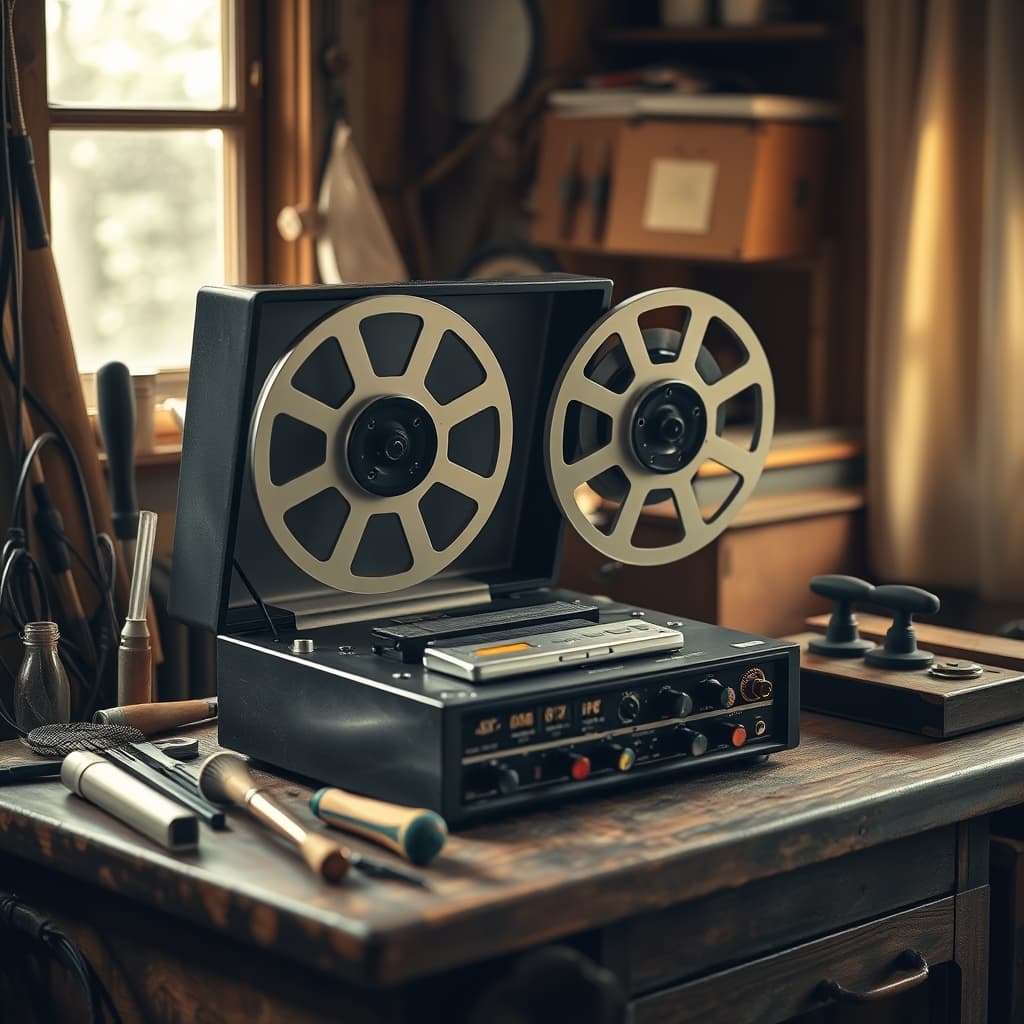
A reel-to-reel recorder asked its user to understand movement. Before any voice or music could be heard, tape had to travel from one reel to the other through a precise path of guides and rollers. Threading it was a physical introduction to the recording: fingertips handled the thin strip, eyes checked its direction, and the controls were approached in sequence rather than all at once. Listening began before sound. It began with preparing a machine whose operation remained visible.
That visibility helped give the recorder a ceremonial quality in homes, clubs, schools, and workplaces. A family recording required people to gather near the microphone and become aware of their own voices. Music copied from another source demanded timing and attention. Rewinding did not instantly return the listener to a chosen moment; the reels spun while everyone waited. The machine made duration tangible, and mistakes—an abrupt stop, a tangled section, a level set badly—became part of learning how recorded sound was made.
Threading Tape Was Part Of Listening
Magnetic tape was both a carrier of memory and a vulnerable material. It could collect dust, crease, lose tension, or suffer from careless storage. Users learned small habits that protected it: returning reels to their boxes, keeping hands away from sensitive surfaces, and watching how tape settled during playback. These routines varied between households and devices, but they shared an important principle. A recording was not an invisible file. It occupied space and required maintenance.
The same material quality gave recordings a distinctive domestic presence. Reels, handwritten notes, cables, adapters, and microphones accumulated around the machine. Identifying a recording might depend on a brief label or on someone remembering which reel contained a wedding speech, a child’s voice, a radio programme, or a carefully selected sequence of songs. The archive was imperfect and personal. Its order reflected the person who had made it, not a standard menu designed by software.
Repair Benches Kept Sound In Circulation
When the machine slowed, distorted sound, refused to turn, or developed an intermittent connection, a repair shop became part of its story. The technician did more than replace a mysterious broken part. Diagnosis often began with observation: listening to the motor, examining the tape path, cleaning contact points, checking belts and moving components, and separating an electrical problem from a mechanical one. The work rewarded patience because several small faults could produce a similar symptom.
Repair shops also held practical knowledge that rarely appeared in family photographs. Drawers contained salvaged components; shelves held machines waiting for attention; a familiar model might provide a part for another. This culture extended the useful life of expensive equipment and gave owners a reason to return rather than discard. It was not always economical or successful, and nostalgia should not hide the frustration of unavailable parts or repeated faults. Yet the attempt itself reveals a different relationship with technology: ownership included responsibility for upkeep.
Digital audio has made recording easier to duplicate, search, and share, but the reel-to-reel recorder still clarifies something about listening. Sound once arrived through an apparatus whose limits could be seen and heard. The gap between pressing a control and receiving the result encouraged attention to process. Preserving these machines today is therefore not only about admiring analogue design. It is about documenting the hands, workshop skills, household organisation, and patient listening that allowed a fragile strip of tape to carry voices across time.