 Eski Pano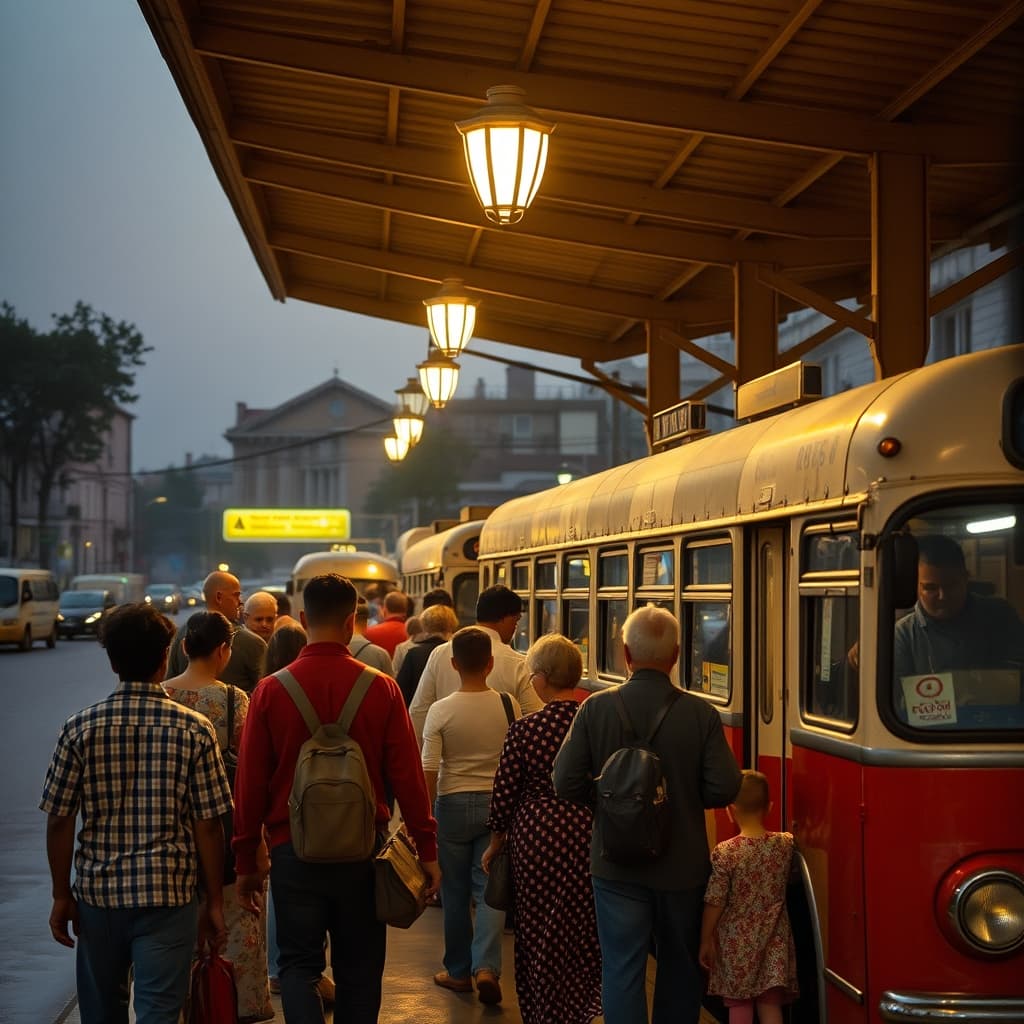
Old bus terminals were built for movement, yet much of their emotional life was shaped by waiting. A traveller arrived early with a suitcase that seemed heavier than its contents, while relatives measured the remaining minutes against a departure board, a ticket stub, or the sound of an engine starting outside. The terminal gathered private decisions in a public room. Work, study, military service, marriage, seasonal employment, and family obligation could all begin with the same practical sequence: finding the correct platform, checking the luggage, and delaying the final goodbye until there was no time left to delay it.
The architecture was rarely designed for tenderness. Hard seats, crowded aisles, fluorescent light, tea counters, luggage bays, and loud announcements served a demanding transport system. Even so, families turned these functional spaces into temporary rooms of their own. Food was unwrapped for the road, a coat was adjusted, money was pressed discreetly into a hand, and instructions already given at home were repeated once more. These gestures did not make departure easier, but they gave it a recognisable form.
A Waiting Room For More Than Buses
For people travelling between small towns and growing cities, the terminal was often the visible edge of a larger social change. The passenger might be leaving a familiar network of neighbours for a place organised by factory shifts, rented rooms, university timetables, or construction work. Those who stayed behind also had to adapt. News would arrive by telephone or through another traveller; visits would be planned around ticket availability; gifts and food might travel in carefully tied parcels. Distance became part of household organisation rather than an abstract measurement on a map.
The terminal therefore held two clocks. One belonged to the transport company and demanded punctuality. The other belonged to families and moved through worry, hope, pride, and uncertainty. A delayed bus could extend a farewell until everyone ran out of things to say. An early arrival could turn the same platform into a place of relief, where faces were searched through the crowd before luggage was even noticed. Departure and reunion used the same doors, which is why terminal memories often combine ache and warmth without separating them neatly.
Suitcases As Records Of A Changing City
The objects carried through these buildings reveal the practical side of migration. Fabric bags, cardboard boxes, metal food containers, blankets, and gifts from the hometown were selected because a journey had limits. What could not fit had to remain behind. What was carried acquired unusual importance, especially when it brought the smell or taste of home into an unfamiliar room. The suitcase was not automatically a romantic object; it could represent exhausting travel, insecure work, or repeated separation. Its meaning came from the decisions packed around it.
Terminal culture also supported its own small economy. Porters, drivers, tea sellers, ticket clerks, cleaners, and nearby shopkeepers learned the rhythm of arrivals and departures. Their work made the journey possible, although travellers often remembered only fragments: a glass of tea before dawn, the call for a platform, or the shop that stayed open for the last service. These details help an archive describe travel as lived experience rather than as a simple history of vehicles and routes.
Contemporary terminals may be more regulated, connected, and digitally organised, but the central human tension remains familiar. Leaving still requires people to divide attention between the practical and the emotional. Remembering the older terminal honestly means keeping both sides in view: the fatigue as well as the excitement, the economic necessity as well as the promise, and the awkward farewell as well as the anticipated return. The old waiting room matters because it shows how large movements in urban history were experienced one ticket, one suitcase, and one family at a time.