 Eski Pano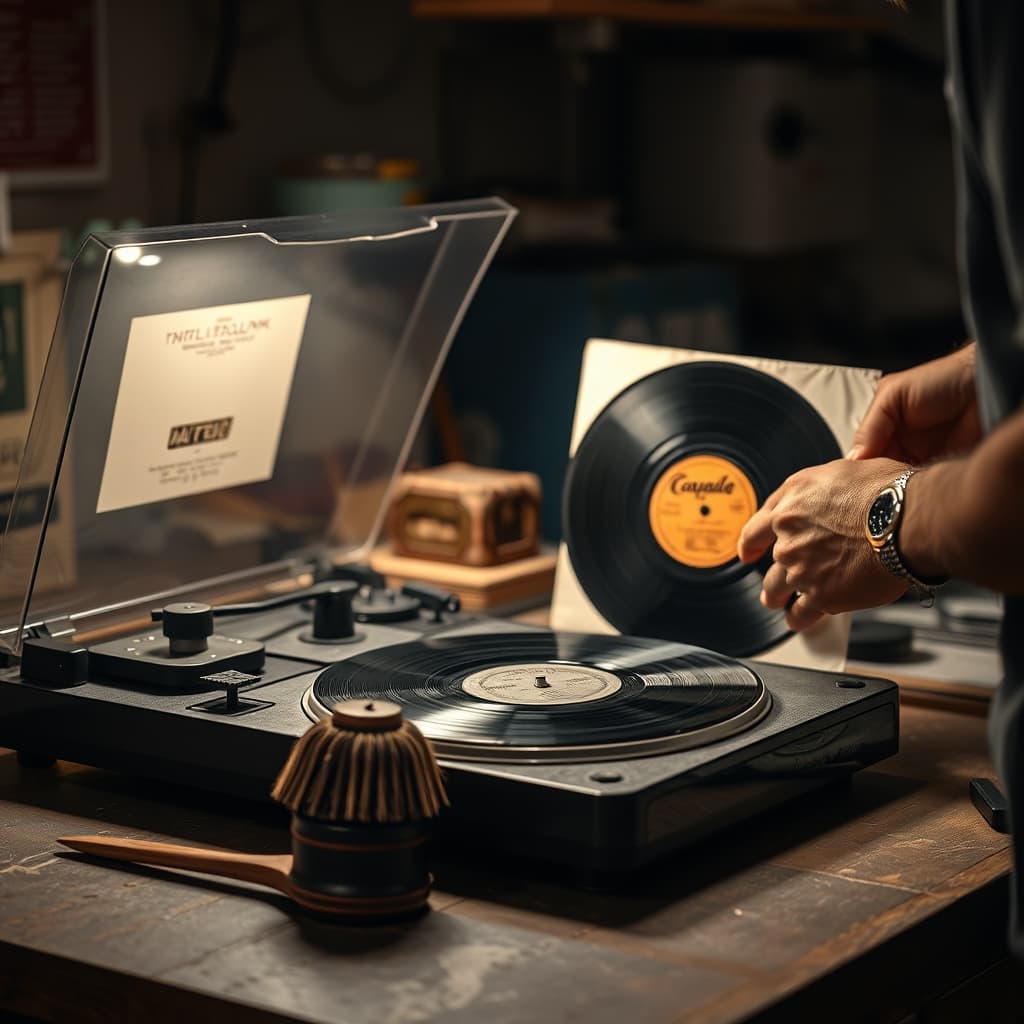
Beside a record player awaiting attention, a cleaning brush could look reassuringly simple. A few careful movements seemed to promise that an old disc would speak clearly again. At a responsible repair bench, however, the brush belonged to diagnosis, not magic. The technician first had to distinguish the disc’s surface condition from wear, damage and faults elsewhere in the playback chain. Giving music another hearing was not the same as restoring every lost detail.
The tool also needs to be named correctly. A record-cleaning brush acts on a physical recording; it does not improve a radio antenna or tune a broadcast. Remembered workshops could contain both radios and record players, but their procedures should not be blended. This distinction preserves the specific work that a small accessory performed among much larger machines.
Inspect Before the Demonstration
A disc’s material and condition determine what attention is appropriate. Vinyl, shellac and other grooved media cannot automatically share one cleaning method. The Library of Congress treats audiovisual cleaning as format-specific and places strong emphasis on preventive handling and storage. An unknown, cracked, mouldy or unstable disc calls for informed assessment rather than an enthusiastic trial on a household turntable.
Visible loose dust is different from a scratch or worn groove. A brush may address certain surface particles when used suitably, but it cannot rebuild missing material. Nor should every crackle be attributed to dirt. Playback setup, stylus condition and the recording itself can contribute to what is heard. A confident claim of repair requires more than a moment that sounds quieter.
The Brush Could Carry Its Own Problems
A dirty, damaged or unsuitable brush risks moving contamination or introducing abrasion. Its fibres, handle and any accompanying instructions should therefore be examined. Do not identify a brush as antistatic from colour alone, or assume that an accessory found inside a record case was original to it. Small tools deserve the same care in description as the equipment they served.
The repair bench made this care visible. A technician could place a disc under good light, inspect associated sleeves and ask the owner about storage or previous treatment. That conversation helped separate a recent spill from long-standing noise, while also showing the limits of memory. Without a surviving account, these steps should be described as diagnostic possibilities, not an invented interview with a named repairer.
A Fair Comparison Needs Conditions
Before-and-after sound can be persuasive, but comparison becomes unreliable when several things change at once. A different stylus, amplifier setting, playback speed or software processing can alter the result. If a treatment is documented, record the equipment, intervention and limitations. Digital noise reduction belongs to the access copy’s history; it should not be presented as physical recovery of the disc.
A surviving brush can be photographed beside the appropriate equipment without putting a fragile record at risk. Record dimensions, fibre condition, marks and its documented association with a workshop. If the tool was repaired, retain evidence of that intervention. A replacement handle does not prove a particular decade, and polished wood does not establish skilled local manufacture.
A Second Life Might Mean Safer Access
The object’s future may involve stable storage and a professionally made transfer rather than repeated nostalgic playback. Keep the original and its documentation even when an access recording is available. A transfer captures one reading under known conditions, while the material disc may retain information that future assessment can interpret differently.
In this light, the record brush earns its place in technical heritage through modesty. It represents the pause before the needle, the distinction between removable dust and irreversible wear, and the willingness to say that a fault lies elsewhere. The workshop’s real promise was not that age could be erased. It was that listening could continue with better understanding of what the disc, the player and the tool could each still do.