 Eski Pano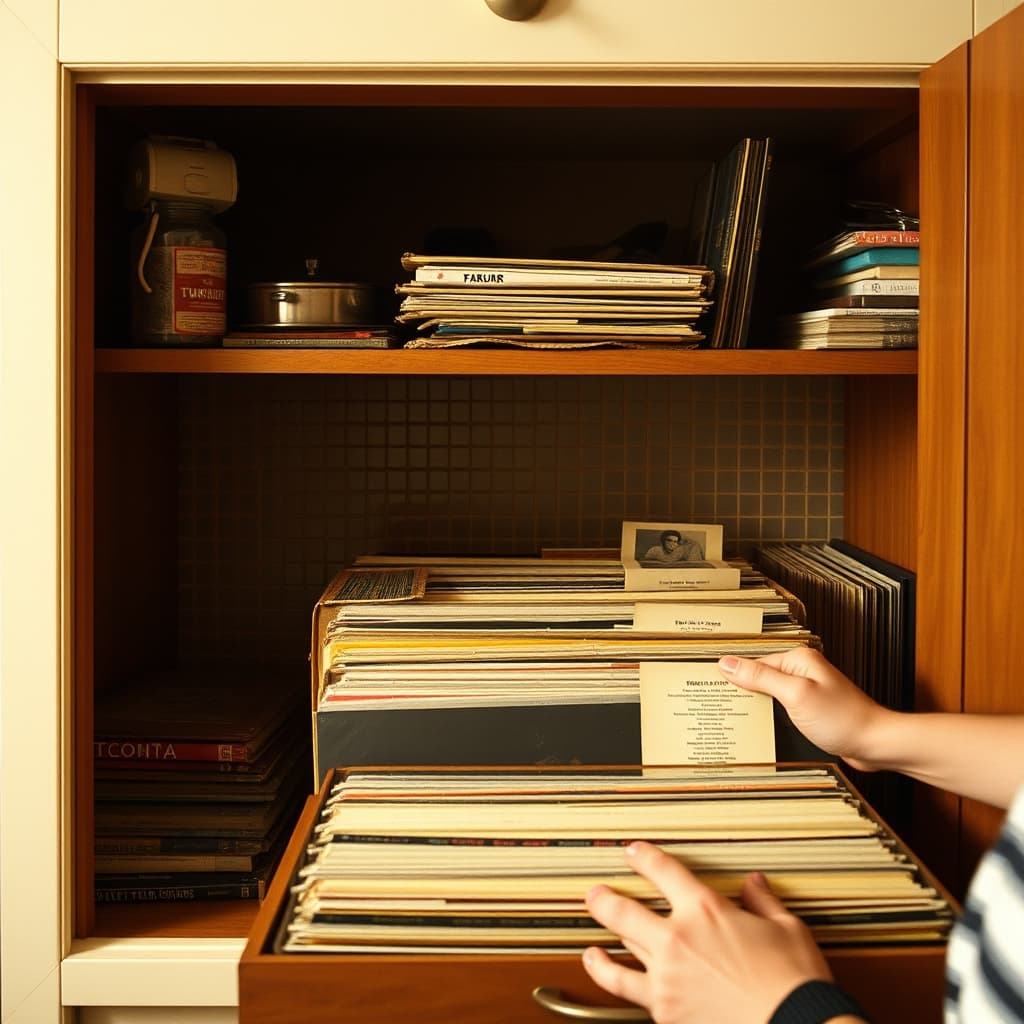
A record box on a kitchen shelf can look like a perfect emblem of domestic music, yet the kitchen is usually a difficult preservation environment. Heat rises, steam condenses, cooking grease travels through air, cleaning products spill, and pests follow food. A box that survived family evenings deserves storage chosen for the physical needs of records and sleeves rather than the charm of its old location.
Collections vary by disc material, diameter, speed, groove type, label, sleeve, box, and recording date. Shellac discs, vinyl records, lacquer discs, flexi discs, and home recordings are not handled identically. Manufacturer information, conservator guidance, labels, matrices, purchase notes, photographs, and family testimony help identify each object before treatment.
The Kitchen Creates Several Microclimates
An upper shelf may become warmer than the room, while an outside wall or cupboard can remain cool enough for condensation. Boiling water raises humidity; ovens and radiators add heat; windows bring sunlight; grease binds dust to surfaces. Repeated fluctuations can distort discs, weaken adhesives, stain paper, and encourage mould. A closed cabinet is not automatically stable.
Food crumbs, cardboard, paper, and dark gaps can attract insects or rodents. Pesticide sprays and fragranced cleaners may damage collection materials or leave residues. Integrated pest management begins with cleanliness, inspection, sealed food, monitoring, and building repair. An active infestation or mould outbreak should be isolated and assessed by a qualified professional.
Vertical Support Prevents Slow Distortion
Many discs are best stored upright, fully supported, and without leaning, crushing pressure, or overcrowding. Shelving must carry the weight and should not place collections above sinks, pipes, cookers, or flood-prone floors. Original boxes can be retained when stable, but damaged acidic enclosures may need archival support rather than tape, glue, or decorative lamination.
Clean inner sleeves appropriate to the disc separate the playing surface from rough or contaminated paper. The outer cover and inserts remain part of the historical object and should not be discarded simply because a replacement sleeve is used. Labels, handwriting, shop stamps, and repair marks may provide provenance.
Handling Begins with an Identifiable Work Area
Hands should be clean and dry, with records held by edges and labelled areas as appropriate. Food, drinks, jewellery, and unstable stacks stay away. Cleaning methods depend on the material: a fluid suitable for one disc may damage another. Valuable, cracked, delaminating, mouldy, or unique recordings require specialist advice before playback or washing.
A catalogue can record title, performer, label, catalogue number, matrix, speed, format, condition, sleeve, owner, date, location, and rights information. Numbering should be reversible and should not place adhesive labels on discs or historic covers. Photographs help track condition, but colour and scale need consistency.
Digitisation reduces repeated handling but does not replace the original. Playback equipment must match groove, speed, stylus, equalisation, and condition. Copyright, performer rights, private speech, and family consent affect online access. A personal recording may be culturally valuable while remaining inappropriate for unrestricted publication.
A Digital Nostalgia Archive can connect the box with every disc, sleeve, matrix, family owner, listening memory, condition image, storage move, playback decision, digital file, and permission. Domestic splendour survives more faithfully when it is separated from steam and grease. The safest shelf may be less picturesque, but it keeps sound, artwork, handwriting, and family context available for another generation.