 Eski Pano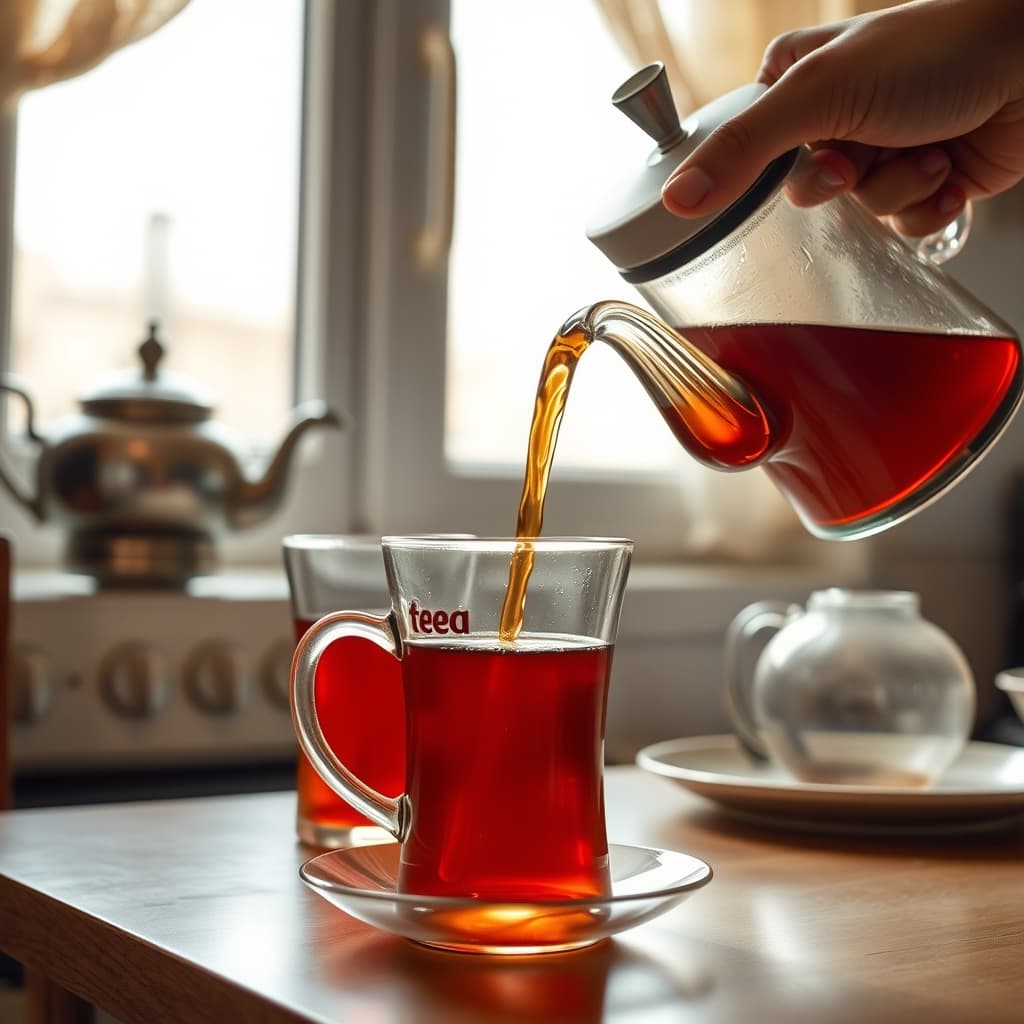
“Rabbit-blood” tea is a Turkish expression for an admired deep, clear red-amber colour, not an ingredient and not an exact laboratory standard. At an after-school table, the judgement happened by eye: brewed tea met hot water in the glass, light passed through it and someone decided whether the balance looked right.
Tea preparation and preferred strength vary between households, regions and individuals. The phrase can signal quality or familiarity, but one person’s ideal may be too strong or too pale for another. A cultural record should preserve the local use of the expression rather than convert it into a single recipe.
The Glass Helped Make the Colour Visible
A transparent tea glass allowed the liquid to be judged from the side and against the light. Glass shape, room lighting and background changed perception. A photograph under modern studio light may therefore make the colour look different from what a family remembers in its kitchen.
The order and proportion of brewed tea and hot water also affected the result. The person pouring might adjust each glass separately. That individual calibration is part of hospitality: children, adults and guests did not necessarily receive the same strength.
Food and conversation influenced how the glass was read. Bread, cheese, a sweet bite or the remains of an afternoon meal could accompany tea, but no single plate represents every household. The important archival detail is the relationship: where the glass stood, what was offered with it and whether the child drank immediately or waited. These details make the table specific without manufacturing a universal ritual.
The Teapot Held Two Kinds of Time
Brewing required waiting, while the school return created its own schedule. Tea could already be ready, still developing or refreshed when someone arrived. The first spoon reaching for food and the first glass of tea belonged to a coordinated kitchen moment, not simply a flavour pairing.
Leaving or reheating tea changes its sensory character, but this article is not a brewing guide. Present-day preparation should follow safe handling and actual equipment instructions. An old kettle or damaged electrical appliance should not be used to stage nostalgia.
A Colour Word Became Household Language
Calling the tea “rabbit-blood” allowed people to discuss appearance quickly. Approval, teasing or a request for more water could follow. The expression should be translated with explanation rather than literally treated as a Portuguese or English culinary term with the same cultural history.
Not everyone liked the phrase or the same shade. Children might receive a lighter glass, and some people preferred tea without judging it by this description. Recording disagreement prevents one vivid idiom from standing in for all Turkish tea culture.
Even within one family, the judgement could shift with season, daylight and the person holding the pot. A glass admired beside a bright window might appear darker at an evening table. Memory often preserves the verdict rather than a measurable concentration. That is why an archive should retain the words used by the speaker and avoid assigning a colour code that suggests false scientific precision.
Photograph the Conditions, Not Only the Glass
A useful record notes the glass, background, light, teapot arrangement and who poured. White balance and editing can shift the apparent colour; keep an unedited master and document adjustments. Do not claim that a digital image proves exact strength.
Oral history can ask what the phrase meant in that household, who used it and how a glass was corrected when judged too dark. Keep those answers attributed. A family saying is valuable even when it cannot be quantified.
The character of the home kitchen appears in this act of adjustment. One pot supported several preferences, and a colour word helped the person pouring interpret them. The after-school glass became memorable not because every cup followed one rule, but because someone looked, diluted and served with knowledge of the person taking the seat.