 Eski Pano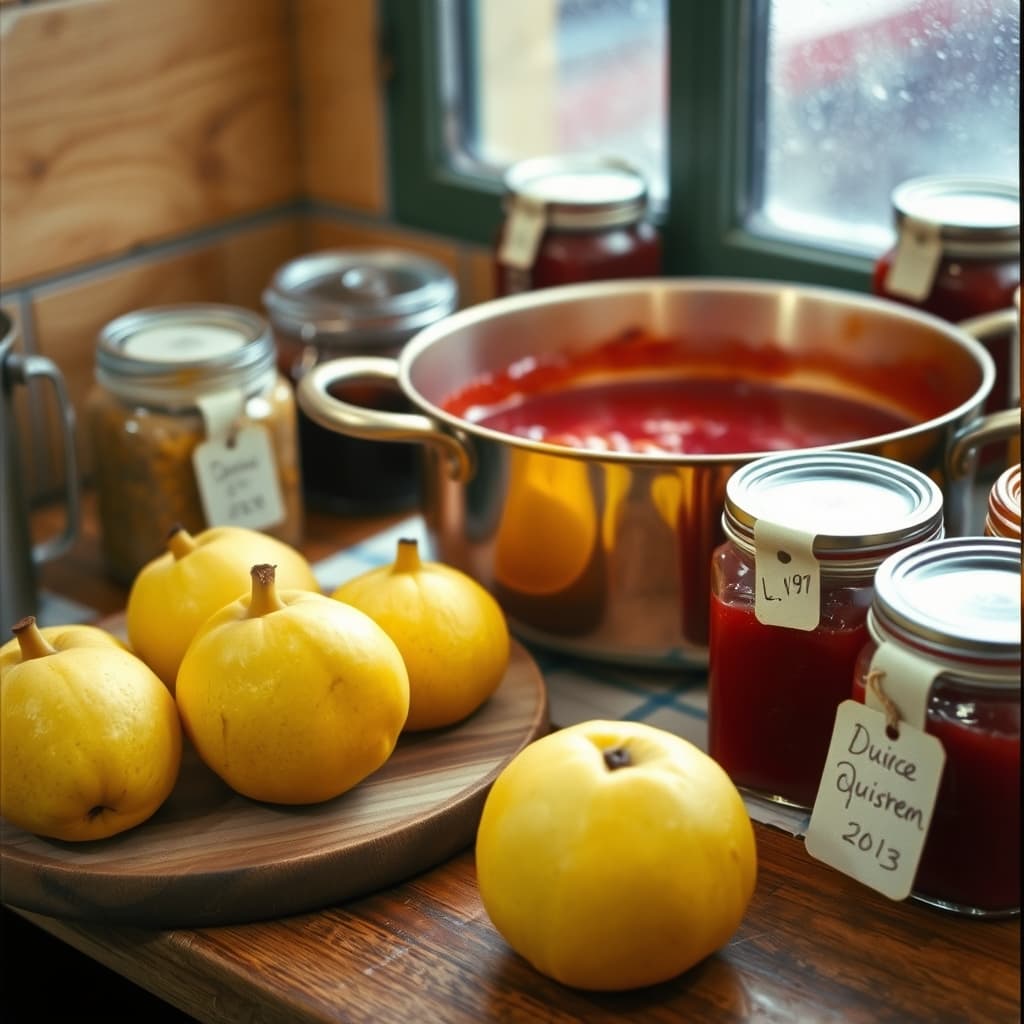
Quince enters the kitchen with resistance. The raw fruit can be firm, grainy, and difficult to cut, with an aroma that promises more softness than the flesh initially gives. Making jam transforms that character through preparation, sugar, acidity, heat, and time. The result belongs to the transition between autumn harvest and winter breakfast, but its success depends on knowledge rather than nostalgia alone.
Fruit maturity influences fragrance, texture, and pectin behaviour. Damaged or mouldy areas cannot simply be hidden by cooking. Quinces should be sorted, washed, and cut with a stable board and suitable knife because their hardness makes slipping a real risk. Recipes differ over peeling, seed use, piece size, and pre-cooking. These variations affect colour and set and should be recorded honestly.
Pectin Builds the Set
Quince naturally contains pectin, a plant substance that helps a preserve form a gel when conditions of sugar and acidity are suitable. Pectin concentration is not identical in every fruit, and prolonged or poorly controlled cooking can change texture. A jam that looks loose while hot may thicken as it cools, so judgement includes waiting as well as stirring.
Seeds and cores appear in many family methods because they can contribute pectin, often enclosed for later removal. However, today's cook should follow a tested recipe rather than improvising quantities or treating every traditional instruction as a safety standard. The goal is a repeatable balance of fruit, acid, sugar, and processing.
Where the Red Colour Comes From
Quince preserves can develop shades from gold to amber and deep red. Variety, ripeness, acidity, oxygen, cooking vessel, temperature, and duration all influence the result. The colour is not a simple test of quality or authenticity. Adding seeds may be associated with colour in household explanations, but the full chemistry is more complex than one ingredient.
High heat can catch sugar at the base while leaving fruit uneven. A wide suitable pan, measured ingredients, steady stirring, and observation help control concentration. Foam, aroma, bubble size, and temperature can provide clues, but tested recipes offer safer guidance than visual memory alone.
Safe Storage Is Part of the Recipe
A decorative jar seal is not proof that a preserve is shelf-stable. Clean containers, correct acidity and sugar, recommended headspace, appropriate heat processing, intact seals, and storage conditions all matter. Practices vary with recipe and local guidance. Anyone preserving quince today should use an up-to-date tested method from a reliable food-safety authority.
After opening, refrigeration and clean utensils reduce contamination. A bulging lid, leakage, mould, fermentation, off odour, or uncertain seal is a reason to discard the product without tasting. Removing visible mould does not make the remainder safe.
Quince jam keeps old kitchen culture alive when the knowledge chain remains visible: selecting sound fruit, cutting safely, understanding set, controlling heat, labelling the jar, and serving without waste. Its ruby glow against a winter window may carry emotional power, but the archive should preserve measurements, dates, vessel choices, and the cook's actual method. Those details let future readers distinguish a family preference from a universal rule—and allow a seasonal taste to be remembered with both warmth and care.