 Eski Pano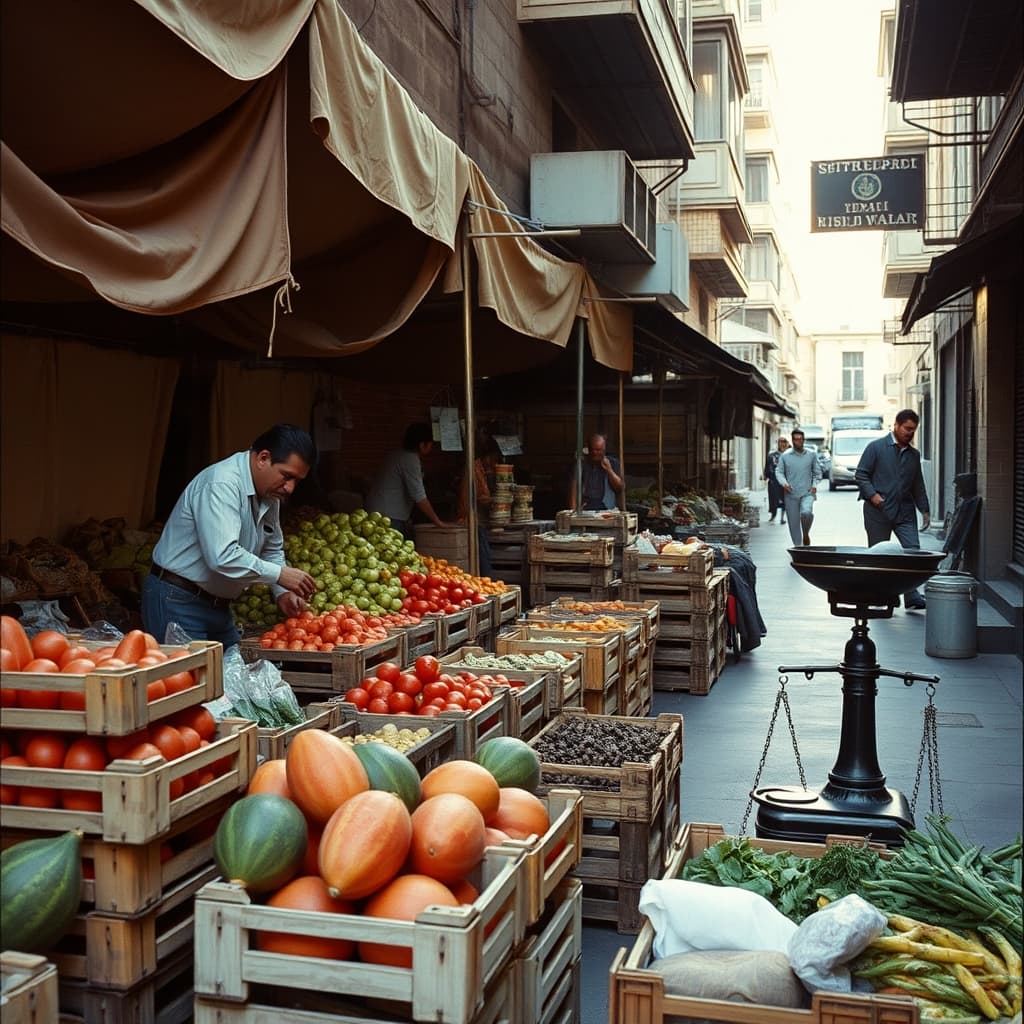
The neighbourhood market began before customers filled the street. Vehicles arrived in dim morning light, metal frames unfolded, canvas roofs were tied, and crates moved from pavement to stall. The transformation could appear spontaneous to a later visitor, yet it depended on allocated pitches, delivery sequences, municipal rules, and workers who understood how to build a temporary commercial street without stopping the surrounding neighbourhood completely.
Each stall was a small system. Produce had to be protected from direct sun, displayed without crushing, and kept within reach of the scale. Empty crates needed somewhere to go. Narrow aisles had to remain passable for handcarts, customers, residents, and emergency access. A successful setup balanced visibility with movement.
The Scale Connected Trust and Calculation
Mechanical balances and later dial scales made quantity visible through weights, pans, needles, and repeated checking. Customers watched selection and weighing, while sellers adjusted a handful of fruit or removed a piece to reach the requested amount. Calibration and honest use mattered because small errors multiplied across a day's trade.
Price was not only a number on a card. Season, quality, supply, weather, transport cost, time of day, and the need to clear perishable stock influenced it. Bargaining practices varied, as did expectations about choosing produce by hand. The social skill of the market lay partly in explaining value without turning every exchange into conflict.
Crates Had a Life Beyond Display
Wooden and plastic crates circulated between farms, wholesalers, vehicles, and stalls. Scratches, repairs, stamps, and colour codes could reveal ownership and repeated routes. They were working packaging, not automatically disposable props. Broken crates, damaged produce, leaves, paper, and string accumulated as the day progressed, creating a second logistical task.
Closing required sorting what could return, what could be sold elsewhere, what might be donated under safe arrangements, and what had become waste. Street cleaning crews, vendors, and municipal services shared responsibility. Nostalgic accounts often remember colour and calls while ignoring the labour that restored the road for ordinary traffic.
The Market and the Residents Around It
For nearby households, market day brought convenience and disruption. Fresh food arrived within walking distance, acquaintances met, and prices could be compared. It also brought early noise, blocked entrances, dropped leaves, and changed parking or transport. Trust depended on negotiated boundaries: leaving doors clear, controlling rubbish, limiting unsafe structures, and respecting the hours agreed for setup and removal.
The market's weekly pulse came from repetition. Residents knew which morning the street would change and when it would return. Sellers recognised regular customers and adjusted stock through accumulated knowledge. A vendor's absence could be as noticeable as a closed neighbourhood shop.
Preserving market memory requires more than photographing a picturesque stall under street lamps. Pitch maps, scale inspection records, vendor licences, crate markings, price cards, cleaning schedules, and oral histories reveal how the temporary street actually worked. The forgotten detail is often coordination. Before the first watermelon was cut or the first shopping bag filled, dozens of practical decisions had already turned an ordinary road into the economic meeting place of the week.