 Eski Pano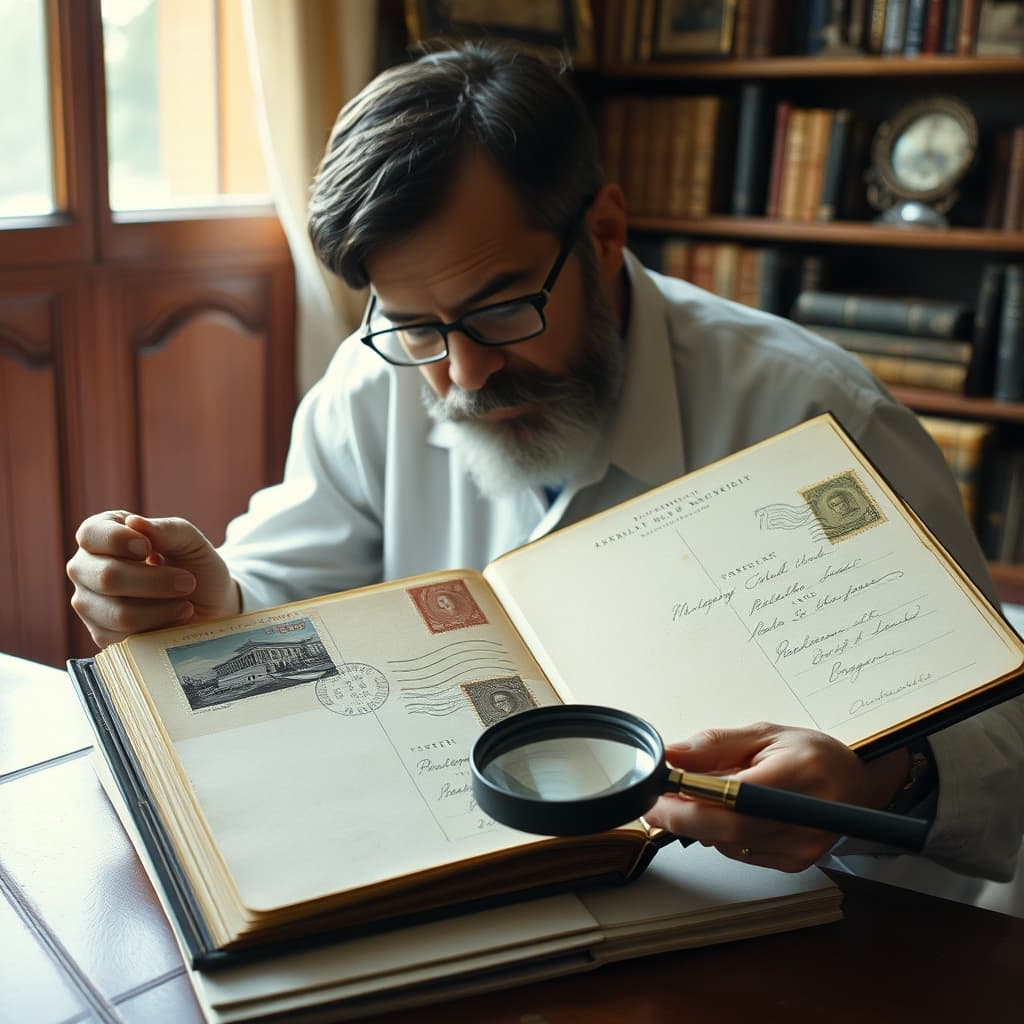
A postcard album rewards slow looking. One page may place a railway station beside a seaside hotel, a monument beside a village road, or an unused commercial view beside a card carrying an intimate message. Collectors return to these albums because each card has at least two histories: the image produced for circulation and the journey, selection, or silence recorded on its reverse.
Albums vary from purpose-made books with corner slots to scrapbooks, office ledgers, and later binders. Cards may have been arranged by place, trip, sender, subject, colour, or simply the order acquired. That sequence is evidence. Removing valuable cards to sell individually can destroy relationships between journeys, correspondents, and the collector's own method.
Clues Extend beyond the Picture
Publisher names, series numbers, printer marks, divided or undivided backs, stamp boxes, paper surfaces, captions, and photographic processes assist identification. Postmarks may establish a latest date of use but can be faint or applied far from the pictured place. Architecture, transport, clothing, and signage support dating when compared with reliable sources, not when judged by intuition alone.
Handwritten messages give ordinary images specific lives. They mention arrivals, weather, health, money, work, military service, family news, and promised returns. Transcription should preserve original spelling while offering notes for unclear names or obsolete terms. Addresses and personal details may concern living people, so public access sometimes requires redaction or consultation.
Rarity Needs a Verifiable Definition
A seller's claim that a card is rare may refer to subject, publisher, edition, condition, cancellation, or current market supply. Price alone does not establish historical importance. Collectors compare catalogues, institutional holdings, auction records, specialist knowledge, and known variants. An ordinary card with strong provenance can be more valuable for research than an expensive view detached from context.
Condition descriptions should distinguish handling wear, creases, silvering, fading, stains, insect damage, trimmed edges, replaced stamps, modern colouring, and reproductions. Digital listings can hide surface texture or alterations. Buyers should request both sides, dimensions, and angled-light details. Ethical dealers disclose restoration and avoid invented stories designed to inflate value.
Collecting Carries Responsibilities
Provenance matters when albums come from estates, archives, displaced communities, conflict, or institutional deaccession. Legal ownership does not resolve every cultural and ethical question. Family correspondence, sacred places, human remains, colonial stereotypes, and images made without consent may require restricted display, community consultation, respectful description, or return.
Collectors can preserve material by keeping cards in stable, inert sleeves or albums, away from high humidity, food, pollutants, and prolonged light. Adhesive tape, pressure-sensitive labels, lamination, and tight plastic pockets can cause damage. Cards should be supported during handling, and fragile albums photographed before any conservation intervention changes their structure.
Digitisation should capture front, reverse, album page, sequence, scale, and colour reference. Metadata includes dimensions, process, publisher, number, caption, postmark, stamp, sender, recipient, transcription, acquisition source, and uncertainty. Searchable data makes dispersed city views comparable, but public files should not erase ownership, copyright, donor, or privacy conditions.
A Digital Nostalgia Archive can connect postcard albums with publisher catalogues, postal routes, maps, hotel registers, railway timetables, family trees, letters, and repeat photographs of the same street. Renewed interest is valuable when it moves beyond decoration. The album teaches collectors to follow evidence across both sides of a card and across the spaces between cards, where one person's method of remembering remains visible.