Eski Pano
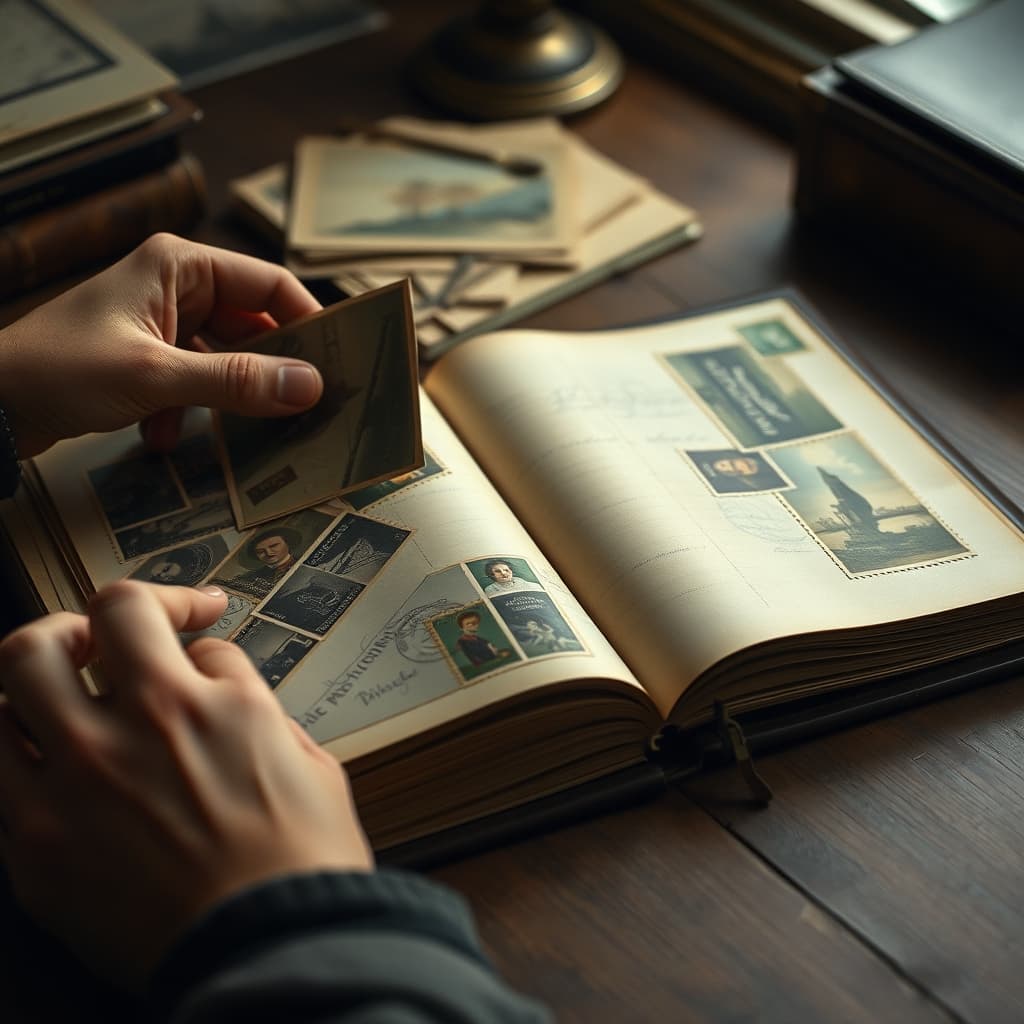
There was a time when postcard albums were kept in the quietest drawers of the house or on the lower shelves of the glass cabinet in the sitting room. As their pages turned, not only landscapes appeared, but also the atmosphere of distant cities, old letterforms, postal marks, and the brief sentences of people we never knew. One postcard might show a station building, another a street under winter sun, another a seaside town already transformed beyond recognition. For that reason, looking through a postcard album meant more than studying a collectible object; it meant approaching the edge of other lives with quiet attention. The everyday appearance of the past often revealed itself not through thick history books, but through thin pieces of printed card.
Seen through the lens of object stories, the postcard album is a special meeting point of design, preservation, and memory culture. Embossed covers, cards tucked into photo corners, handwritten dates, and sometimes faded ink all show that these albums carry a tactile memory as well as a visual one. Part of the reason collectors are turning toward this world again lies here. A postcard captures details that official history often leaves aside: a tram line crossing a square, a shop sign, the cut of clothing, the arrangement of trees, or the form of address chosen by the writer. Each card is both image and trace. By gathering these traces, the collector is in fact rebuilding a lost atlas of everyday life.
The renewed interest in postcard albums today also speaks to a desire for a slower and more tangible relationship with the past in response to the speed of digital life. In an era where images stream endlessly across screens and almost nothing stays still, the postcard knows how to remain. The wear at its edges, the few lines on its back, the color of the stamp, and the date of the postmark make the object unique. Perhaps that is why people do not only look at postcards now; they research them, classify them, and try to learn where they came from. These objects remind us that the past is not made of one great story alone, but also of small towns, ordinary journeys, and personal greetings that deserve the same attention as official events. In that sense, the postcard album answers a modern need to meet the past in a more intimate and patient way.
Part of the fascination of the past pursued by collectors lies in its missing pieces. The phrase “we arrived safely” written on a card suggests a longer journey whose continuation we never learn. A city square seen a century ago reveals what has disappeared from the same place today. The person turning the album’s pages does not encounter only an attractive object, but unfinished stories waiting to be completed by curiosity. For that reason, the postcard album keeps nostalgia alive not merely as a feeling of looking back, but as a desire to investigate. Its renewed appeal may lie exactly there: in calling the past back not through a single answer, but through traces, elegant surfaces, and quiet questions.
The return of interest in postcards also shows that people are beginning to approach urban memory with a different gaze. A postcard of an old seaside town makes one think about what a concrete shore has erased; a station card recalls the social importance of train journeys. In this way, what appears to be a collectible object turns into a witness of cultural memory. That is why the postcard album remains more than a nostalgic item. When looked at carefully, it continues to live as a small archive carrying the slow voice of the past into the present.
The Postcard Album and the Past Traced by Collectors: Why Is It Drawing Interest Again Today