 Eski Pano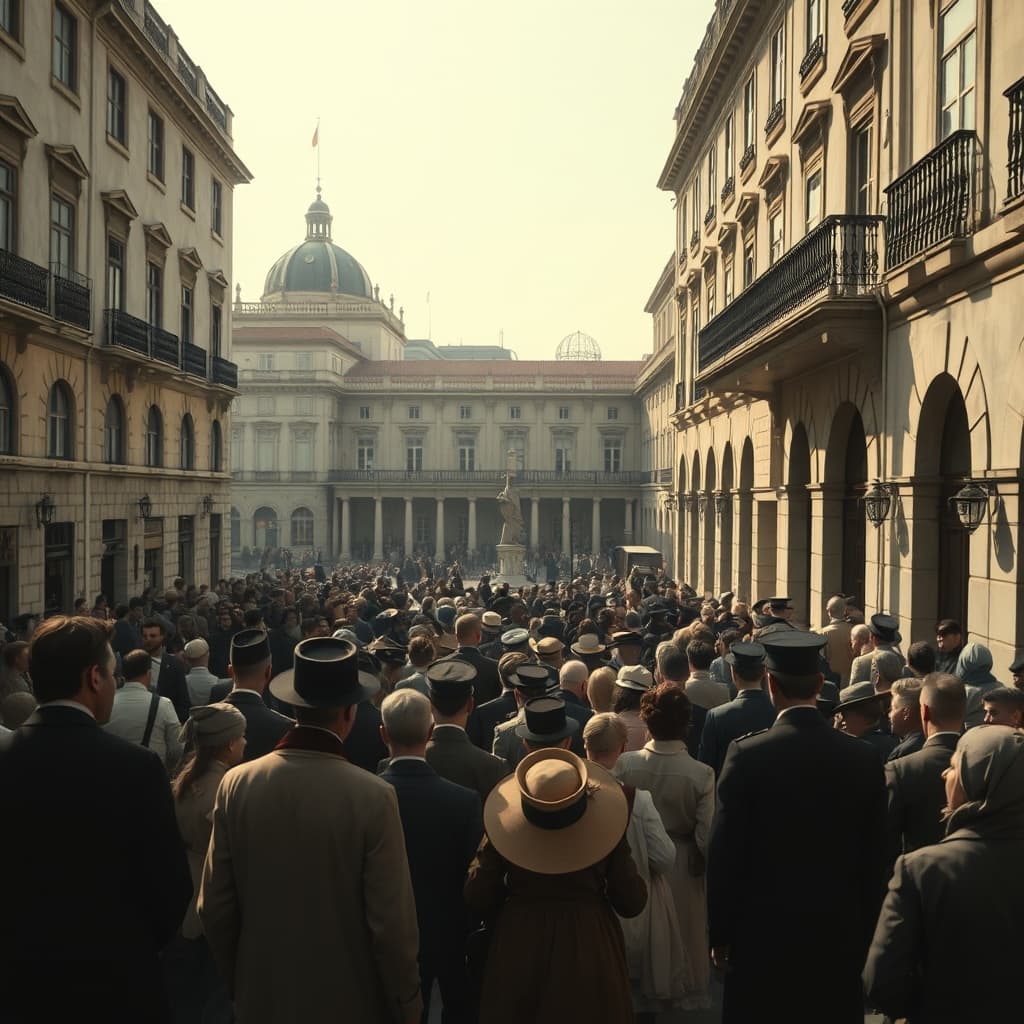
On the morning of 5 October 1910, the proclamation of the Portuguese Republic in Lisbon gave a public form to a political rupture already unfolding through conflict and uncertainty. Portugal’s parliamentary history records the proclamation from Lisbon’s municipal building and the end of the constitutional monarchy. The scene matters, but it should not be mistaken for a complete explanation of how a republic was imagined, contested and built.
The anniversary is observed as the Implantation of the Republic. For a digital nostalgia archive, its strongest material lies not in recreating a triumphant crowd but in following how political change entered streets, institutions and ordinary visual life. Public buildings, printed notices, flags and official language made the new regime visible while its constitutional shape was still being worked out.
A Balcony Turned the Square Into a Political Stage
A proclamation from a municipal balcony transformed architecture into communication. The elevation allowed speakers to address people below, while the square gathered witnesses, rumours and movement. Yet surviving photographs and reports capture selected moments. They do not reveal a single emotion shared by everyone in Lisbon, much less by the entire country.
The preceding events involved military and civilian action, and uncertainty about the outcome. A responsible account should avoid compressing conflict into a picturesque dawn. The republic’s public announcement was decisive because it named the change; the meanings attached to it remained diverse.
New Symbols Had to Become Familiar
A change of regime required more than replacing a title. New national symbols and institutional forms entered official and public life. The flag, anthem and republican imagery became visible through ceremonies, buildings, schools, printed matter and later remembrance. Their adoption was a process of recognition, not an instant transformation of every daily habit.
Objects from this transition need precise cataloguing. A flag, badge, postcard or newspaper should be dated and sourced rather than labelled simply “from the Republic.” Later commemorative objects can resemble contemporary material. Reproduction, anniversary issue and original document should remain distinct in the archive.
The Constitution Came After the Proclamation
Portugal’s parliamentary record places the First Republic from 1910 to 1926 and notes that a constituent assembly produced the Constitution approved in 1911. This sequence matters: proclamation opened a regime, while legal structures and representative institutions required further political work. Treating the morning of 5 October as a finished constitutional settlement removes that important interval.
The new order also had limits and conflicts. Participation was not equivalent to contemporary universal suffrage, and political instability did not disappear with the monarchy. Commemoration should preserve the aspiration of republican citizenship without claiming that equality was immediately complete.
Reading 5 October in Today’s Lisbon
A historical walk can connect municipal space, archival photographs and present-day street form, but current buildings should not be treated as unchanged scenery. Record sightlines, plaques and alterations. Cite documents for specific claims, and distinguish a witness account from a later patriotic retelling.
The enduring trace of 5 October lies in this relationship between a visible announcement and long institutional consequences. Lisbon’s streets offered the republic a stage, but the regime then had to move into law, administration, symbols and contested public memory. Preserving both the morning and what followed gives the anniversary historical depth rather than reducing it to a date repeated on a calendar.