 Eski Pano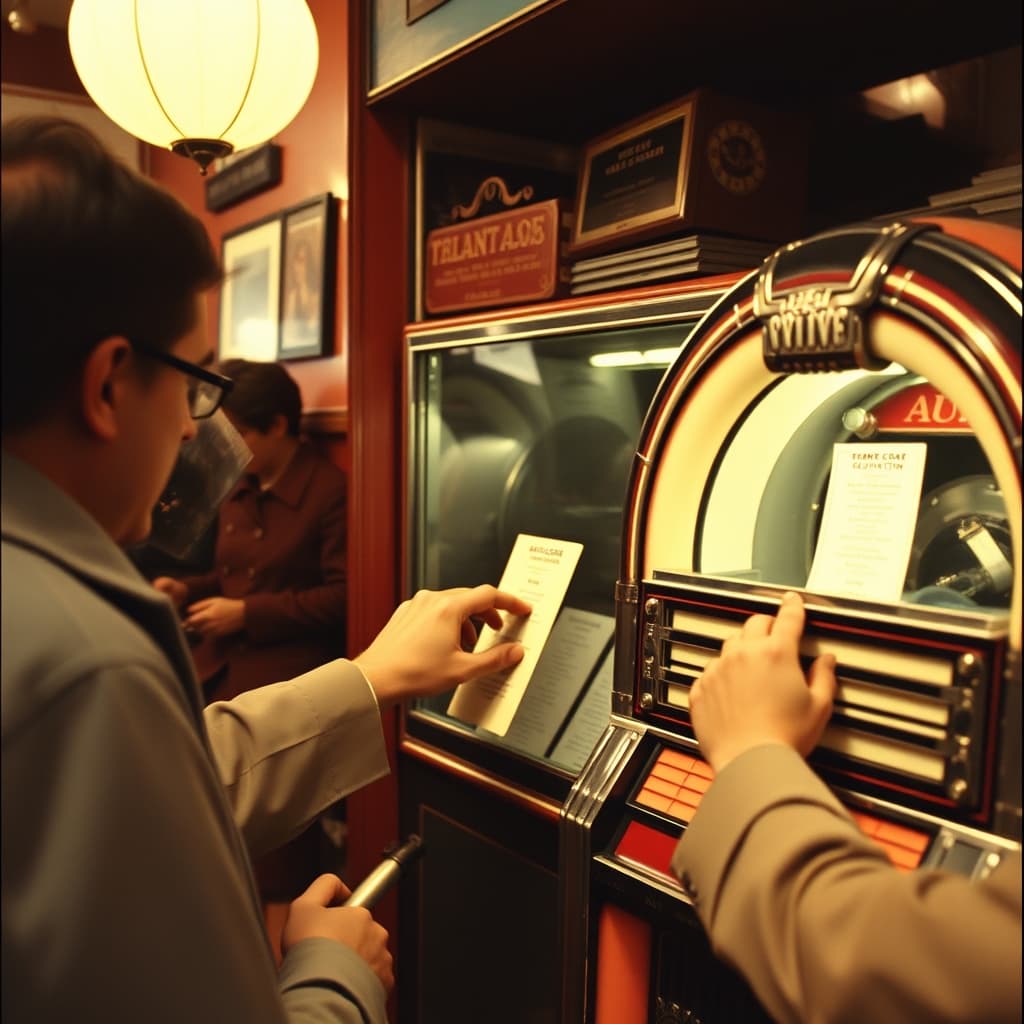
At a jukebox, choosing a song was visible. A person approached the machine, read the available selections, entered the required payment and committed to a title that other people would hear. The moment before the music began could carry confidence, hesitation or negotiation. Unlike private listening, the choice entered a room already occupied by other tastes.
The Turkish phrase “müzik kutusu” can also refer to a mechanical music box, so the object must be identified from context. A coin-operated record-playing machine is not tuned by turning a radio antenna. Workshops and memories may contain several technologies, but their controls and functions should not be blended.
The Selection Card Was a Small Catalogue
Titles and codes connected human choice to an internal mechanism. A card could be replaced as the musical programme changed, while the cabinet remained. Surviving cards should be photographed and dated where possible; a title strip found near a machine does not automatically prove it played there.
Reading the list also took time. Familiar songs competed with curiosity, and limited credit could make one choice consequential. Friends might advise or disagree. These interactions explain why the machine became social without assuming that everyone welcomed every selection.
The printed programme also placed a limit around choice. What was absent could not be requested unless the person managing the venue changed the records and cards. A remembered machine therefore reflects several decisions: the distributor or owner assembled a repertoire, the customer chose within it and the room responded. Treating the list as neutral furniture would miss how taste was filtered before the first coin entered.
Payment Started a Sequence
Coin and credit systems varied. A rejected coin, exhausted selection or mechanical fault could interrupt expectation. The user’s action did not guarantee an immediate perfect performance. A repair record is needed before naming a specific internal cause.
The machine then performed a hidden sequence of selecting and playing recorded media. Watching through glass, when the design allowed it, made the mechanism part of the attraction. Opening a surviving machine or powering damaged equipment, however, belongs to qualified technical work, not nostalgic demonstration.
Public Music Created Public Etiquette
The selected song occupied shared time. Volume, repetition and turn-taking could create pleasure or irritation. Informal rules developed around who chose next and whether one person used all the available choices. This was communal listening, but not necessarily equal control.
Waiting created its own small audience. Someone who had paid might remain near the cabinet until the correct title began, while another person watched to see whether the mechanism obeyed. If several credits were queued, the delay between decision and sound could blur whose choice was playing. Memories of sequence should therefore be checked against the machine model and local practice rather than reconstructed as a perfectly orderly queue.
An oral history should ask where the machine stood, who managed it, how selections changed and what happened when a song failed. Avoid inventing a café, price or favourite title from a generic photograph. Private recollection and machine documentation answer different questions.
Preserve the Choice as Well as the Cabinet
Catalogue front, controls, selection area, coin mechanism and any known media separately. Record modern replacement parts and keep original components when safe. Rights may apply to recordings and visible title lists, so public digital access requires care.
The jukebox habit endured in memory because choosing was a performance before the performance. A small decision moved from card to mechanism and then into everyone’s hearing. Preserving that sequence keeps the machine distinct from a decorative music box or a radio—and explains why one selected song could briefly reorganise an entire room.