 Eski Pano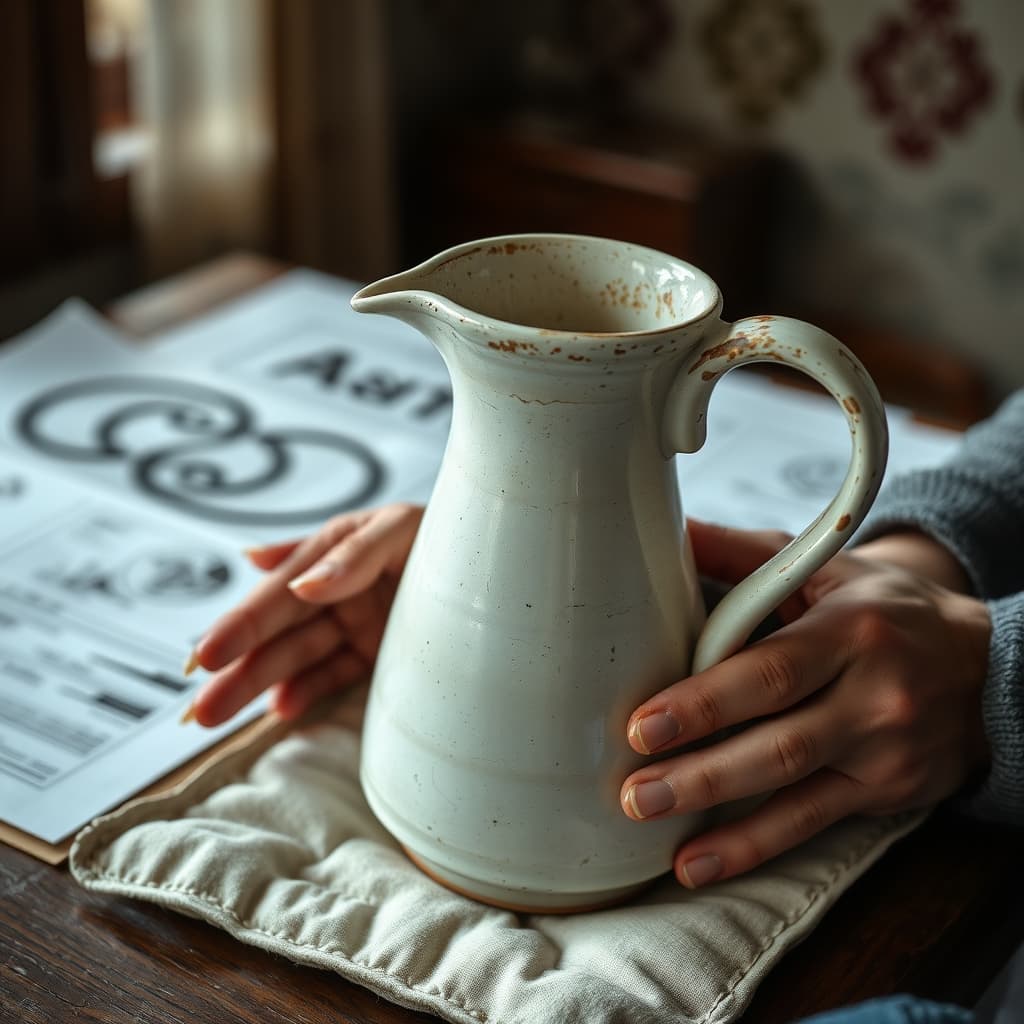
A ceramic pitcher can remain visually familiar after it is no longer suitable for serving. The handle still invites a hand, the spout still suggests water and the body keeps the marks of a table. Yet a crack, unstable repair or uncertain glaze may change the object’s role. Renewed interest should not automatically return an inherited pitcher to food use.
Ceramic bodies, glazes and firing methods vary. Age and safety cannot be judged from colour or style alone. A pitcher with unknown provenance, damaged glaze or old adhesive requires informed assessment before contact with food or drink.
The Handle Records Weight and Repair
Wear where fingers met the handle can show repeated use, while a line at the joint may indicate manufacture, stress or repair. It does not identify the contents once carried. Supporting the base rather than lifting by a weakened handle protects both object and evidence.
Old repairs deserve documentation. Metal staples, adhesive or a replacement section may belong to the family history of keeping the pitcher. Removing them for a cleaner appearance can destroy that layer. Photograph all sides and note movement or instability without testing strength.
The spout deserves the same attention as the handle. A worn lip may record repeated pouring, while a chip can expose a porous ceramic body and create a vulnerable edge. Do not smooth or colour a break simply to make the vessel photograph better. Record its profile under even light, including any loss that changes how liquid would once have left the pitcher.
Glaze Cracks Change the Question
Fine crazing may be visually subtle but can affect how a vessel is assessed for use. Stains and residues within cracks should not be scrubbed or chemically treated without advice. A bright interior does not guarantee safety, and a dull one does not by itself prove contamination.
The right question may shift from “Can it hold water?” to “How can it be preserved and interpreted?” A separate modern vessel can serve drinks while the historical pitcher remains nearby as a documented object. This protects guests and allows the original to retain its material history.
Display Is Another Form of Use
A stable support, moderate light and protection from knocks can let the pitcher remain visible. Avoid filling it with water or heavy flowers when its condition is uncertain. Modern inserts, if used, should be reversible and clearly documented.
Cataloguing should include dimensions, weight, glaze, base, maker’s marks, repairs and family testimony. A mark may identify a workshop or distributor only when researched. Do not invent an owner or special occasion from decorative motifs.
Provenance may be modest but still useful. A note that the pitcher was kept in a particular cupboard, inherited from a named relative or taken out only for guests should be attributed to the speaker and dated. Such testimony does not establish a factory or production year, yet it explains the object’s household career. Separate that remembered history from conclusions drawn through material examination.
Interest Grows Through Evidence, Not Perfection
Collectors may value irregularity, repair and signs of handling because they distinguish a used object from a generic shape. This interest should not encourage aggressive restoration or inflated rarity claims. Comparison with documented examples is stronger than an attractive story.
The pitcher’s quiet trace lies in the change of role. It once carried liquid through meals; now it can carry evidence about grip, care, damage and adaptation. Retiring it from the table is not abandoning its purpose. It is a new household decision that allows daily use to become material memory without asking a fragile vessel to perform beyond its condition.