 Eski Pano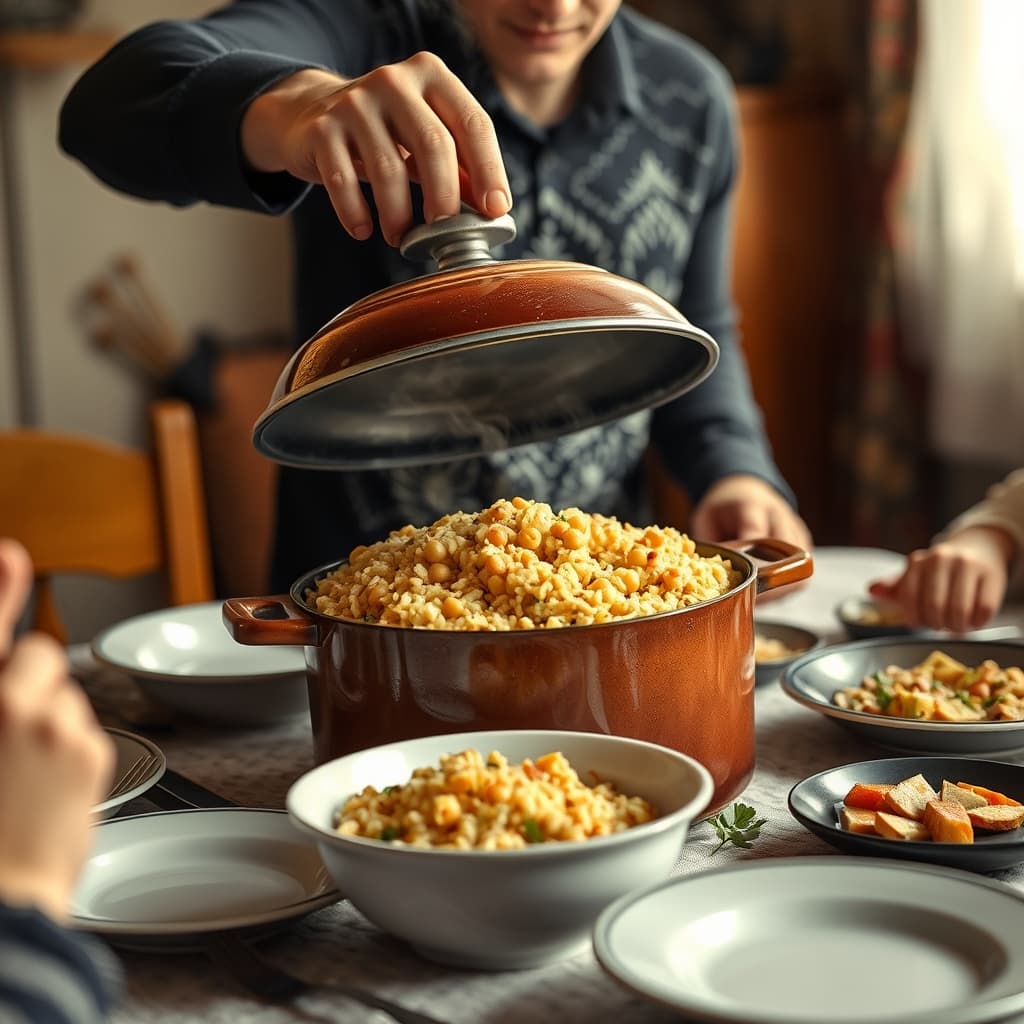
When chickpea rice pilaf reached the table from a nearby street seller or neighbourhood source, the whole house could seem to recognise it at once. The effect was not only the recipe. A covered container held heat and aroma during the short journey; opening it indoors released steam at a particular moment, turning arrival into a household event.
Chickpea rice varies in rice, fat, stock, seasoning, chickpea texture and accompaniments. Food sold or shared locally also differs from home preparation. This article follows transport and serving rather than declaring one authentic version or providing a full recipe.
The Lid Stored the Moment of Arrival
A covered pot, bowl or package limited heat loss and contained much of the aroma. The material and fit of the container affected the journey. Once opened, the smell moved faster than the food itself, reaching rooms before portions were served. That sensory sequence helps explain why people remember an entire home filling with one dish.
The lid also protected the rice during carrying. It had to remain stable through stairs, doors or uneven pavement. A staged image should not show unsafe handling of hot food. Oral history can ask who carried the container, how far and whether it was transferred to another bowl before serving.
Steam Changed the First Impression
Freshly opened rice offered warmth, moisture and aroma together. Waiting changed all three. Grains could settle, chickpeas could become more prominent at the surface and reheating might alter texture. These are reasons to document timing, not rules that apply to every preparation.
Current safe handling of cooked rice and chickpeas should follow authoritative food-safety guidance. A nostalgic description of leaving food covered or warm is not storage advice. The archive can record a remembered practice without recommending it today.
Serving Order Distributed More Than Food
Someone opened the container, stirred or did not stir, and decided portions. The first plate might receive a different balance of chickpeas and rice than the last. Accompaniments and preferences also shaped service. Asking who served makes visible the labour behind the shared aroma.
The whole family did not necessarily experience the moment equally. A person working late might receive a reserved portion; a child might wait while adults arranged the table. The smell could create anticipation and also make waiting more noticeable. Warmth at the table was organised, not automatic.
Record the Container With the Dish
Food-memory documentation often photographs the final plate and loses the vessel that carried it. Record lid, handles, wrapping and transfer bowl where evidence survives. Note whether the meal was bought, gifted or prepared at home. Do not infer a seller, price or street from a generic container.
A present-day reconstruction should identify its source and follow current safety. Photographs can show the closed arrival, careful opening and served plate without pretending to be historical. Oral accounts may disagree about whether the rice came from the street or a neighbour; keep each version attributed.
The aroma filled the house because several actions concentrated it: carrying the dish closed, crossing a threshold and lifting the lid where people were waiting. Chickpea rice became memorable through this short choreography between public street and private table. Preserving the container, timing and serving hand keeps that choreography visible instead of reducing the memory to an appealing smell.