Eski Pano
There was a time when the Polaroid camera was not simply a device that took photographs, but a small miracle that placed memory directly into the hand without delay. After the shutter was pressed, the square print slowly emerging from the mouth of the camera was awaited in living rooms, engagement gatherings, farewell send-offs, and summer evenings with an impatience almost childlike in its wonder. As the image gradually appeared on paper, everyone watched the same thing: time becoming visible between their fingers. That is why the Polaroid mattered as more than a machine. It was one of the objects through which the analog age produced hope. The photograph might be imperfect, the light might fall unevenly, the edges might fade slightly, yet that incomplete perfection was exactly what made it unforgettable.
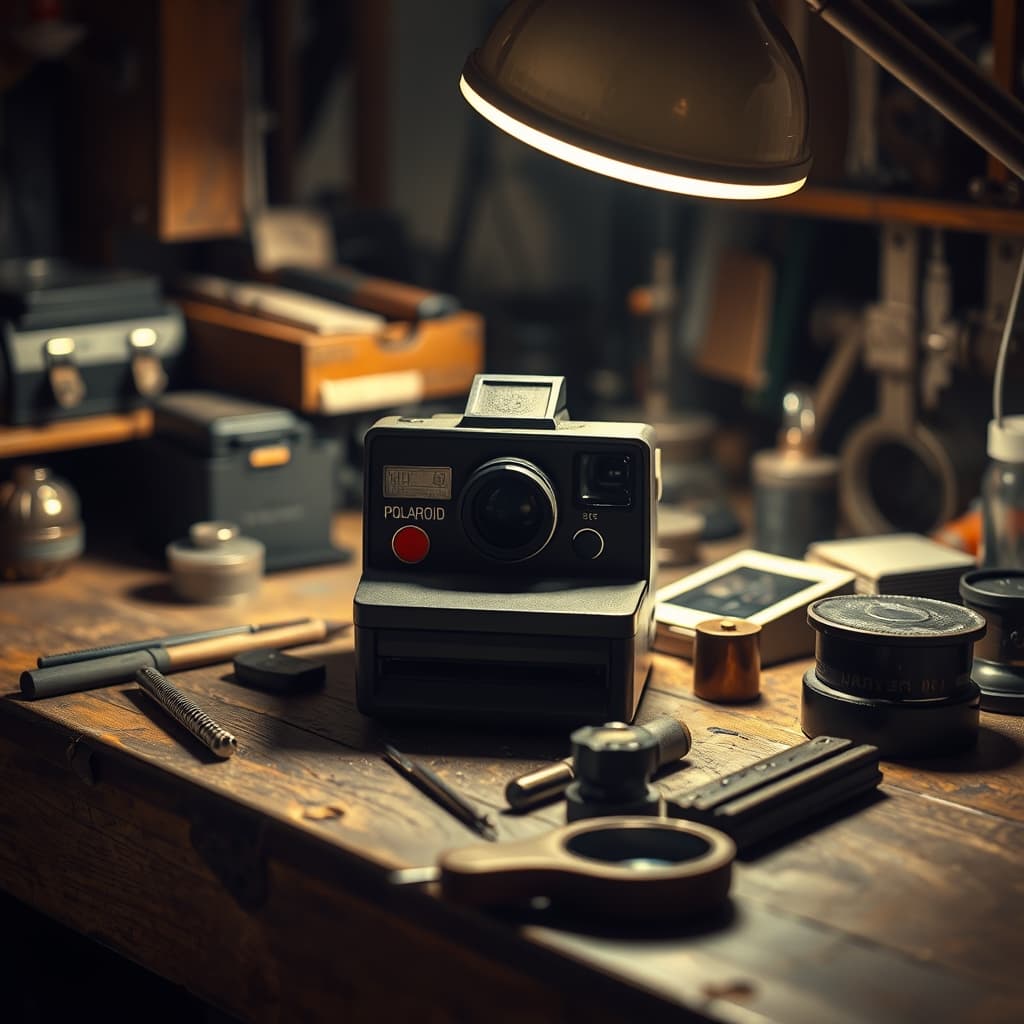
From the perspective of technological heritage, the second life of this camera is tied to a repair culture that refused to let objects disappear quietly. New models arrived, digital photography took command of daily life, and instant images became trapped inside screens. Like many analog tools, Polaroid cameras were pushed aside for a time. Yet in repair shops that withdrawal never became the final word. Craftsmen bent again over cameras with loose covers, jammed film slots, dead flashes, or missing screws, and in repairing them they preserved not only the mechanism but the memory surrounding it. Every screw removed on the workbench resembled a gesture of respect toward an older habit of photographing. Some devices survive not because of technical superiority, but because of the emotional relationship people formed with them.
The phrase about a hope becoming clearer as the antenna is turned may sound strange, yet it fits the spirit of repair. In the analog world, clarity often came through patience, manual skill, and repetition. The low motor sound inside the camera, the click of a cartridge settling into place, and the waiting before the first test shot all carried a quiet belief that something might work again. When a repairman picked up the body of the machine, he seemed to read more than its parts. The scratches suggested how many hands had carried it. The looseness of the lid hinted at how long it had been neglected. The haze in the viewfinder implied how many months or years it had waited. That is why the repair table could feel like a small operating room and, at the same time, a place where the past was persuaded to return.
Seen within everyday life, the second life of the Polaroid also comes from people’s longing for a tangible form of memory. Digital galleries may hold thousands of images, but the emotional life of a photograph that can be held, dated, tucked inside an album, or placed in a wallet is entirely different. A Polaroid does not live only at the moment it is taken. It continues on refrigerator doors, inside drawers, in letters, or between the pages of a book where it quietly yellows over time. The camera revived by the hands of repairmen makes this circulation possible again. People are not returning only to an old machine. They are returning to the slower, touchable life of the image itself. Some photographs become memory only when they can be bent lightly between the fingers rather than enlarged with a swipe on glass.
For that reason, the Polaroid camera finding a second life in the hands of repairmen is not merely nostalgia refusing to surrender. It reminds us that technology gains its place in human life through relationship, not speed alone. Every device that can still be repaired says that not everything from the past is truly finished. The repairman’s screwdriver, the customer’s waiting, and the joy that appears with the first successful print all show that the analog world still has a living language. To look at those cameras today is to look not only at an old object, but at a time in which imperfections were loved, effort mattered, and photography could once again become a small ceremony.
Polaroid Camera: Explains Why, Within a Hope That Becomes Clearer as the Antenna Is Turned, It Found a Second Life in the Hands of Repairmen