Eski Pano
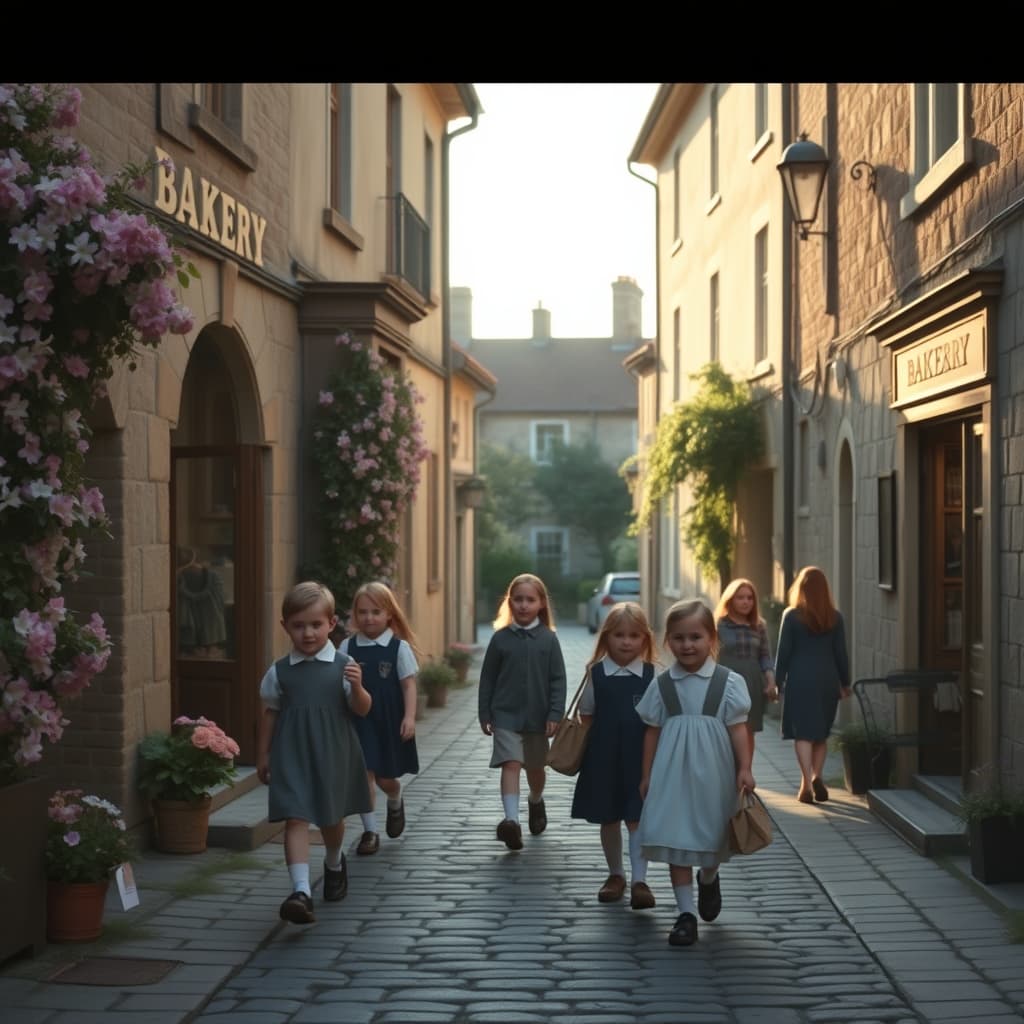
There was a time when school mornings began not only with the rush to reach the bell, but with the discipline of the street itself. Jasmines opening by narrow pavements, honeysuckle leaning over old walls, and stone roads still holding the coolness of the night did more than frame the walk to school. They established an invisible order. Black smocks or freshly ironed shirts may have looked alike, yet what children carried on those mornings was not merely clothing but a shared faith in the future. A mother straightening a collar at the door, a neighbor calling out not to be late, and the grocer lifting his head in greeting while opening the shutters turned the road to school into something larger than an ordinary walk.
Seen through the lens of memory, this scene speaks of a period in which neighborhoods educated children as much as schools did. Old newspapers recorded new school terms, buildings, and official debates about education, but the deeper schooling often began in the short distance between the house and the classroom. A child learned how to stand in line not only in the schoolyard, but also in front of the bakery. The habit of lowering one’s voice was practiced not only in class, but while passing an older worker already on the street at dawn. Flower-scented streets were therefore not simply picturesque. They were environments that shaped character. Sharing the path, greeting elders, carrying one’s belongings carefully, and adapting to the rhythm of the neighborhood were small habits that feel increasingly faint in the individual speed of today.
That is also why school smocks seemed to carry the same dream. Families had different means, houses contained different objects, and home lives varied widely, yet children meeting on the same road every morning were made visibly equal for a brief hour. One child held a metal lunchbox, another hugged notebooks to the chest, but each carried a quiet desire that was rarely spoken aloud: to be educated, to go further, to make the family proud. It was not an ambitious dream expressed with noise. It appeared in polished shoes, in buttoned collars, in the seriousness of looking at a teacher with respect. Looking back now, what remains memorable is not only the school building, but the way that seriousness had already spread into the street itself.
The details of everyday life keep this memory vivid. The distant clink of milk bottles, the smell of warm bread from the bakery, the thin dampness on paving stones after rain, and the familiar gesture of shifting a satchel from one shoulder to the other all belonged to the same image. In some streets mulberry trees stained children’s fingers purple; in others there was always a final sip of water at a public fountain before the turn toward school. Friends waiting for one another, mothers calling after a child who had left late, and the little crowd vanishing together around the corner created a sense of community that does not fit easily into today’s school buses and gated blocks.
The quiet habits left to the present matter precisely because of this. Greeting elders, lowering one’s voice upon entering a room, slowing one’s pace to match a friend walking beside you, and seeing a teacher not merely as a giver of information but as a figure of order in life all belong to the invisible inheritance of those flower-scented streets. Cities have grown, school routes have changed, and children’s mornings are now shaped by screens and vehicle schedules. Yet certain gestures still survive inside family phrases that begin, “This is how we learned it back then.” The school smocks resting on the dusty shelves of memory remain not only as garments of another era, but as symbols of shared aspiration, quiet discipline, and a street culture that still watches the present in silence.
Mornings When School Smocks Carried the Same Dream on the Dusty Shelves of Memory: What Quiet Habits Did Flower-Scented Streets Leave to Today?