
Skip to content

Eski Pano

🇹🇷 Geçmişin güzelliğini keşfedin 🇬🇧 Exploring the beauty of the past 🇧🇷 Explorando a beleza do passado

Menu
  • Hakkımızda | About Us | Sobre Nós
  • İletişim | Contact | Contato
Menu

Kalabalık Aile Sofralarının Unutulmayan Tadı ile Hatırlanan Ev Usulü Domates Çorbası: bir Dönemin Paylaşma Kültürünü Nasıl Taşıyor | Homemade Tomato Soup Remembered with the Unforgotten Taste of Crowded Family Tables: How Does It Carry the Sharing Culture of an Era? | A Sopa de Tomate Caseira Lembrada Com o Sabor Inesquecível Das Mesas de Família Cheias: Como Leva Adiante a Cultura de Partilha de Uma Época?
Posted on 13/04/2026 by admin

🇹🇷 Türkçe | Buharıyla Sofrayı Bir Arada Tutan Ev Usulü Bir Tat

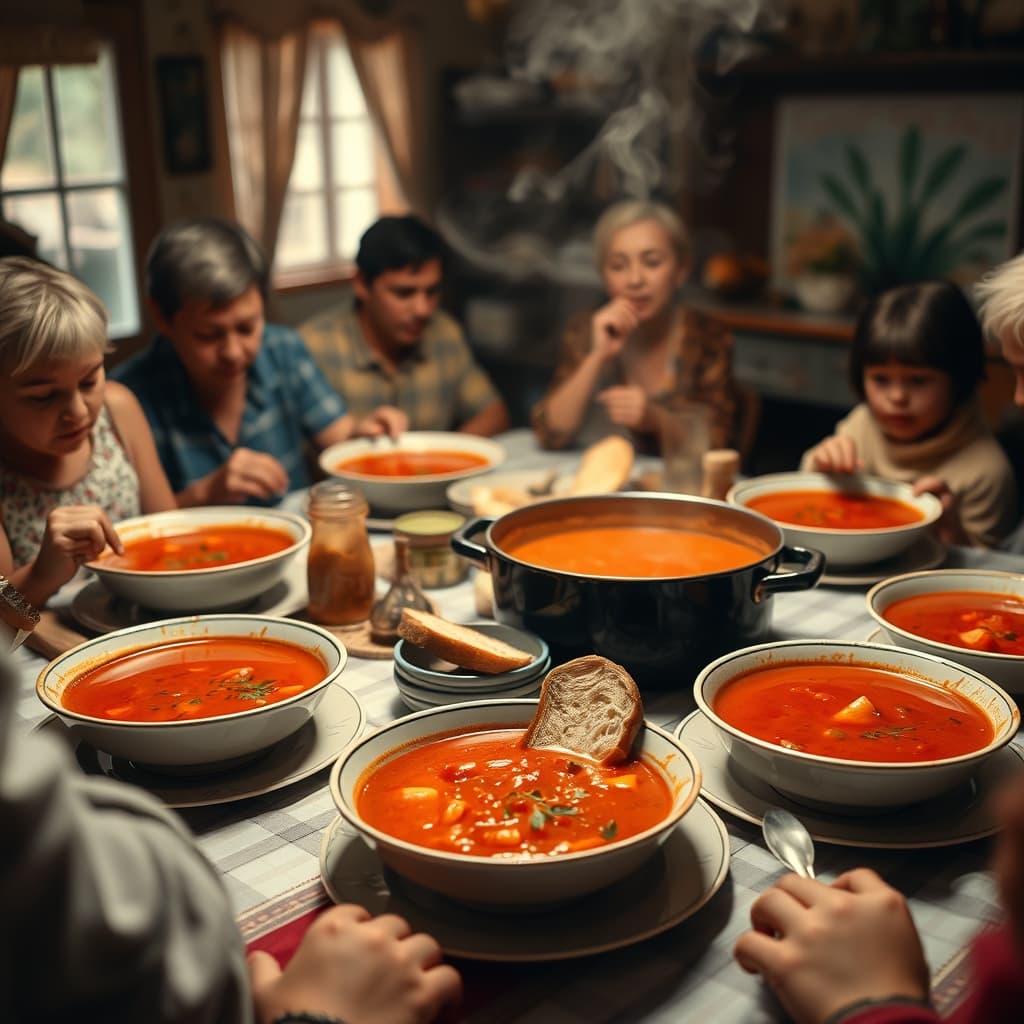
Bir zamanlar kalabalık aile sofralarında masaya gelen ilk tabaklardan biri domates çorbası olduğunda, o akşamın havası daha baştan yumuşardı. Çorbanın buharı yalnız mutfağın değil, bütün evin kokusunu değiştirir; sofraya oturanların sesini biraz sakinleştirir, kaşıkların ritmini aynı noktada buluştururdu. Ev usulü domates çorbası sade bir başlangıç gibi görünse de, içinde bir dönemin paylaşma kültürünü taşıyan derin bir ev terbiyesi saklıydı. Tencerede tereyağıyla kavrulan unun kokusu, rendelenmiş domatesin ağır ağır koyulaşması, bir yandan su ya da et suyu eklenirken diğer yandan ekmek dilimlerinin hazırlanması, daha yemek başlamadan ortaklık duygusunu kurardı. Çünkü bu çorba tek kişilik değil, hep birlikte içilmek üzere pişerdi.

Damak Hafızası açısından domates çorbası, tanıdık malzemelerle büyük bir sıcaklık kurabilen yemeklerden biridir. Özellikle ev usulü yapıldığında, mevsime göre yazdan hazırlanmış domates püresi, kışlık kavanozların kapağı, teneke kutudan çıkan salçanın kokusu ya da üstüne serpilen kaşarın erime biçimi, her evde farklı ama birbirine yakın izler bırakırdı. Çorbanın tarifinden çok pişiriliş tarzı önem taşırdı: kiminde biraz daha koyu, kiminde nane kokulu, kiminde yanında kızarmış ekmekle servis edilen bir yorum olurdu. Fakat ortak olan şey, onun sofra açıcı niteliğiydi. Büyük ailelerde herkes aynı anda ana yemeğe yetişemezdi belki, ama çorba geldiğinde masa kurulmuş, bekleyiş bitmiş sayılırdı.

Kalabalık aile sofralarının unutulmayan tadı ile hatırlanan bu çorbanın bir dönemin paylaşma kültürünü taşımasının nedeni, yoklukla bolluk arasında kurduğu dengedir. Domates çorbası gösterişli bir yemek değildi; ama herkese yetecek kadar çoğaltılabilirdi. Büyük tencerede pişer, kepçeyle eşit bölünür, kimi zaman son kalan kısım “biraz da ona koy” denilerek pay edilirdi. Çocukların önüne biraz ılıtılarak gelir, yaşlıların kasesine karabiber dikkatle eklenir, babanın önüne bazen ekstra kızarmış ekmek konurdu. Herkese aynı tencereden çıkan bir tat sunmak, aile içindeki görünmez adalet duygusunu da beslerdi. Çorba o yüzden sadece besleyici değil; paylaşmayı gündelikleştiren bir yemekti.

Gündelik hayatın ayrıntıları, bu çorbanın neden böylesine güçlü hatırlandığını açık eder. Akşam üzeri mutfaktan gelen domates ve tereyağı kokusu, salondan sofraya çağrılan çocuklar, masa örtüsünün üzerine konan derin tabaklar, cam bardakta su ve hemen yanında limonluk, eski evlerin tanıdık düzenini taşırdı. Kimi evde çorbanın üzerine ince rendelenmiş kaşar serpilir, kimi evde kuru nane kızdırılır, kimi evde yanına kızarmış bayat ekmek değerlendirilirdi. Her ayrıntı, ev ekonomisiyle sevginin birbirinden ayrı tutulmadığını gösterirdi. Çünkü iyi bir çorba, çoğu zaman eldeki malzemeyi israf etmeden, sofradaki kişileri eksik bırakmadan kurmanın bilgisiydi.

Bu yüzden ev usulü domates çorbası sadece bir tarif olarak değil, aile içi ilişki biçimi olarak da hatırlanıyor. Bir kaşığın ardından öteki gelirken konuşmalar açılır, günün yorgunluğu yavaşça çözülür, sofraya sonradan oturan biri için ocakta biraz daha çorba bekletilirdi. Kimse bunun üzerinde uzun uzun düşünmezdi belki, ama evin paylaşma kültürü tam bu alışkanlıklarda yaşardı. Bir tencerenin birçok kişiyi aynı sıcaklıkta buluşturması, ev hayatının en temel cömertliklerinden biriydi.

Bugün domates çorbası hâlâ yapılabilir; fakat hatırlanan tadın içindeki derinlik yalnız domatesin ya da tereyağının lezzetinden gelmez. O tat, kalabalık sofranın sesiyle, aynı anda uzanan kaşıklarla, kimse dışarda kalmasın diye tutulan mutfak ölçüsüyle tamamlanır. Bu yüzden kalabalık aile sofralarının unutulmayan tadı ile hatırlanan ev usulü domates çorbası, bir dönemin paylaşma kültürünü taşımaya devam ediyor. Çünkü bazen bir çorba, yalnız karın doyurmaz; bir evin nasıl birlikte yaşadığını da anlatır.


🇬🇧 English | A Homemade Taste Whose Steam Held the Table Together

There was a time when, on crowded family tables, the arrival of tomato soup as one of the first dishes softened the whole evening from the start. Its steam changed not only the smell of the kitchen, but the mood of the house itself. Voices around the table became calmer, and the rhythm of spoons found a common pace. Homemade tomato soup seemed like a simple beginning, yet inside it lived a deep domestic discipline carrying the culture of sharing of an entire era. The scent of flour browning in butter, the slow thickening of grated tomatoes, the careful addition of water or broth, and the slicing of bread on the side all built a sense of togetherness before the meal had even properly begun. This was not a soup made for one person. It was cooked to be shared.

From the perspective of taste memory, tomato soup is one of those dishes capable of creating great warmth with familiar ingredients. Especially in homemade form, its traces varied from house to house while still belonging to a common world: tomato preserve prepared in summer, jars opened in winter, the smell of tomato paste from a tin, or cheese melting on top. More important than the recipe itself was the style of making it. In one home it was thicker, in another scented with mint, in another served with cubes of toasted bread. Yet what remained constant was its function as an opener of the table. In large families not everyone always arrived at the main dish at the same moment, but once the soup was served, the table was truly assembled and the waiting was over.

One reason this soup carries the sharing culture of an era is the balance it established between modest means and abundance. Tomato soup was never a showy food, but it could always be extended enough to reach everyone. It simmered in a large pot, was ladled out evenly, and the final portion was often passed on with the phrase, “Put a little more in that bowl.” A child’s serving might be cooled before it arrived, an elder’s bowl seasoned carefully with pepper, and a father’s portion offered with extra toasted bread. To offer the same taste from the same pot to everyone at the table nourished a quiet sense of fairness inside the family. That is why the soup was not only filling, but an everyday lesson in sharing.

The details of domestic life explain why it is remembered so vividly. The smell of tomato and butter coming from the kitchen in the late afternoon, children called from the sitting room, deep bowls placed on the cloth, water glasses lined beside a lemon dish, all belonged to the familiar order of older homes. In one house finely grated cheese was sprinkled over the top, in another dried mint was warmed in butter, and in another stale bread was transformed into crisp garnish rather than wasted. Every detail showed that household economy and affection were not separated from one another. A good soup often meant knowing how to make enough from what was available without waste and without leaving anyone at the table feeling absent.

That is why homemade tomato soup is remembered not merely as a recipe, but as a form of family relationship. Spoon followed spoon, conversation slowly opened, the fatigue of the day loosened, and a little soup was often kept warm for the person who would sit down later. Perhaps no one thought about these customs in explicit terms, yet the household culture of sharing lived precisely in them. The ability of a single pot to gather many people into the same warmth was one of the quiet generosities of home life.

Tomato soup can still be made today, of course, but the depth of the remembered taste comes from more than the flavor of tomato or butter. It is completed by the sound of a crowded table, by spoons reaching forward together, and by the kitchen measure kept so that no one would be left out. That is why homemade tomato soup, remembered through the unforgettable taste of large family tables, continues to carry the sharing culture of its time. Sometimes a soup does more than feed the body. It tells us how a household once lived together.


🇧🇷 Português (Brasil) | Um Sabor Caseiro Cujo Vapor Mantinha a Mesa Unida

Houve um tempo em que, nas mesas cheias de família, a chegada da sopa de tomate como um dos primeiros pratos já suavizava a noite inteira. O vapor mudava não apenas o cheiro da cozinha, mas o clima da casa. As vozes ao redor da mesa ficavam mais calmas, e o ritmo das colheres encontrava um compasso comum. A sopa de tomate caseira podia parecer um começo simples, mas dentro dela havia uma disciplina doméstica profunda que carregava a cultura de partilha de toda uma época. O cheiro da farinha dourando na manteiga, o tomate ralado engrossando devagar, a água ou o caldo sendo acrescentados com cuidado e o pão sendo cortado ao lado criavam um sentimento de união antes mesmo de a refeição começar de verdade. Não era uma sopa feita para uma pessoa só. Era preparada para ser dividida.

Do ponto de vista da memória do paladar, a sopa de tomate é um daqueles pratos capazes de criar grande aconchego com ingredientes conhecidos. Especialmente quando feita em casa, deixava marcas diferentes em cada família, mas sempre reconhecíveis: a polpa de tomate preparada no verão, os potes abertos no inverno, o cheiro do extrato saindo da lata ou o queijo derretendo por cima. Mais importante do que a receita era o modo de preparo. Em uma casa ela era mais encorpada, em outra vinha com hortelã seca, em outra era servida com cubos de pão torrado. Mas havia algo comum em todas: a função de abrir a mesa. Nas famílias grandes, nem todos chegavam ao prato principal ao mesmo tempo, mas quando a sopa era servida a refeição realmente começava e a espera terminava.

Uma das razões para essa sopa carregar a cultura de partilha de um tempo está no equilíbrio que ela criava entre simplicidade e fartura. A sopa de tomate não era vistosa, mas podia sempre ser aumentada para alcançar todos. Cozinhava numa panela grande, era servida em porções equilibradas, e o final costumava ser repartido com a frase “coloca um pouco mais para ele”. A tigela da criança vinha mais morna, a do idoso recebia pimenta com cuidado, e a do pai às vezes ganhava pão torrado extra. Oferecer o mesmo sabor vindo da mesma panela a todos alimentava também um senso silencioso de justiça dentro da família. Por isso a sopa não era apenas nutritiva, mas uma lição cotidiana de partilha.

Os detalhes da vida doméstica explicam por que ela é lembrada com tanta força. O cheiro de tomate e manteiga vindo da cozinha no fim da tarde, as crianças chamadas da sala, os pratos fundos colocados sobre a toalha, os copos de água ao lado da pequena travessa de limão, tudo isso fazia parte da ordem familiar das casas antigas. Em uma casa polvilhava-se queijo ralado fino; em outra, hortelã seca era aquecida na manteiga; em outra, o pão amanhecido virava acompanhamento crocante em vez de desperdício. Cada detalhe mostrava que economia da casa e afeto não viviam separados. Muitas vezes uma boa sopa significava saber fazer bastante com o que havia, sem desperdício e sem deixar ninguém de fora.

É por isso que a sopa de tomate caseira é lembrada não apenas como receita, mas como uma forma de relação familiar. Uma colher vinha depois da outra, as conversas se abriam devagar, o cansaço do dia se dissolvia, e um pouco de sopa ficava no fogão esperando quem chegaria mais tarde. Talvez ninguém refletisse longamente sobre esses hábitos, mas a cultura de partilha da casa vivia justamente neles. A capacidade de uma única panela reunir várias pessoas no mesmo calor era uma das generosidades silenciosas da vida doméstica.

A sopa de tomate ainda pode ser feita hoje, claro, mas a profundidade do sabor lembrado não vem apenas do tomate ou da manteiga. Ela se completa com o som da mesa cheia, com as colheres avançando ao mesmo tempo e com a medida da cozinha ajustada para que ninguém ficasse de fora. É por isso que a sopa de tomate caseira, lembrada pelo sabor inesquecível das mesas de família cheias, continua levando adiante a cultura de partilha de sua época. Às vezes uma sopa faz mais do que alimentar. Ela conta como uma casa vivia em conjunto.


Category: Damak Hafızası / Taste of Memory / Memória do Paladar

Yazı gezinmesi

← Açık Pencere Arkasından Gelen Radyo Sesi ile Geçen Saatler Sokağı Nasıl Ortak bir Eve Dönüştürdü | How Did the Hours Passed with the Radio Sound Coming from Behind an Open Window Turn the Street into a Shared Home? | Como as Horas Passadas Com o Som do Rádio Vindo de Trás da Janela Aberta Transformaram a Rua Numa Casa Compartilhada?
Hatıraların Tozlu Raflarında Okul Önlüklerinin Aynı Hayali Taşıdığı Sabahlar: Bugüne Hangi Sessiz Alışkanlıkları Bıraktı Çiçek Kokulu Sokaklar | Mornings When School Smocks Carried the Same Dream on the Dusty Shelves of Memory: What Quiet Habits Did Flower-Scented Streets Leave to Today? | Manhãs Em Que Os Aventais Escolares Carregavam o Mesmo Sonho Nas Prateleiras Poeirentas da Memória: Que Hábitos Silenciosos as Ruas Com Cheiro de Flores Deixaram Para Hoje? →

Bir yanıt yazın Yanıtı iptal et

E-posta adresiniz yayınlanmayacak. Gerekli alanlar * ile işaretlenmişlerdir

🇹🇷 Retro, Tarih ve Nostaljik Hikayeler
🇬🇧 Retro, History & Vintage Stories
🇧🇷 Histórias Retro, Históricas e Vintage

Son Yazılar | Recent Posts | Postagens recentes

  • Eski Şehir Hayatında Çıraklık Kültürünün Sokaklara Düzen Verdiği Zamanlar: Hafızada Neden Hâlâ bu Kadar Canlı Cam Açtıran Sabahlar | Times When Apprenticeship Culture Brought Order to the Streets of Old City Life: Why do Those Window-Opening Mornings Still Feel So Vivid in Memory? | Tempos Em Que a Cultura do Aprendizado Dava Ordem Às Ruas da Vida Urbana Antiga: Por Que Aquelas Manhãs Que Faziam Abrir as Janelas Ainda Permanecem Tão Vivas Na Memória?
  • Tepsi Böreği ve Okul Dönüşü Tabağa İlk Uzanan Kaşık: Ev Mutfağının Karakterini Nasıl Anlatıyor | Tray Pastry and the First Spoon Reaching for the Plate After School: How Does It Tell the Character of the Home Kitchen? | Torta de Assadeira E a Primeira Colher Que Alcança o Prato Na Volta da Escola: Como Ela Revela o Caráter da Cozinha da Casa?
  • Bayramlık Ayakkabı Heyecanı Kış Gecelerinde: Çocuk Hafızasında Neden Hiç Silinmedi | the Excitement of Holiday Shoes on Winter Nights: Why Was It Never Erased from a Child’s Memory? | A Emoção dos Sapatos de Festa Nas Noites de Inverno: Por Que Nunca Se Apagou da Memória Infantil?
  • Çeyiz Sandığı ve Sandıkların Dibinden Çıkan İnce Hikâyesi: Neden Bugün Yeniden İlgi Görüyor | the Dowry Chest and the Delicate Story Emerging from the Bottom of Old Trunks: Why Is It Drawing Attention Again Today? | O Baú de Enxoval E a Delicada História Que Sai do Fundo dos Baús: Por Que Volta a Despertar Interesse Hoje?
  • Polaroid Fotoğraf Makinesi: Anteni Çevirdikçe Netleşen Umut İçinde Tamircilerin Elinde Neden İkinci bir Ömür Bulduğunu Açıklıyor | Polaroid Camera: Explains Why, Within a Hope That Becomes Clearer as the Antenna Is Turned, It Found a Second Life in the Hands of Repairmen | Câmera Fotográfica Polaroid: Explica Por Que, Dentro de Uma Esperança Que Fica Mais Nítida Ao Girar a Antena, Ela Encontrou Uma Segunda Vida Nas Mãos dos Consertadores

Son Yorumlar | Recent Comments | Comentários recentes

  1. Susiewedia - Seramik Sürahi ve Gündelik Kullanımın İçinde Görünmeden Bıraktığı İz: bir Dönemin Zevk Anlayışını Nasıl Yansıttı | the Ceramic Pitcher and the Trace İt Left Almost İnvisibly in Everyday Use: How İt Reflected an Era’s Sense of Taste | A Jarra de Cerâmica E o Rastro Quase İnvisível Que Deixou No Uso Cotidiano: Como Refletiu o Senso de Gosto de Uma Época
  2. GregoryLossy - Seramik Sürahi ve Gündelik Kullanımın İçinde Görünmeden Bıraktığı İz: bir Dönemin Zevk Anlayışını Nasıl Yansıttı | the Ceramic Pitcher and the Trace İt Left Almost İnvisibly in Everyday Use: How İt Reflected an Era’s Sense of Taste | A Jarra de Cerâmica E o Rastro Quase İnvisível Que Deixou No Uso Cotidiano: Como Refletiu o Senso de Gosto de Uma Época
  3. SheilaWex - Seramik Sürahi ve Gündelik Kullanımın İçinde Görünmeden Bıraktığı İz: bir Dönemin Zevk Anlayışını Nasıl Yansıttı | the Ceramic Pitcher and the Trace İt Left Almost İnvisibly in Everyday Use: How İt Reflected an Era’s Sense of Taste | A Jarra de Cerâmica E o Rastro Quase İnvisível Que Deixou No Uso Cotidiano: Como Refletiu o Senso de Gosto de Uma Época
  4. Susiewedia - Seramik Sürahi ve Gündelik Kullanımın İçinde Görünmeden Bıraktığı İz: bir Dönemin Zevk Anlayışını Nasıl Yansıttı | the Ceramic Pitcher and the Trace İt Left Almost İnvisibly in Everyday Use: How İt Reflected an Era’s Sense of Taste | A Jarra de Cerâmica E o Rastro Quase İnvisível Que Deixou No Uso Cotidiano: Como Refletiu o Senso de Gosto de Uma Época
  5. SheilaWex - Seramik Sürahi ve Gündelik Kullanımın İçinde Görünmeden Bıraktığı İz: bir Dönemin Zevk Anlayışını Nasıl Yansıttı | the Ceramic Pitcher and the Trace İt Left Almost İnvisibly in Everyday Use: How İt Reflected an Era’s Sense of Taste | A Jarra de Cerâmica E o Rastro Quase İnvisível Que Deixou No Uso Cotidiano: Como Refletiu o Senso de Gosto de Uma Época

Arşivler | Archives | Arquivos

  • Nisan 2026
  • Mart 2026
  • Şubat 2026

Kategoriler | Categories | Categorias

  • Damak Hafızası / Taste of Memory / Memória do Paladar
  • Mahalle Kültürü / Neighborhood Culture / Cultura do Bairro
  • Obje Hikayeleri / Object Stories / Histórias de Objetos
  • Teknoloji Mirası / Tech Heritage / Herança Tecnológica
  • Zamanın İzinde / Traces of Time / Trilhas do Tempo
eskipano.com'da yer alan bilgi, yorum ve değerlendirmeler yatırım danışmanlığı kapsamında değildir. Yatırım danışmanlığı hizmeti; aracı kurumlar, portföy yönetim şirketleri, mevduat kabul etmeyen bankalar ve yatırımcı arasında imzalanacak sözleşme çerçevesinde sunulmaktadır.

Sitede paylaşılan içerikler genel bilgilendirme amacı taşımakta olup, bunları hazırlayanların kişisel görüş ve değerlendirmelerine dayanabilir. Bu içerikler, ziyaretçilerin mali durumu ile risk ve getiri tercihleri dikkate alınarak hazırlanmış özel öneriler niteliğinde değildir. Bu nedenle yalnızca burada yer alan bilgi, yorum ve değerlendirmelere dayanılarak yatırım kararı verilmesi, beklentilere uygun sonuçlar doğurmayabilir.

eskipano.com üzerinde yayımlanan bazı içeriklerde reklam, sponsorluk, tanıtım, iş birliği, bağlı kuruluş bağlantıları (affiliate links) veya ticari yönlendirmeler yer alabilir. Bu tür içerikler, ilgili durumun niteliğine göre açıkça belirtilmeye çalışılsa da, kullanıcıların sitede yer alan her içeriği kendi değerlendirmeleri çerçevesinde incelemesi tavsiye edilir. Reklam, sponsorluk veya benzeri ticari unsurlar içeren içerikler, hiçbir şekilde kesin tavsiye, garanti ya da taahhüt anlamına gelmez.

eskipano.com'da yayımlanan içeriklerde doğruluk ve güncellik konusunda azami özen gösterilmekle birlikte, sitede yer alan bilgi ve verilerde oluşabilecek hata, eksiklik, gecikme ya da farklılıklardan; ayrıca bu bilgilerin kullanılması veya kullanılmaması nedeniyle ortaya çıkabilecek doğrudan ya da dolaylı zararlardan, kar kaybından veya üçüncü kişilerin uğrayabileceği zararlardan site yönetimi sorumlu tutulamaz.
  • Gizlilik Politikası | Privacy Policy | Política de Privacidade
  • Hakkımızda | About Us | Sobre Nós
  • İletişim | Contact | Contato
  • Site Haritası | Sitemap | Mapa do site
© 2026 Eski Pano | Powered by Minimalist Blog WordPress Theme