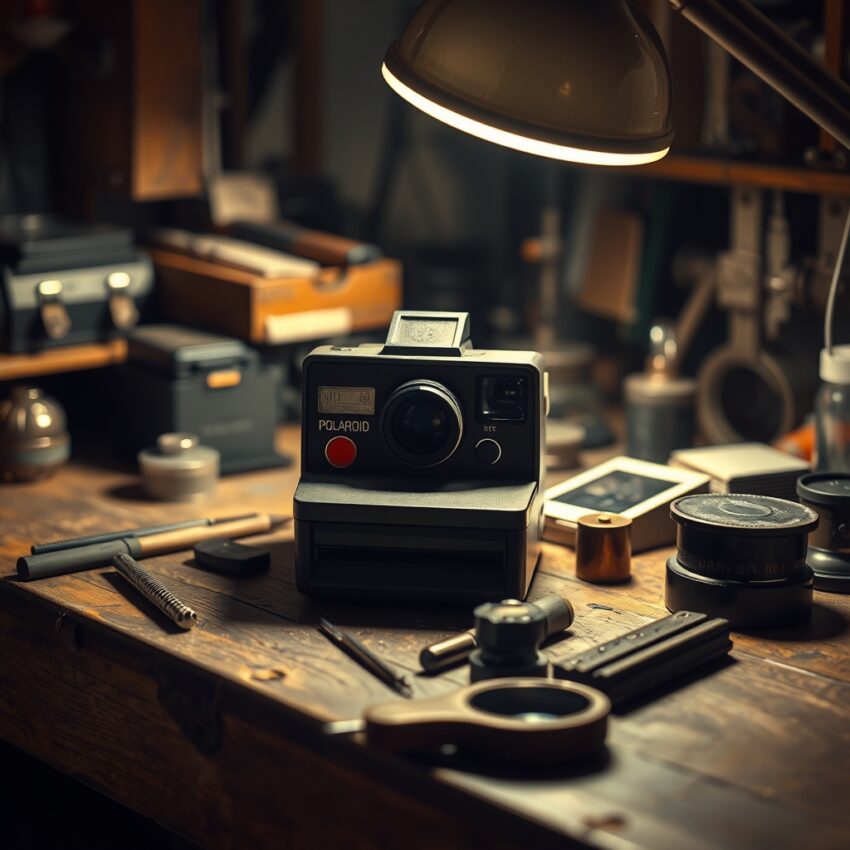
🇹🇷 Türkçe | Tamir Masasında Yeniden Parlayan Analog Umudun Sessiz Hikâyesi
Bir zamanlar polaroid fotoğraf makinesi, yalnız fotoğraf çeken bir cihaz değil; anı beklemeden ele bırakabilen küçük bir mucizeydi. Düğmeye basıldıktan sonra makinenin ağzından yavaşça çıkan kare, evlerin salonlarında, nişan masalarında, asker uğurlamalarında ve yazlık akşamlarda sabırsızlıkla beklenirdi. Görüntü kâğıdın üstünde yavaş yavaş belirirken herkes aynı şeye biraz çocukça bir hayranlıkla bakardı: sanki zaman kendi elleri arasında görünür oluyordu. Bu yüzden polaroid, teknik bir alet olmanın ötesinde, analog çağın umut üreten nesnelerinden biriydi. Çekilen kare kusurlu olabilir, ışık tam düşmeyebilir, kenar hafif soluk çıkabilirdi; ama tam da bu eksik kusursuzluk, onu unutulmaz kılardı.
Teknoloji Mirası açısından bakıldığında bu makinenin ikinci ömrü, atılmayı reddeden bir zanaat kültürüyle ilgilidir. Yeni modellerin piyasaya çıkması, dijital fotoğrafın hayatı ele geçirmesi ve anlık görüntünün ekrana sıkışmasıyla birçok analog alet gibi polaroidler de bir ara köşelere çekildi. Fakat tamircilerin dükkânlarında bu geri çekilişin son söz olmadığı görüldü. Vidaları eksik, kapağı gevşemiş, flaşı çalışmayan ya da film sürgüsü takılan makinelere yeniden eğilen ustalar, onları yalnız onarmadı; onların etrafındaki hafızayı da ayakta tuttu. Tamir tezgâhında sökülen her vida, bir dönemin fotoğraf alışkanlığına gösterilen saygı gibiydi. Çünkü bazı cihazlar teknik değerinden çok, insanların onlarla kurduğu duygusal temas nedeniyle yaşatılır.
“Anteni çevirdikçe netleşen umut” gibi tuhaf ama şiirli bir ifade, aslında tamir kültürünün ruhuna yakışır. Analog dünyada netlik çoğu zaman sabırla, el becerisiyle ve tekrar denemeyle gelirdi. Polaroid makinenin içinden duyulan küçük motor sesi, kartuşun yerine oturuşu ve ilk deneme çekiminin bekleyişi, bir şeyin yeniden çalışacağına dair usul bir inanç taşırdı. Usta tamirci cihazı eline aldığında yalnız mekanizmaya bakmaz; gövdenin çiziklerinden kimlerin elinden geçtiğini, kapağın gevşekliğinden ne kadar süre ihmal edildiğini, vizörün pusundan ne kadar beklediğini de sezermiş gibi davranırdı. Bu yüzden tamir masası bazen küçük bir ameliyathane, bazen de geçmişe açılan bir ikna masası olurdu.
Gündelik hayatın içinden bakınca polaroidin ikinci ömrü biraz da insanların somut hatıraya duyduğu özlemle ilgilidir. Dijital galerilerde binlerce görüntü birikse de elde tutulabilen, kenarına tarih atılabilen, albüm arasına sıkıştırılabilen fotoğrafın duygusu ayrıdır. Bir polaroid kare, çekildiği an kadar sonrasında da yaşar; buzdolabı kapağına mıknatısla tutturulur, cüzdana konur, mektubun içine eklenir ya da çekmecede yıllarca sararmaya bırakılır. Tamircilerin elinde canlanan makine, işte bu dolaşımı yeniden mümkün kılar. İnsanlar yalnız eski bir cihaza değil, fotoğrafın yavaş ve elle tutulur hâline geri dönmek ister. Çünkü bazı görüntüler ekranda kalınca değil, elde hafifçe bükülünce hatıraya dönüşür.
Polaroid fotoğraf makinesinin tamircilerin elinde ikinci bir ömür bulması bu yüzden yalnız nostaljinin inadı değildir. Bu durum, teknolojinin insan hayatındaki yerinin hızla değil ilişkiyle belirlendiğini hatırlatır. Onarılabilen her cihaz, geçmişte bir şeylerin tamamen bitmediğini söyler. Ustanın tornavidası, müşterinin bekleyişi ve ilk başarılı baskıda beliren sevinç, analog dünyanın hâlâ canlı bir dili olduğunu gösterir. Bugün o makinelere bakanlar yalnız eski bir nesneye bakmıyor; kusurlarıyla sevilen, emekle çalışan ve fotoğrafı tekrar küçük bir törene dönüştüren bir zamana da bakıyor.
🇬🇧 English | The Quiet Story of Analog Hope Shining Again on the Repair Bench
There was a time when the Polaroid camera was not simply a device that took photographs, but a small miracle that placed memory directly into the hand without delay. After the shutter was pressed, the square print slowly emerging from the mouth of the camera was awaited in living rooms, engagement gatherings, farewell send-offs, and summer evenings with an impatience almost childlike in its wonder. As the image gradually appeared on paper, everyone watched the same thing: time becoming visible between their fingers. That is why the Polaroid mattered as more than a machine. It was one of the objects through which the analog age produced hope. The photograph might be imperfect, the light might fall unevenly, the edges might fade slightly, yet that incomplete perfection was exactly what made it unforgettable.
From the perspective of technological heritage, the second life of this camera is tied to a repair culture that refused to let objects disappear quietly. New models arrived, digital photography took command of daily life, and instant images became trapped inside screens. Like many analog tools, Polaroid cameras were pushed aside for a time. Yet in repair shops that withdrawal never became the final word. Craftsmen bent again over cameras with loose covers, jammed film slots, dead flashes, or missing screws, and in repairing them they preserved not only the mechanism but the memory surrounding it. Every screw removed on the workbench resembled a gesture of respect toward an older habit of photographing. Some devices survive not because of technical superiority, but because of the emotional relationship people formed with them.
The phrase about a hope becoming clearer as the antenna is turned may sound strange, yet it fits the spirit of repair. In the analog world, clarity often came through patience, manual skill, and repetition. The low motor sound inside the camera, the click of a cartridge settling into place, and the waiting before the first test shot all carried a quiet belief that something might work again. When a repairman picked up the body of the machine, he seemed to read more than its parts. The scratches suggested how many hands had carried it. The looseness of the lid hinted at how long it had been neglected. The haze in the viewfinder implied how many months or years it had waited. That is why the repair table could feel like a small operating room and, at the same time, a place where the past was persuaded to return.
Seen within everyday life, the second life of the Polaroid also comes from people’s longing for a tangible form of memory. Digital galleries may hold thousands of images, but the emotional life of a photograph that can be held, dated, tucked inside an album, or placed in a wallet is entirely different. A Polaroid does not live only at the moment it is taken. It continues on refrigerator doors, inside drawers, in letters, or between the pages of a book where it quietly yellows over time. The camera revived by the hands of repairmen makes this circulation possible again. People are not returning only to an old machine. They are returning to the slower, touchable life of the image itself. Some photographs become memory only when they can be bent lightly between the fingers rather than enlarged with a swipe on glass.
For that reason, the Polaroid camera finding a second life in the hands of repairmen is not merely nostalgia refusing to surrender. It reminds us that technology gains its place in human life through relationship, not speed alone. Every device that can still be repaired says that not everything from the past is truly finished. The repairman’s screwdriver, the customer’s waiting, and the joy that appears with the first successful print all show that the analog world still has a living language. To look at those cameras today is to look not only at an old object, but at a time in which imperfections were loved, effort mattered, and photography could once again become a small ceremony.
🇧🇷 Português (Brasil) | A História Silenciosa da Esperança Analógica que Volta a Brilhar na Bancada de Conserto
Houve um tempo em que a câmera Polaroid não era apenas um aparelho fotográfico, mas um pequeno milagre capaz de colocar a lembrança na mão sem espera. Depois do clique, o quadrado que saía lentamente da boca da máquina era aguardado com ansiedade em salas de estar, noivados, despedidas para o quartel e noites de verão. Enquanto a imagem surgia devagar no papel, todos olhavam com um encanto quase infantil para a mesma coisa: o tempo se tornando visível entre os dedos. É por isso que a Polaroid foi mais do que uma máquina. Ela foi um dos objetos pelos quais a era analógica produzia esperança. A foto podia sair imperfeita, a luz podia falhar, a borda podia ficar um pouco apagada, mas era justamente essa perfeição incompleta que a tornava inesquecível.
Do ponto de vista do patrimônio tecnológico, a segunda vida dessa câmera está ligada a uma cultura de conserto que se recusou a deixar os objetos desaparecerem em silêncio. Novos modelos chegaram, a fotografia digital tomou conta da rotina e a imagem instantânea passou a morar nas telas. Como muitos aparelhos analógicos, a Polaroid foi por um tempo colocada de lado. Mas nas oficinas esse recuo não foi a palavra final. Técnicos voltaram a se debruçar sobre máquinas com tampa solta, flash quebrado, compartimento travado ou parafusos ausentes, e ao repará-las preservaram não só o mecanismo, mas a memória ao redor dele. Cada parafuso retirado da bancada parecia um gesto de respeito por um modo antigo de fotografar. Alguns objetos sobrevivem não por superioridade técnica, e sim pela relação afetiva criada com as pessoas.
Essa frase sobre uma esperança que fica mais nítida ao girar a antena pode soar estranha, mas combina com o espírito do conserto. No mundo analógico, a nitidez quase sempre vinha com paciência, habilidade manual e repetição. O ruído leve do motor, o encaixe do cartucho e a espera antes da primeira foto de teste carregavam uma fé discreta de que algo poderia voltar a funcionar. Quando o consertador pegava o aparelho, parecia ler mais do que as peças. Os riscos no corpo sugeriam quantas mãos o haviam carregado. A tampa frouxa contava quanto tempo ele ficara sem cuidado. A névoa no visor revelava meses ou anos de espera. Por isso a bancada podia parecer ao mesmo tempo uma pequena sala cirúrgica e uma mesa onde o passado era convencido a voltar.
Dentro da vida cotidiana, a segunda vida da Polaroid também nasce da saudade de uma memória tangível. Galerias digitais podem guardar milhares de imagens, mas a emoção de uma foto que se segura na mão, recebe uma data, entra num álbum ou vai para dentro da carteira é diferente. A Polaroid não vive só no instante do clique. Ela continua na porta da geladeira, no fundo da gaveta, dentro de uma carta ou entre páginas de livro, onde amarelece devagar. A câmera reanimada pelas mãos do técnico torna esse percurso possível outra vez. As pessoas não estão voltando apenas a um aparelho antigo. Estão voltando ao ritmo mais lento e tocável da própria imagem. Algumas fotografias só viram memória quando podem se curvar levemente entre os dedos em vez de crescer na tela.
Por isso, o fato de a câmera Polaroid encontrar uma segunda vida nas mãos dos consertadores não é apenas nostalgia teimosa. É um lembrete de que a tecnologia conquista lugar na vida humana não só pela velocidade, mas pela relação que estabelece. Cada aparelho que ainda pode ser reparado diz que nem tudo do passado terminou de verdade. A chave de fenda do técnico, a espera do dono e a alegria que aparece com a primeira impressão bem-sucedida mostram que o mundo analógico ainda fala uma língua viva. Quem olha hoje para essas câmeras não vê apenas um objeto antigo, mas um tempo em que as imperfeições eram queridas, o esforço tinha valor e a fotografia podia voltar a ser uma pequena cerimônia.