🇹🇷 Türkçe | berberden taşan muhabbet günleri: mahalle esnafıyla bağı nasıl güçlendirdi
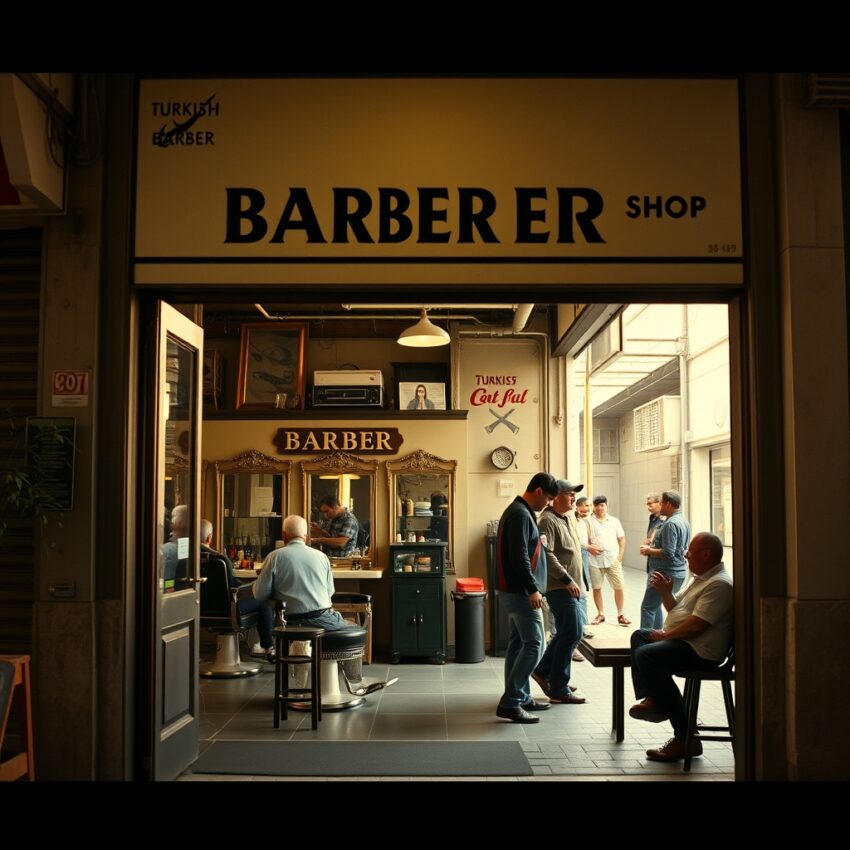
Mahallede bazı dükkânlar alışveriş yapılan yer olmaktan daha fazlasıydı; berber bunların başında gelirdi. Camındaki solmuş model fotoğrafları, içerideki tıraş losyonu kokusu, aynaların önünde sıralanan koltuklar ve sürekli yarım bırakılıp yeniden başlanan cümlelerle berber dükkânı, günün ritmini dışarıya da taşırdı. Kapı kimi zaman tam kapanmaz, içeride konuşulan meseleler kaldırıma kadar yayılırdı. Bir müşteri tıraş olurken giren başka biri selam verip sandalyeye ilişir, henüz sırası gelmemiş olsa bile muhabbete katılırdı. Bu yüzden berberden taşan günler, yalnız saç kesiminin ya da sakal tıraşının değil, mahallenin birbirini duyma biçiminin de parçasıydı. İnsanlar burada yalnız görünüşlerini değil, komşuluk bağlarını da tazelerdi.
Mahalle Kültürü içinde berberin ayrıcalıklı yeri, onun yarı kamusal bir buluşma noktası olmasından gelir. Kahvehane daha geniş bir kalabalık toplarken, berber dükkânı daha sık aralıklı ve daha kişisel temaslar üretirdi. Mahalle esnafıyla bağın güçlenmesi de tam burada başlardı. Berber, müşterisinin saç yapısını bildiği kadar ailesini, işini, askerdeki oğlunu, sınava hazırlanan torununu da bilirdi. Bu bilgi meraktan çok süreklilikten doğardı. Aynı dükkâna yıllarca gitmek, kişinin yüzünü ve hikâyesini mahallenin ortak arşivine teslim etmesi demekti. Yan dükkândaki manavın sabah ne zaman kepenk açtığını, fırındaki zam haberini, sokaktaki taşınmayı ya da düğün hazırlığını ilk duyan yerlerden biri çoğu zaman berber olurdu. Böylece berber dükkânı, esnaf ağı içinde haberin ve samimiyetin dolaştığı bir düğüm işlevi görürdü.
Muhabbetin berberden taşması, dükkânın fiziksel sınırlarını aşan bir mahalle sıcaklığı yaratırdı. Yaz aylarında kapının önüne atılan tabure, içeride yer kalmayınca dışarıda bekleyen müşteriler, tıraş sonrası ayaküstü devam eden sohbetler, bu mekânı sokağın uzantısına çevirirdi. Çocuklar babalarının yanında gelir, aynalarda kendilerini izler, kolonya şişesine merakla bakar, berber ustasının makası nasıl taşıdığını fark etmeden öğrenirdi. Gençler ilk kez saç modelini değiştirirken dükkânın diline kulak verir, yaşlılar yalnız tıraş olmak için değil iki kelime duymak için de uğrardı. Bu süreklilik, mahalle esnafıyla kurulan ilişkinin yalnız ihtiyaca dayanmadığını gösterirdi. Berber, mahallenin nabzını tutan ama bunu resmiyete dökmeden yapan bir hafıza bekçisi gibiydi.
Esnafla bağın güçlenmesinde güven duygusu belirleyici rol oynardı. Usturanın boğaza yaklaşması, makasın baş çevresinde dolaşması, yüzün köpükle kaplanması, insanı kaçınılmaz olarak berbere teslim eden anlardır. Bu teslimiyet, yalnız teknik beceriye değil, tanışıklığa da dayanır. “Her zamanki gibi olsun” cümlesi, yıllar içinde biriken sessiz anlaşmanın kısa özetidir. Berberin eli kadar sözüne de güvenilir; o da müşterisinin yalnız tıraş biçimini değil, nerede susulacağını, nerede şaka yapılacağını bilir. Böyle bir ilişki, çevredeki başka esnafa da yansırdı. Berberde adı geçen kasap, terzi ya da bakkal, otomatik olarak o ortak güven zincirinin parçası hâline gelirdi. Mahalle böylece dükkân dükkân birbirine bağlanırdı.
Bugün berberden taşan muhabbet günlerinin neden bu kadar özlendiğini anlamak zor değil. Çünkü orada konuşma, vakit öldürmenin değil, birlikte var olmanın doğal yoluydu. İnsanlar birbirlerini hızla tüketilen bilgi kırıntılarıyla değil, tekrar eden karşılaşmalarla tanıyordu. Berber dükkânının aynaları yalnız yüzleri göstermiyor; mahallenin birbirine dönük tarafını da çoğaltıyordu. Mahalle esnafıyla bağın güçlenmesi biraz da bu yüzden mümkündü. Aynı sesleri duymak, aynı isimleri anmak, aynı dükkânda biraz oyalanmak, bir topluluğun gündelik dokusunu kuvvetlendiriyordu. Berberden sokağa taşan muhabbet, mahallenin kendi kendini ayakta tutan sıcak diliydi.
🇬🇧 English | The Days When Conversation Spilled Out of the Barber Shop: How Did It Strengthen the Bond with Neighborhood Tradesmen?
In the neighborhood, some shops were more than places where purchases were made, and the barber stood at the front of them. With faded hairstyle photographs on the window, the smell of aftershave inside, chairs lined up before mirrors, and sentences constantly interrupted and resumed, the barber shop carried the rhythm of the day outward. The door did not always close completely, and the matters discussed inside could spread as far as the pavement. While one customer was being shaved, another would enter, offer greetings, and sit down, joining the conversation even before his turn arrived. For that reason, the days when talk spilled out of the barber shop belonged not only to haircuts and shaves, but also to the neighborhood’s way of hearing itself. People renewed not only their appearance there, but their ties of familiarity.
Within neighborhood culture, the barber’s privileged place came from being a semi-public meeting point. A coffeehouse gathered a broader crowd, but the barber shop created more frequent and more personal contact. This is exactly where the bond with neighborhood tradesmen began to deepen. The barber knew not only a customer’s hair, but also his family, his work, the son away in military service, or the grandchild preparing for exams. Such knowledge did not arise from curiosity as much as from continuity. Going to the same shop for years meant placing one’s face and story into the neighborhood’s shared archive. The barber shop was often among the first places where one heard when the greengrocer next door opened his shutters, when prices changed at the bakery, or when a move or wedding was taking place on the street. In this way it functioned as a node through which news and warmth moved across the local network of tradesmen.
The fact that conversation overflowed from the barber created a neighborhood warmth that exceeded the physical limits of the shop. In summer, the stool placed outside the door, the customers waiting outdoors when there was no room inside, and the small talk continuing after the shave turned the place into an extension of the street. Children came beside their fathers, watched themselves in mirrors, looked curiously at the cologne bottle, and learned without realizing it how the barber carried his scissors. Young men listened to the language of the shop while changing their hairstyle for the first time, and older men stopped by not only for grooming but to hear a few human sentences. This continuity showed that the relationship with neighborhood tradesmen was not based on need alone. The barber was like a keeper of memory, holding the pulse of the area without formalizing it.
Trust played a decisive role in strengthening the bond with tradesmen. The razor approaching the throat, the scissors moving around the head, the face covered in foam are moments in which a person inevitably yields himself to the barber. That surrender depends not only on technical skill, but on familiarity. The phrase “as usual” is a short summary of a silent agreement accumulated over years. One trusts not only the barber’s hand, but also his word, and he in turn knows not only how his customer likes to be shaved, but also when silence is needed and when humor is welcome. Such a relationship reflected outward toward other shopkeepers as well. The butcher, tailor, or grocer mentioned in the barber shop automatically became part of that shared chain of trust. In this way the neighborhood connected itself shop by shop.
It is not difficult today to understand why those days of conversation spilling from the barber are remembered with longing. There, conversation was not a way of killing time, but a natural way of existing together. People did not know one another through quickly consumed fragments of information, but through repeated encounters. The mirrors in the barber shop reflected more than faces. They multiplied the neighborhood’s tendency to turn toward itself. That is why the bond with local tradesmen could grow so strong. Hearing the same voices, speaking the same names, lingering a little in the same place strengthened the daily fabric of a community. The conversation that spilled from the barber onto the street was the neighborhood’s own warm and self-sustaining language.
🇧🇷 Português (Brasil) | Os Dias em que a Conversa Transbordava da Barbearia: Como Isso Fortaleceu o Vínculo com os Comerciantes do Bairro?
No bairro, algumas lojas eram mais do que lugares de compra, e a barbearia vinha entre as primeiras. Com as fotos já desbotadas de cortes no vidro, o cheiro de loção pós-barba, as cadeiras alinhadas diante dos espelhos e as frases sempre interrompidas e retomadas, a barbearia fazia o ritmo do dia escapar para fora. A porta nem sempre fechava completamente, e os assuntos falados lá dentro podiam se espalhar até a calçada. Enquanto um cliente fazia a barba, outro entrava, cumprimentava, sentava-se e participava da conversa mesmo antes de sua vez chegar. Por isso os dias em que a conversa transbordava da barbearia diziam respeito não apenas ao corte de cabelo ou ao barbear, mas também à maneira como o bairro escutava a si mesmo. Ali as pessoas renovavam não apenas a aparência, mas também os laços de convivência.
Dentro da cultura de bairro, o lugar privilegiado da barbearia vinha do fato de ela ser um ponto de encontro semi-público. O café reunia um grupo maior, mas a barbearia criava contatos mais frequentes e mais pessoais. É justamente aí que o vínculo com os comerciantes do bairro se fortalecia. O barbeiro conhecia não apenas o cabelo do cliente, mas também sua família, seu trabalho, o filho que estava no exército ou o neto que estudava para a prova. Esse conhecimento surgia menos da curiosidade e mais da continuidade. Frequentar a mesma loja durante anos significava entregar o próprio rosto e a própria história ao arquivo comum do bairro. A barbearia costumava ser um dos primeiros lugares onde se ouvia a que horas o verdureiro ao lado levantava a porta, se o padeiro tinha aumentado os preços ou se havia mudança ou casamento na rua. Assim, ela funcionava como um nó por onde circulavam notícias e afeto entre os comerciantes locais.
O fato de a conversa transbordar da barbearia criava um calor de bairro que ultrapassava os limites físicos do espaço. No verão, o banquinho colocado junto à porta, os clientes esperando do lado de fora quando não havia lugar dentro e a conversa continuando de pé depois do corte transformavam o local numa extensão da rua. As crianças chegavam com os pais, observavam a si mesmas nos espelhos, olhavam com curiosidade para o vidro de colônia e aprendiam sem perceber como o barbeiro segurava a tesoura. Os jovens ouviam a linguagem da loja quando mudavam o penteado pela primeira vez, e os mais velhos apareciam não apenas para se arrumar, mas também para escutar algumas palavras humanas. Essa continuidade mostrava que a relação com os comerciantes do bairro não se apoiava apenas na necessidade. O barbeiro era como um guardião da memória local, mantendo o pulso da vizinhança sem transformar isso em formalidade.
O sentimento de confiança tinha papel decisivo no fortalecimento desse vínculo. A navalha perto do pescoço, a tesoura circulando pela cabeça, o rosto coberto de espuma são momentos em que a pessoa inevitavelmente se entrega ao barbeiro. Essa entrega depende não só da habilidade técnica, mas também da familiaridade. A frase “como sempre” resume em poucas palavras um acordo silencioso construído ao longo dos anos. Confia-se não apenas na mão do barbeiro, mas também na sua palavra, e ele, por sua vez, sabe não só como o cliente gosta do corte, mas também quando é melhor calar e quando convém brincar. Uma relação assim irradiava para outros comerciantes ao redor. O açougueiro, o alfaiate ou o merceeiro citados na barbearia passavam automaticamente a fazer parte dessa cadeia comum de confiança. Desse modo, o bairro se ligava loja por loja.
Hoje não é difícil entender por que aqueles dias em que a conversa escapava da barbearia despertam tanta saudade. Ali conversar não era uma forma de matar o tempo, mas um modo natural de existir junto. As pessoas não se conheciam por fragmentos rápidos de informação, mas por encontros repetidos. Os espelhos da barbearia refletiam mais do que rostos. Multiplicavam também o modo como o bairro se voltava para si mesmo. É por isso que o vínculo com os comerciantes locais podia se tornar tão forte. Ouvir as mesmas vozes, citar os mesmos nomes e ficar um pouco mais no mesmo lugar fortalecia o tecido cotidiano de uma comunidade. A conversa que saía da barbearia para a rua era a linguagem quente e autossustentada do próprio bairro.