🇹🇷 Türkçe | anne usulü mercimek çorbası ve kalabalık aile sofralarının unutulmayan tadı: unutulan mutfak alışkanlıklarını nasıl geri çağırıyor
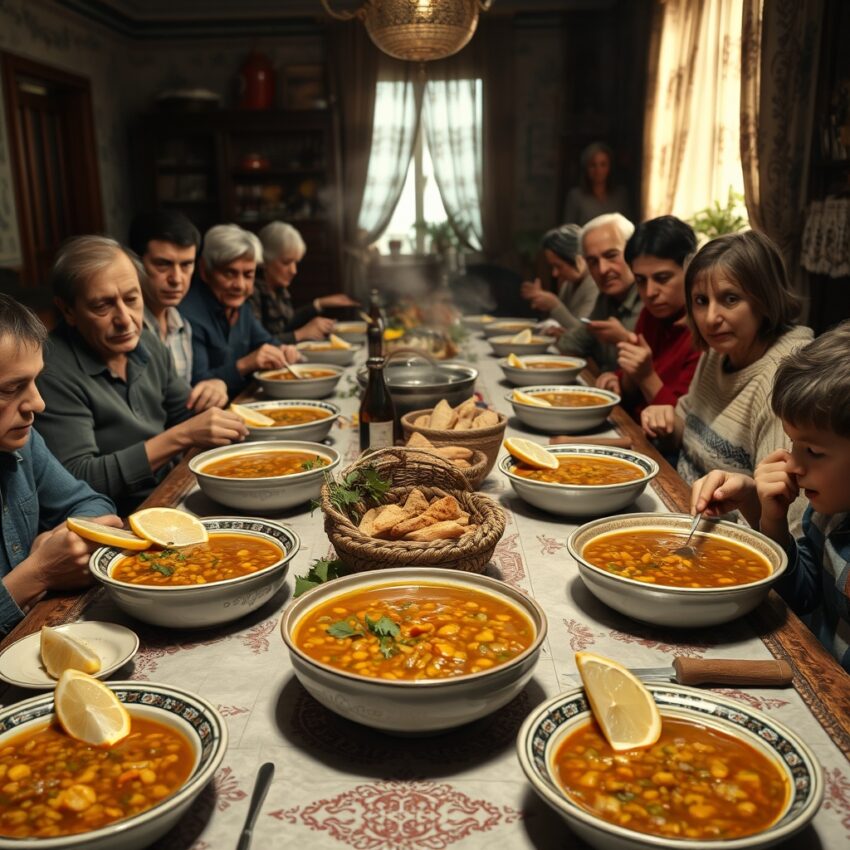
Bazı yemekler tarif defterinde yazılı oldukları için değil, sofraya gelir gelmez evin bütün seslerini aynı yöne çevirdikleri için unutulmaz olur. Anne usulü mercimek çorbası da böyledir. Tencereden kepçeyle tabağa dökülürken çıkan o tok ses, üstüne gezdirilen kızdırılmış yağın kokusu, masaya son anda getirilen limon dilimleri ve ekmek sepetinin hafifçe yakına çekilmesi, kalabalık aile sofralarının başlangıç işaretleri gibidir. Bu çorba çoğu zaman gösterişli bir yemek olarak görülmez; ama sofrada yarattığı duygu gösterişten daha kalıcıdır. Çünkü o, yalnız sıcak bir başlangıç değil, mutfağın eski alışkanlıklarını taşıyan bir düzen işaretidir. Herkesin oturmasını, kaselerin pay edilmesini ve ilk kaşığın birlikte alınmasını bekleyen bir ev ritmi vardır onun etrafında.
Damak Hafızası açısından mercimek çorbası, eski mutfak kültürünün ölçü, tekrar ve şefkatle kurduğu sürekliliğin güçlü örneklerinden biridir. Kırmızı ya da sarı mercimeğin ayıklanması, soğanın sabırla kavrulması, kimi evlerde havuç ya da patatesin eklenmesi, kimi evlerde terbiyenin ayrı hazırlanması, çorbanın yalnız malzemelerle değil, elde yerleşmiş alışkanlıklarla piştiğini gösterir. Anne usulü denildiğinde akla gelen şey bu yüzden tek bir reçete değildir. Daha çok, tadı aileye göre değişse de taşıdığı bakım duygusunun benzer kalmasıdır. Kalabalık sofralarda çorbanın yeri özel olur; çünkü herkese yetmesi gereken, herkesi aynı sıcaklıkta buluşturması beklenen yemektir. İlk tabak çocuğa, sonra yaşlıya, sonra sofradakilere dağıtılırken mutfağın görünmeyen düzeni de kendini belli eder.
Unutulan mutfak alışkanlıklarını geri çağırması biraz da bu görünmeyen düzen sayesinde olur. Bugün çoğu sofrada hız, tek kişilik porsiyon ve dağınık saatler baskın olabilir; oysa anne usulü mercimek çorbası insanı ortak zaman fikrine geri götürür. Tencere ocağın üstünde ağır ağır pişerken evin içine yayılan koku, yaklaşan öğünün ilk habercisidir. Birinin limon sıkacağı getirmesi, bir başkasının kaseleri dizmesi, ekmeğin önceden kesilmesi, sofrada “önce çorba” diye kurulan o alışıldık sıra, mutfakta unutulmaya yüz tutmuş bir topluluk disiplinini hatırlatır. Bu disiplin sert değil, şefkatlidir. Herkesin aynı anda doyacağı ve aynı sıcaklıktan pay alacağı düşüncesine dayanır. Mercimek çorbası bu yüzden yalnız bir lezzet değil, aile içi koordinasyonun ve karşılıklı özenin de tadıdır.
Çorbanın unutulmayan tadı, malzemenin sadeliğiyle de yakından ilişkilidir. Mercimek, su, soğan, biraz yağ ve birkaç tamamlayıcı dokunuş… Büyük iddiaları olmayan bu yapı, mutfak alışkanlıklarını daha görünür kılar. Çünkü böyle yemeklerde lezzeti yaratan şey çoğu zaman teknikten çok el ayarıdır. Tuzun tam kararında oluşu, kıvamın ne çok koyu ne çok ince olması, üstteki yağın kokusunun yanmadan çıkması, blenderdan geçse de tencere tadını koruması, bunların hepsi öğrenilmiş bir dikkat gerektirir. Çocuk için bu çorba çoğu zaman hastalık günlerinin tesellisi, kış akşamlarının ilk sıcaklığı ya da kalabalık sofralarda iştahı açan tanıdık tattır. Yetişkin içinse annesinin ya da evde çorbayı yapan kişinin ritmini hatırlatan bir hafıza izi olur.
Bugün anne usulü mercimek çorbası unutulan mutfak alışkanlıklarını nasıl geri çağırıyor diye sorduğumuzda, aslında bir yemeğin topluluk duygusunu nasıl sakladığını anlamaya çalışırız. Bu çorba bize eski sofralarda yemeğin yalnız karın doyurmak için değil, ortak bir düzen kurmak için de piştiğini hatırlatır. Kalabalık aile masalarının unutulmayan tarafı çoğu zaman gösterişli yemekler değil, herkesi aynı anda içine alan sade başlangıçlardır. Mercimek çorbası tam da böyle bir başlangıçtır. İçinde geçmiş mutfakların sabrı, annenin el alışkanlığı ve sofranın paylaşım düzeni vardır. O yüzden ilk kaşıkta geri gelen şey yalnız tat değil; unutulmuş bir ev düzeninin sıcak ve tanıdık yankısıdır.
🇬🇧 English | Mother-Style Lentil Soup and the Unforgotten Taste of Crowded Family Tables: How Does It Call Back Forgotten Kitchen Habits?
Some foods become unforgettable not because they are written in recipe notebooks, but because the moment they arrive at the table they turn all the sounds of the house in the same direction. Mother-style lentil soup belongs to that kind. The full sound made as it is ladled from pot to bowl, the smell of warm butter or oil drizzled over it, the lemon wedges brought at the last moment, and the bread basket quietly pulled closer all feel like signs that a crowded family meal is beginning. This soup is rarely seen as a grand dish, yet the feeling it creates is more lasting than display. It is not only a warm beginning, but a sign of order carrying the older habits of the kitchen. Around it there is a household rhythm that waits for everyone to sit down, for the bowls to be distributed, and for the first spoonful to be taken together.
Seen as taste memory, lentil soup is one of the strongest examples of continuity built through measure, repetition, and tenderness in older kitchen culture. The sorting of red or yellow lentils, the patient sautéing of onion, the carrot or potato added in some homes, the separate seasoning prepared in others all show that soup is cooked not only with ingredients, but with habits settled in the hand. That is why the phrase mother-style does not suggest one single formula. It suggests instead a feeling of care that remains similar even when the taste changes from family to family. At crowded tables the place of soup becomes special, because it is expected to reach everyone and gather everyone in the same warmth. As the first bowl is given to the child, then to the elder, and then to the rest of the table, the unseen order of the kitchen makes itself known.
Its ability to call back forgotten kitchen habits comes partly from that unseen order. Today many tables are shaped by speed, single portions, and scattered hours. Mother-style lentil soup leads the mind back to the idea of shared time. While the pot simmers slowly on the stove, the smell moving through the house becomes the first announcement of the approaching meal. One person brings the lemon press, another arranges the bowls, the bread is sliced in advance, and the familiar order of “soup first” gently returns. What is recalled is a kind of household discipline, yet not a harsh one. It is a tender discipline based on the thought that everyone will be fed at the same moment and will receive the same warmth. Lentil soup is therefore not only a flavor. It is also the taste of coordination within the family and of mutual care.
The unforgettable taste of the soup is closely linked to the simplicity of its ingredients. Lentils, water, onion, a little oil, and a few finishing touches. This modest structure makes old kitchen habits more visible. In such dishes, flavor is often created less by complexity than by the hand’s experience. The right amount of salt, the consistency that is neither too thick nor too thin, the fragrant topping prepared without burning, the ability to blend the soup while still preserving its pot-cooked character all require learned attention. For a child, this soup may be the consolation of illness, the first warmth of a winter evening, or the familiar opening taste at a crowded table. For an adult, it becomes a memory trace of the rhythm of the mother, or of whoever in the house used to prepare it.
When we ask today how mother-style lentil soup calls back forgotten kitchen habits, we are really trying to understand how a meal can preserve the feeling of community. The soup reminds us that in older tables, food was cooked not only to satisfy hunger, but also to establish a shared order. What remains unforgettable about crowded family tables is often not the most elaborate dishes, but the simple beginnings that include everyone at once. Lentil soup is exactly such a beginning. It carries the patience of older kitchens, the practiced hand of the mother, and the order of sharing at the table. That is why what returns with the first spoonful is not taste alone, but the warm and familiar echo of a forgotten domestic order.
🇧🇷 Português (Brasil) | sopa de lentilha ao estilo de mãe e o sabor inesquecido das mesas de família cheias: como ela chama de volta hábitos de cozinha esquecidos
Algumas comidas se tornam inesquecíveis não porque estejam escritas em cadernos de receita, mas porque, no momento em que chegam à mesa, fazem todos os sons da casa se voltarem para a mesma direção. A sopa de lentilha ao estilo de mãe é assim. O som cheio da concha ao passar da panela para o prato, o cheiro da gordura ou da manteiga aquecida por cima, as fatias de limão trazidas no último instante e a cesta de pão discretamente puxada para mais perto parecem sinais de que uma refeição de família vai começar. Essa sopa raramente é vista como um prato grandioso, mas o sentimento que cria dura mais do que qualquer exibição. Ela não é apenas um começo quente. É também um sinal de ordem, carregando hábitos antigos da cozinha. Ao redor dela existe um ritmo doméstico que espera que todos se sentem, que as tigelas sejam distribuídas e que a primeira colherada seja tomada em conjunto.
Como memória do paladar, a sopa de lentilha é um dos exemplos mais fortes da continuidade construída por medida, repetição e afeto na antiga cultura da cozinha. A escolha da lentilha vermelha ou amarela, a cebola refogada com paciência, a cenoura ou a batata acrescentadas em algumas casas, o tempero separado preparado em outras mostram que a sopa é feita não apenas com ingredientes, mas com hábitos assentados na mão. Por isso a expressão ao estilo de mãe não aponta para uma única fórmula. Ela aponta para um sentimento de cuidado que permanece parecido, mesmo quando o sabor muda de família para família. Nas mesas cheias, o lugar da sopa se torna especial porque se espera que ela alcance todos e reúna todos na mesma temperatura afetiva. Quando a primeira tigela vai para a criança, depois para a pessoa idosa e só então para o restante da mesa, a ordem invisível da cozinha se torna visível.
O fato de ela chamar de volta hábitos de cozinha esquecidos vem em parte dessa ordem invisível. Hoje muitas mesas são marcadas pela pressa, por porções individuais e por horários dispersos. A sopa de lentilha ao estilo de mãe leva a mente de volta à ideia de tempo compartilhado. Enquanto a panela ferve devagar no fogão, o cheiro que se espalha pela casa se torna o primeiro anúncio da refeição que se aproxima. Uma pessoa traz o espremedor de limão, outra organiza as tigelas, o pão já foi cortado, e a velha ordem do “primeiro a sopa” reaparece de maneira suave. O que volta à lembrança é uma espécie de disciplina doméstica, mas não dura. É uma disciplina afetuosa, baseada na ideia de que todos serão alimentados ao mesmo tempo e receberão o mesmo calor. Por isso a sopa de lentilha não é apenas sabor. Ela é também o gosto da coordenação familiar e do cuidado mútuo.
O sabor inesquecido da sopa está profundamente ligado à simplicidade dos ingredientes. Lentilha, água, cebola, um pouco de gordura e alguns toques finais. Essa estrutura modesta torna os antigos hábitos da cozinha ainda mais visíveis. Em pratos assim, o sabor costuma ser criado menos pela complexidade do que pela experiência da mão. A medida certa do sal, a consistência que não fica nem grossa nem rala demais, a cobertura aromática preparada sem queimar, a capacidade de bater a sopa sem apagar seu caráter de panela, tudo isso exige atenção aprendida. Para a criança, essa sopa pode ser o consolo nos dias de doença, o primeiro calor de uma noite fria ou o sabor conhecido que abre a refeição em uma mesa cheia. Para o adulto, ela se torna uma marca de memória do ritmo da mãe ou de quem costumava prepará-la em casa.
Quando perguntamos hoje como a sopa de lentilha ao estilo de mãe chama de volta hábitos de cozinha esquecidos, estamos na verdade tentando entender como uma comida pode guardar o sentimento de comunidade. A sopa nos lembra que, nas mesas antigas, a comida não era feita apenas para matar a fome, mas também para criar uma ordem compartilhada. O que fica inesquecível nas mesas de família cheias muitas vezes não são os pratos mais elaborados, mas os começos simples que acolhem todos ao mesmo tempo. A sopa de lentilha é exatamente esse tipo de começo. Ela carrega a paciência das cozinhas antigas, a mão treinada da mãe e a ordem de partilha à mesa. É por isso que o que retorna na primeira colherada não é só o sabor, mas o eco quente e familiar de uma ordem doméstica já quase esquecida.