🇹🇷 Türkçe | Bir kuşağın içini ısıtan günlerde fuar alanlarının memlekete vitrin olduğu mevsimler: şehir belleğinde nasıl derin bir iz açtı cam açtıran sabahlar
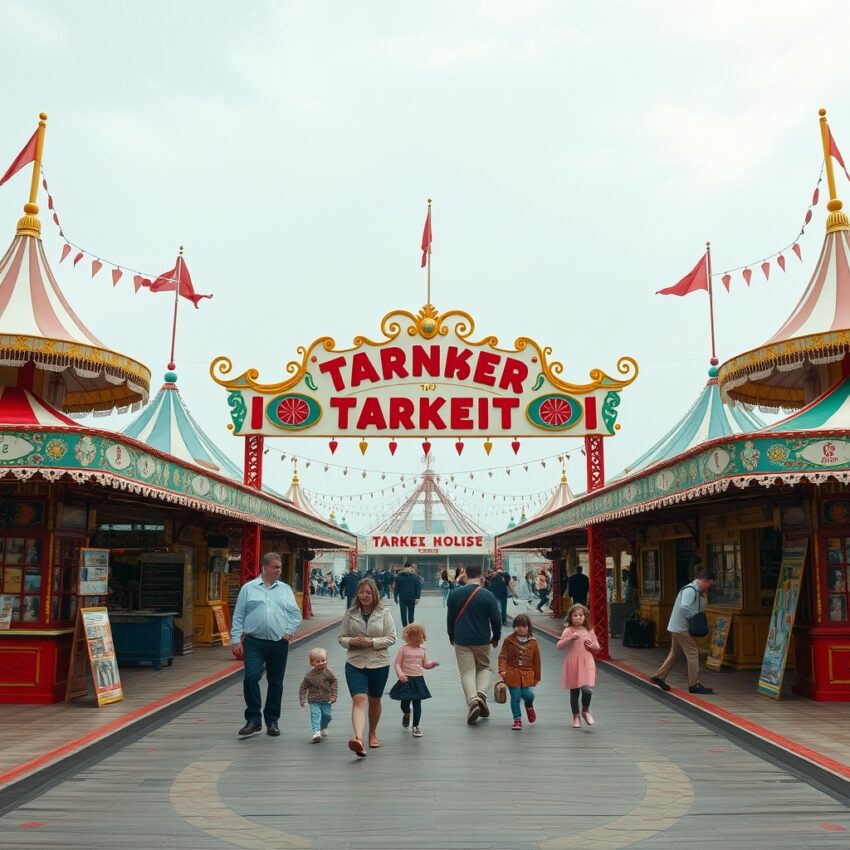
Bazı sabahlar daha perde tam aralanmadan tanınır. Hava serin değil, hafifçe içeri çağıran bir yumuşaklıktadır; cam açılır açılmaz sokaktan egzozdan çok ıslak toprak, yeni sulanmış çim ve uzaktan gelen simit kokusu duyulur. İşte fuar mevsimleri birçok şehirde böyle başlardı. Henüz günün kalabalığı kurulmadan önce, evlerin içinde özel bir hareket baş gösterirdi. Anneler çocukların üstünü başını toparlar, babalar pazar ciddiyetiyle hazırlanır, gençler hangi pavyonun görüleceğini, hangi stanttan broşür alınacağını konuşurdu. Çünkü fuar alanı yalnız gezilecek bir yer değildi; memleketin kendini topluca daha düzenli, daha parlak ve daha umutlu gösterdiği bir sahneydi. Cam açtıran sabahlar, biraz da bu yüzden sıradan mevsim sabahlarından farklı hatırlanır.
Zamanın İzinde açısından fuar alanları, modernleşmenin halka en görünür hâliydi. Eski gazetelerde fuar haberleri çoğu zaman ekonomik gelişmenin, şehirlerin canlılığının ve yeni teknolojilerin habercisi olarak sunulurdu. Ancak şehir belleğinde asıl yer eden şey, resmi söylemden çok gündelik karşılığıydı. Aileler ilk kez bazı mutfak aletlerini orada görür, çocuklar ışıklı panoların ve örnek ev kurulumlarının önünde hayal kurar, öğretmenler öğrencilerine “geleceği görmeye gidiyoruz” cümlesini abartı saymadan söyleyebilirdi. Kentin sokaklarında süren gündelik hayat, fuar kapısından girildiğinde başka bir tona bürünürdü. Dondurma külahı taşıyan çocukla takım elbiseli memurun aynı yürüyüş yolunda yan yana ilerlemesi, şehirde nadiren kurulan bir eşitlenme duygusu yaratırdı. Herkes bakıyor, öğreniyor, karşılaştırıyor ve aynı anda biraz gururlanıyordu.
Fuar alanlarının memlekete vitrin olması yalnız gösterişli stantlardan kaynaklanmazdı. Orada sergilenen şey, aynı zamanda düzen fikriydi. Geniş yürüyüş yolları, numaralanmış salonlar, bayraklarla süslenen girişler, hoparlörden yapılan anonslar, akşam olunca yanan rengârenk ampuller… Bütün bunlar ziyaretçiye “şehir büyüyor” duygusu verirdi. Bir ilçe kasabasından gelen aile için bu deneyim, yalnızca eğlence değil, görgü kazanımıydı da. Hangi standın önünde daha uzun durulacağı, hangi makinenin eve dönünce komşulara anlatılacağı, hangi ülke pavyonunun en merak uyandırıcı bulunduğu, sonra günlerce konuşulurdu. Fuar, insanlara tüketilecek şeyler kadar anlatılacak malzeme de verirdi. Bu yüzden etkisi bir akşamla sınırlı kalmaz, mahalleye ve eve taşardı.
Ev içi hafızada da fuar mevsimlerinin ayrı bir yeri vardı. Dönüşte alınan küçük kataloglar sehpanın üstüne bırakılır, çocuklar broşürlerdeki resimlere tekrar tekrar bakar, büyükler “eskiden böyle şeyler yoktu” ile “bak neler geliyor” arasında gidip gelen cümleler kurardı. Bazı evlerde fuardan alınmış ucuz ama göz alıcı bir hatıra, aylarca vitrinde durur; kimi zaman bir anahtarlık, kimi zaman plastik bir oyuncak, kimi zaman da yabancı bir markanın logolu küllüğü olurdu. O nesneler, fuar alanının evde kalan küçük uzantılarıydı. Cam açtıran sabahlar nasıl günün başında içeri bir ferahlık taşıyorsa, fuar dönüşü eve gelen o küçük eşyalar da geleceğin kokusunu ev düzenine katıyor gibiydi. Bir kuşağın içini ısıtan şey belki tam olarak buydu: henüz her şeye sahip olmadan, yaklaşmakta olan bir dünyanın kıyısını görmek.
Bugün dönüp bakıldığında fuar mevsimlerinin şehir belleğinde derin iz bırakmasının nedeni yalnız kalabalıklar ya da eğlence değildir. Asıl iz, ortak beklenti hâlinde saklıdır. Aynı sabahlarda pencerelerin açılması, aynı otobüslere binilmesi, aynı salonlarda hayret edilmesi ve akşam eve dönünce benzer cümlelerin kurulması, o mevsimleri toplu bir hatıraya dönüştürdü. Fuar alanı memlekete vitrin olurken şehir de kendine başka bir gözle bakmayı öğreniyordu. İnsanlar yalnız sergilenen ürünleri değil, kendi yaşadıkları hayatın değişme ihtimalini de seyrediyordu. Cam açtıran sabahların hâlâ iç ısıtmasının sebebi, belki de o mevsimlerin bir nesle ilerlemenin soğuk değil, paylaşılmış bir heyecan olarak hissedilebileceğini göstermesidir.
🇬🇧 English | In the Days That Warmed a Generation from Within, the Seasons When Fairgrounds Became the Country’s Showcase: How Did Window-Opening Mornings Leave Such a Deep Mark on Urban Memory?
Some mornings are recognized before the curtain is fully pulled aside. The air is not cold, but softly inviting; the moment the window is opened, what comes in from the street is less exhaust than damp earth, freshly watered grass, and the distant smell of simit. For many cities, fair season began exactly like that. Before the day’s crowd had fully formed, a special movement would start inside homes. Mothers straightened children’s clothes, fathers prepared themselves with a kind of Sunday seriousness, and young people discussed which pavilion would be visited and from which stand brochures would be collected. The fairground was not merely a place to stroll. It was a stage on which the country presented itself as brighter, better arranged, and more hopeful. That is why those window-opening mornings are remembered differently from ordinary seasonal mornings.
Seen through the lens of time, fairgrounds were one of the most visible public forms of modernization. Old newspapers often described them as signs of economic development, urban vitality, and arriving technologies. Yet what remained in urban memory was less the official language than its daily-life equivalent. Families saw certain kitchen appliances there for the first time, children dreamed in front of illuminated panels and model home displays, and teachers could say without exaggeration, “we are going to see the future.” Everyday city life took on another tone once one passed through the fair gate. The child holding an ice cream cone and the office worker in a suit walking along the same path created a feeling of temporary equality rarely found elsewhere in the city. Everyone was looking, learning, comparing, and, in some quiet way, taking pride at the same time.
The sense that fairgrounds became the country’s showcase did not come from impressive stands alone. What was on display there was also an idea of order. Wide promenades, numbered halls, entrances decorated with flags, loudspeaker announcements, and colorful bulbs lighting up at dusk all gave visitors the feeling that the city was growing. For a family arriving from a smaller district town, this was not only entertainment, but a lesson in urban manners and expectation. Which stand deserved the longest pause, which machine would later be described to neighbors, which foreign pavilion seemed most intriguing, all of this continued to be discussed for days. The fair offered not only things to look at, but material to narrate afterward. For that reason, its effect did not end in a single evening. It traveled back into the neighborhood and into the home.
Fair season also held a special place in domestic memory. Small catalogs brought home were left on the coffee table, children returned again and again to the pictures in brochures, and adults moved between sentences such as “we never had things like this before” and “look what is coming.” In some homes a cheap but striking souvenir from the fair remained in the glass cabinet for months, sometimes a keychain, sometimes a plastic toy, sometimes an ashtray with a foreign brand printed on it. Those objects were little extensions of the fairground inside the house. Just as those mornings that made one open the window carried freshness into the day, the objects brought back from the fair seemed to carry the scent of the future into domestic order. Perhaps this was exactly what warmed a generation from within: seeing the edge of an approaching world before yet fully possessing it.
Looking back today, the reason fair seasons left such a deep mark on urban memory was not simply the crowds or the entertainment. The deeper mark lies in shared expectation. The same windows opening on the same kinds of mornings, the same buses being boarded, the same halls producing wonder, and the same kinds of sentences being spoken upon returning home transformed those seasons into a collective memory. While the fairground became a showcase for the country, the city also learned to look at itself differently. People were not only viewing displayed products. They were also watching the possibility of their own lives changing. The reason those mornings still warm memory may be that they taught one generation that progress could be felt not as something cold, but as a shared excitement.
🇧🇷 Português (Brasil) | Nos Dias que Aqueciam por Dentro uma Geração, as Estações em que os Parques de Feira se Tornavam a Vitrine do País: Como as Manhãs que Pediam Janelas Abertas Deixaram uma Marca Tão Profunda na Memória da Cidade?
Algumas manhãs são reconhecidas antes mesmo de a cortina ser totalmente aberta. O ar não está frio, mas suavemente convidativo; no instante em que a janela se abre, o que entra da rua não é tanto fumaça quanto cheiro de terra úmida, grama recém-molhada e o perfume distante do simit. Em muitas cidades, a temporada de feiras começava assim. Antes que o movimento do dia estivesse realmente armado, uma agitação especial surgia dentro das casas. As mães arrumavam a roupa das crianças, os pais se preparavam com uma espécie de solenidade de domingo, e os jovens conversavam sobre qual pavilhão ver primeiro e em qual estande pegar folhetos. O parque de feira não era apenas um lugar para passear. Era um palco em que o país se mostrava mais organizado, mais brilhante e mais esperançoso. Por isso essas manhãs que pediam janelas abertas permanecem lembradas de forma diferente das manhãs comuns da estação.
No rastro do tempo, os parques de feira foram uma das formas mais visíveis de modernização diante do público. Os jornais antigos muitas vezes apresentavam a feira como sinal de desenvolvimento econômico, vitalidade urbana e chegada de novas tecnologias. Mas o que ficou na memória da cidade não foi tanto a linguagem oficial quanto seu equivalente na vida cotidiana. Ali as famílias viam certos eletrodomésticos pela primeira vez, as crianças sonhavam diante de painéis iluminados e casas-modelo, e os professores podiam dizer sem exagero: “vamos ver o futuro.” A vida comum da cidade ganhava outro tom depois que se passava pelo portão da feira. A criança com o sorvete na mão e o funcionário de terno caminhando pela mesma alameda criavam um raro sentimento de igualdade passageira. Todos olhavam, aprendiam, comparavam e, de algum modo silencioso, se orgulhavam ao mesmo tempo.
O fato de os parques de feira se tornarem a vitrine do país não vinha apenas dos estandes vistosos. O que também estava exposto ali era uma ideia de ordem. Caminhos largos, salões numerados, entradas enfeitadas com bandeiras, anúncios pelo alto-falante e lâmpadas coloridas acendendo ao anoitecer davam ao visitante a sensação de que a cidade estava crescendo. Para uma família vinda de uma cidade menor, essa experiência era não só diversão, mas também uma espécie de aprendizagem do olhar e do comportamento urbano. Em qual estande parar mais tempo, qual máquina contar aos vizinhos ao voltar para casa, qual pavilhão estrangeiro parecia mais curioso, tudo isso continuava sendo comentado por dias. A feira oferecia não apenas coisas para ver, mas também assunto para narrar depois. Por isso seu efeito não terminava em uma noite. Ele voltava para o bairro e para dentro de casa.
Na memória doméstica, a temporada de feiras também ocupava um lugar especial. Pequenos catálogos trazidos de volta ficavam sobre a mesa de centro, as crianças voltavam muitas vezes às imagens dos folhetos, e os adultos oscilavam entre frases como “antes não existia nada disso” e “veja o que está chegando.” Em algumas casas, uma lembrança barata mas chamativa da feira ficava meses na cristaleira, às vezes um chaveiro, às vezes um brinquedo de plástico, às vezes um cinzeiro com o nome de alguma marca estrangeira. Esses objetos eram pequenas extensões da feira dentro de casa. Assim como as manhãs que faziam abrir a janela levavam frescor para dentro do dia, os objetos trazidos da feira pareciam levar o cheiro do futuro para a ordem da casa. Talvez fosse exatamente isso que aquecia por dentro uma geração: ver a borda de um mundo que se aproximava antes mesmo de possuí-lo.
Quando olhamos para trás hoje, percebemos que a marca profunda deixada pela temporada de feiras na memória da cidade não se explica apenas pela multidão ou pelo entretenimento. A marca mais forte está na expectativa compartilhada. As mesmas janelas se abrindo em manhãs parecidas, os mesmos ônibus sendo tomados, os mesmos salões provocando espanto e as mesmas frases sendo ditas no retorno para casa transformaram essas estações em memória coletiva. Enquanto o parque de feira servia de vitrine para o país, a cidade também aprendia a se olhar de outro modo. As pessoas não observavam apenas produtos expostos. Observavam também a possibilidade de mudança em suas próprias vidas. Se essas manhãs ainda aquecem a lembrança, talvez seja porque ensinaram a uma geração que o progresso podia ser sentido não como algo frio, mas como um entusiasmo compartilhado.