🇹🇷 Türkçe | Sandık Dibinde Saklanan Sessiz Zarafetin Bugünkü Dönüşü
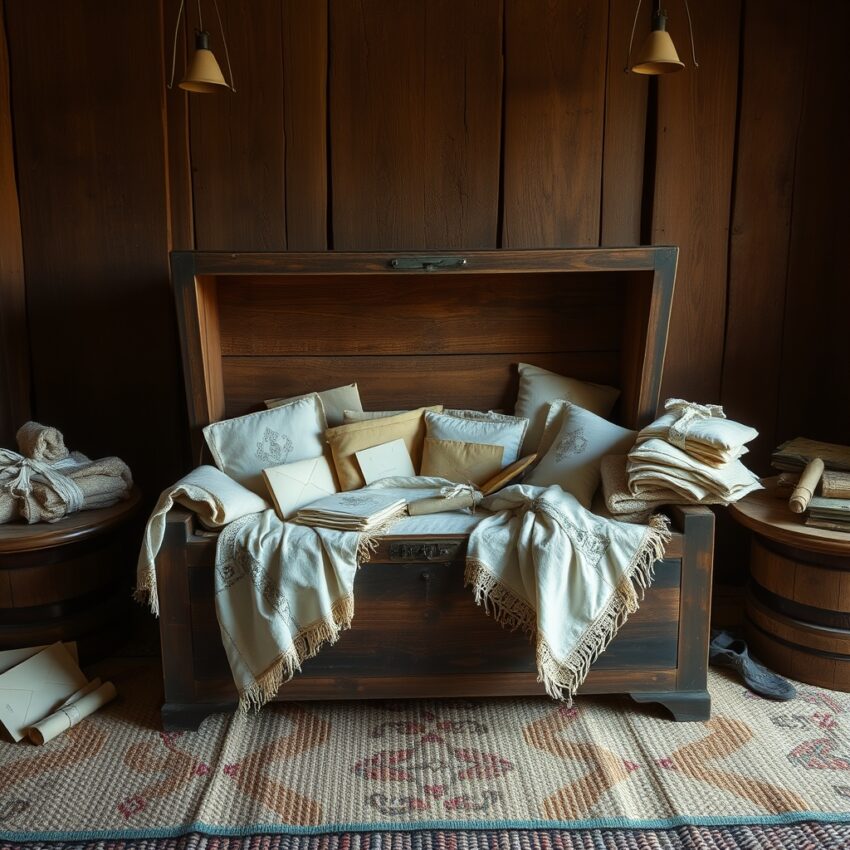
Bir zamanlar çeyiz sandığı, evin görünür eşyalarından biri olsa da içindeki hikâyeleri kolay kolay ele vermeyen mahcup bir hafıza kutusuydu. Odanın bir köşesinde örtüyle kapalı durur, kapağı her gün açılmaz, çoğu zaman ancak özel bir vesileyle ya da derin bir temizlik sırasında yeniden hatırlanırdı. Ama kapağı kaldırıldığında ortaya yalnız dantel kenarlı bohçalar, işlemeli örtüler ya da naftalin kokusu çıkmazdı; yıllarca beklemiş bir düzen duygusu, özenle saklanmış bir kadın emeği ve bir aile terbiyesinin görünmeyen çizgileri de görünür olurdu. Sandığın dibinden çıkan her parça, hazır alınmış bir eşyadan çok daha fazla şey söylerdi; çünkü onda vakit, sabır ve geleceğe hazırlanma fikri birikirdi.
Obje Hikayeleri açısından bakıldığında çeyiz sandığı, kullanım eşyasıyla duygusal mirasın birbirine en yoğun biçimde geçtiği nesnelerden biridir. Ahşabının tonu, metal kilidinin sesi, iç kapağa sinmiş lavanta ya da naftalin kokusu bile tek başına bir dönemin ev içi estetiğini anlatır. Sandık yalnız saklama amacı taşımaz; bir hayat tahayyülünü de saklar. İçine yerleştirilen havlular, oyalı yazmalar, yatak örtüleri, küçük kutular ve kimi zaman mektuplar, henüz kurulmamış bir evin sessiz provası gibidir. Bugün yeniden ilgi görmesinin nedenlerinden biri de budur: modern hayatın hızla tüketilen eşyalarına karşı, zamanı emerek ağırlaşmış nesneler insanlara daha derin bir anlam sunuyor.
Sandıkların dibinden çıkan ince hikâye çoğu zaman eşyaların kendisinden çok, onlara eşlik eden sesi taşır. “Bunu annen genç kızken işlemişti” cümlesi, “şunu bayramdan önce yetiştirmek için gece oturmuştu” diye eklenen küçük notlar ya da kumaşın arasından düşen bir eski fotoğraf, nesneyi bir anda gündelik eşya olmaktan çıkarır. Sandık dibinde saklı kalan bu anlatı, görünüşte mütevazı ama etkisi büyük bir aile arşividir. Her parça, kim tarafından hazırlandığını, hangi sabırla bekletildiğini ve hangi duyguyla saklandığını hissettirir. Bu yüzden insanlar bugün sandıklara bakarken yalnız vintage estetiği görmüyor; elle kurulmuş bir hayatın yavaş temposuna da bakıyor.
Günümüzde yeniden ilgi görmesinin bir başka nedeni, tasarım dünyasının da bu nesnelere farklı bir gözle yaklaşmasıdır. Eski sandıklar artık sadece depoda duran ağır kutular olarak değil; yaşam alanına karakter veren, köklü bir hikâye taşıyan objeler olarak görülüyor. Bir sandığın sehpa olarak kullanılması, yatak ucuna yerleştirilmesi ya da içindeki tekstillerin yeniden değerlendirilmesi, geçmişin bugünkü eve misafir edilmesi anlamına geliyor. Fakat asıl çekim gücü dekoratif işlevde değil, o nesnenin üzerindeki kullanım izlerinde saklıdır. Kenarındaki hafif aşınma, kapaktaki küçük çatlak, kilidin yumuşamış sesi, hepsi nesnenin yaşamış olduğunu hissettirir. Seri üretimin parlak ama hafızasız yüzeylerine alışan göz için bu yaşanmışlık çok kıymetlidir.
Çeyiz sandığının yeniden ilgi görmesi bu yüzden geçici bir moda olarak okunmamalıdır. Bu ilgi, geçmişle daha yavaş, daha dokunulabilir ve daha saygılı bir ilişki kurma arzusunu da anlatır. İnsanlar bugün sandıkların dibinden çıkan örtülere, kutulara ya da sararmış zarflara bakarken yalnız bir eski zaman romantizmine kapılmıyor; aile içinde emek, sabır ve devamlılık fikrinin nasıl taşındığını da anlamaya çalışıyor. Sandık dibindeki ince hikâye tam da burada bugüne bağlanıyor: her şeyin hızla yenilendiği bir çağda, uzun süre saklanmış bir eşyanın hâlâ konuşabiliyor olması bize kaybettiğimiz ritmi hatırlatıyor.
🇬🇧 English | The Return of a Quiet Elegance Preserved at the Bottom of Old Chests
There was a time when the dowry chest stood visibly inside the home and yet kept its stories hidden with a kind of modest reserve. It rested in the corner of a room beneath a cover, not opened every day, remembered mostly during a special occasion or a deep round of cleaning. But when the lid was finally lifted, what appeared was not only lace bundles, embroidered cloths, or the familiar smell of mothballs. What surfaced was a sense of order patiently preserved, the visible trace of women’s labor, and the quiet lines of family discipline. Every object drawn from the bottom of the chest said more than something newly purchased ever could, because it contained accumulated time, patience, and the idea of preparing for a future still being imagined.
From the perspective of object history, the dowry chest is one of the strongest points where useful possession and emotional inheritance meet. The color of the wood, the sound of the metal lock, even the lavender or mothball scent caught beneath the lid are enough to describe an entire domestic aesthetic from another era. A chest does not merely store items. It stores a vision of life. Towels, edged scarves, bedcovers, small boxes, and sometimes letters placed inside it resemble the silent rehearsal of a home not yet fully formed. One reason it draws attention again today is exactly this. Against the rapid consumption of modern belongings, objects that have absorbed time feel more meaningful and more human.
The delicate story that rises from the bottom of such trunks often lies less in the objects themselves than in the voices that accompany them. “Your mother embroidered this when she was still a young girl,” someone says. Another adds, “She stayed up late to finish this before the holiday.” A faded photograph slips from between layers of cloth, and in an instant the object ceases to be merely functional. What is hidden at the bottom is in fact a humble yet powerful family archive. Each piece suggests who prepared it, with what patience it was kept, and with what tenderness it was saved. That is why people looking at these chests today are not responding only to vintage beauty. They are also responding to the slower tempo of a life assembled by hand.
Another reason for renewed interest is the way design culture has begun to see these pieces differently. Old chests are no longer regarded only as heavy boxes left in storage rooms. They are seen as objects that give character to living spaces and carry deep continuity. A trunk used as a coffee table, placed at the foot of a bed, or opened so that its textiles can be reintroduced into daily life allows the past to enter the present home as a guest rather than as a burden. Yet their deepest attraction does not lie merely in decorative usefulness. It lives in the marks of wear. A softened hinge, a small crack in the lid, an edge slightly rubbed down by years of hands all remind the viewer that the object has lived. To eyes exhausted by polished but memoryless surfaces, such signs feel precious.
For that reason, the renewed attention surrounding the dowry chest should not be read as a passing fashion. It expresses the desire for a slower, more touchable, and more respectful relation with the past. When people look today at cloths, boxes, and yellowed envelopes drawn from the bottom of these chests, they are not surrendering only to romance. They are trying to understand how labor, patience, and continuity once moved within family life. The delicate story at the bottom connects to the present precisely here: in an age when everything is quickly replaced, an object that has been preserved for decades and can still speak reminds us of a rhythm we may have lost.
🇧🇷 Português (Brasil) | O Retorno de uma Elegância Silenciosa Guardada no Fundo dos Baús
Houve um tempo em que o baú de enxoval ficava visível dentro da casa e, ainda assim, guardava suas histórias com uma espécie de timidez. Ele permanecia num canto do quarto, coberto por um tecido, sem ser aberto todos os dias, lembrado mais em ocasiões especiais ou durante uma grande arrumação. Mas quando a tampa se erguia, o que aparecia não era apenas renda dobrada, pano bordado ou cheiro de naftalina. Surgia também um senso de ordem conservado com paciência, o vestígio do trabalho feminino e as linhas discretas da disciplina familiar. Cada peça retirada do fundo do baú dizia mais do que um objeto comprado pronto poderia dizer, porque ali se acumulavam tempo, cuidado e a ideia de preparação para um futuro ainda em construção.
Do ponto de vista das histórias dos objetos, o baú de enxoval é um dos lugares em que a utilidade e a herança afetiva mais se misturam. A cor da madeira, o som do fecho metálico, o perfume de lavanda ou naftalina preso sob a tampa bastam para contar toda uma estética doméstica de outra época. O baú não guarda apenas coisas. Guarda uma visão de vida. Toalhas, lenços com renda, colchas, caixinhas e às vezes cartas colocadas ali parecem o ensaio silencioso de uma casa ainda não inteiramente formada. Uma das razões para ele voltar a despertar interesse hoje é justamente essa. Diante do consumo rápido dos objetos modernos, peças que absorveram tempo parecem mais humanas e mais densas.
A delicada história que sobe do fundo desses baús está muitas vezes menos nos objetos do que nas vozes que os acompanham. “Sua mãe bordou isso quando ainda era moça”, alguém diz. Outra pessoa completa: “Ela ficou até tarde para terminar antes da festa.” Uma fotografia desbotada escorrega entre os tecidos, e naquele instante a peça deixa de ser só funcional. O que está guardado no fundo é, na verdade, um arquivo familiar humilde, mas poderoso. Cada item sugere quem o preparou, com que paciência foi guardado e com que afeto permaneceu ali. É por isso que quem olha hoje para esses baús não responde apenas a uma estética vintage. Responde também ao ritmo mais lento de uma vida montada à mão.
Outro motivo para esse interesse renovado é a forma como o mundo do design passou a olhar para esses objetos. Baús antigos já não são vistos apenas como caixas pesadas deixadas no depósito. São percebidos como peças que dão caráter ao ambiente e carregam continuidade. Um baú transformado em mesa de centro, colocado aos pés da cama ou aberto para que seus tecidos voltem ao uso permite que o passado entre na casa atual como visitante, não como peso. Ainda assim, a força maior não está apenas na função decorativa. Está nas marcas de uso. A dobradiça amolecida, a pequena rachadura na tampa, a borda gasta pelo toque de muitas mãos lembram que aquele objeto viveu. Para olhos cansados de superfícies brilhantes, mas sem memória, essa experiência parece valiosa.
Por isso, o novo interesse pelo baú de enxoval não deve ser lido como moda passageira. Ele revela o desejo de uma relação mais lenta, mais tátil e mais respeitosa com o passado. Quando as pessoas olham hoje para tecidos, caixas e envelopes amarelados retirados do fundo desses baús, não se rendem apenas a um romantismo antigo. Elas tentam compreender como trabalho, paciência e continuidade circulavam dentro da família. A delicada história escondida no fundo se liga ao presente exatamente aí: num tempo em que tudo é substituído depressa, um objeto preservado por décadas e ainda capaz de falar recorda um ritmo que talvez tenhamos perdido.