🇹🇷 Türkçe | Çiçek Kokulu Sokaklardan Bugüne Kalan Sessiz Terbiyenin İzleri
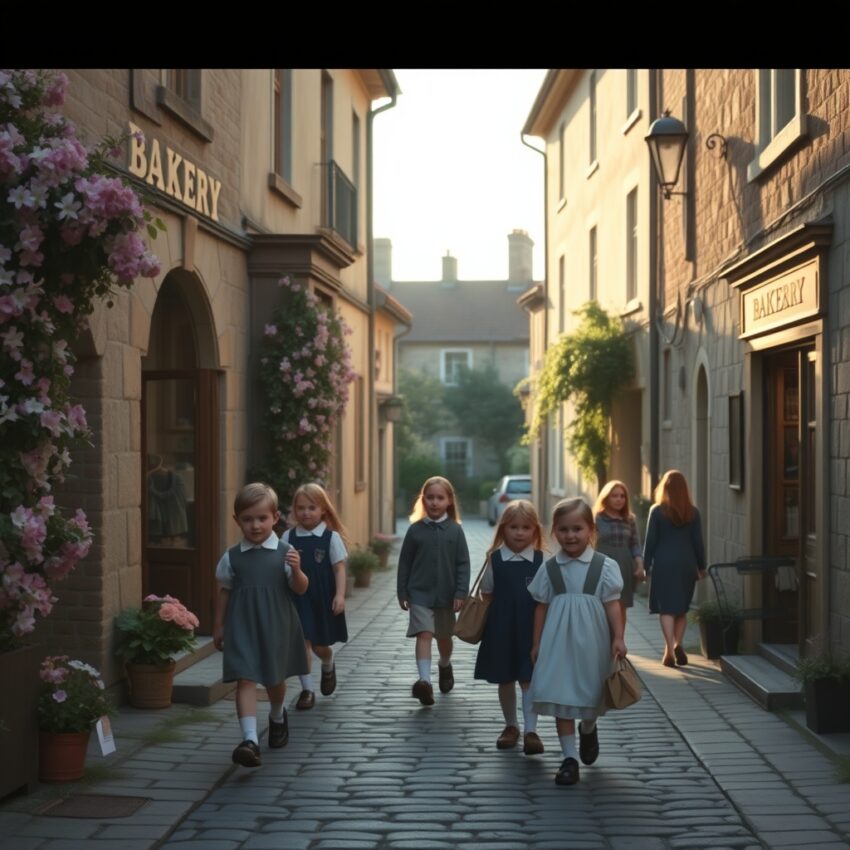
Bir zamanlar okul sabahları, yalnızca ders ziline yetişme telaşıyla değil, sokağın kendi terbiyesiyle başlardı. Dar kaldırımların kenarında açan yaseminler, duvar diplerinden sarkan hanımelleri ve gece serinliğini üstünde taşıyan taş sokaklar, çocukları evden okula uğurlarken görünmez bir düzen de kurardı. Siyah önlükler ya da ütüsü yeni yapılmış mavi gömlekler birbirine benzeyebilirdi; ama o sabahlarda çocukların taşıdığı ortak şey kıyafet değil, aynı geleceğe duyulan sessiz inançtı. Kapı önünde annelerin son kez yaka düzeltmesi, komşu teyzenin “hadi evladım, geç kalma” diye seslenişi ve mahallenin bakkalının kepenk açarken çocukları başıyla selamlaması, okul yolunu sıradan bir yürüyüş olmaktan çıkarırdı.
Zamanın İzinde bakıldığında bu sahne, eğitim kadar mahalle kültürünün de çocuk yetiştirdiği bir dönemi anlatır. Eski gazetelerin eğitim haberleri çoğu zaman okul binalarını, yeni ders yılı başlangıçlarını ya da müfredat tartışmalarını yazardı; fakat asıl eğitim çoğu zaman sokakla ev arasındaki o kısa mesafede başlardı. Çocuk, sıraya girmeyi yalnız okul bahçesinde değil, fırın önünde de öğrenirdi. Sesini alçaltmayı yalnız sınıfta değil, sabah erkenden işine giden komşunun yanından geçerken de kavrardı. Çiçek kokulu sokaklar bu yüzden bir manzara değil, karakter kuran bir çevreydi. Yolu paylaşmak, büyükleri selamlamak, elindekini dikkatle taşımak ve mahallenin ritmine ayak uydurmak, bugünün bireysel hızında giderek silikleşen küçük ama belirleyici alışkanlıklardı.
Okul önlüklerinin aynı hayali taşıdığı duygusu da biraz buradan gelirdi. Çocukların ailesi, imkânı, evinin eşyası farklı olsa bile sabahın erken saatinde aynı okul yolunda buluşmaları onları görünür biçimde eşitlerdi. Birinin elinde metal beslenme çantası, diğerinin koltuğunun altında defterleri olurdu; ama hepsi günün sonunda “okumuş olmak”, “bir yerlere gelmek”, “ailesini gururlandırmak” gibi söze dökülmeyen ortak bir arzuyu taşırdı. O arzunun gürültülü bir iddiası yoktu. Daha çok, ayakkabısını silip yola çıkmakta, önlüğünün düğmesini eksiksiz iliklemekte, öğretmenin gözüne saygıyla bakmakta kendini gösteren sakin bir ciddiyet vardı. Bugün dönüp bakınca hatırlanan yalnız okul binası değil, o ciddiyetin sokağa da sinmiş olmasıdır.
Gündelik hayatın ayrıntıları bu hafızayı daha da canlı kılar. Sabah sütçüsünün uzaktan gelen şişe sesi, fırından yayılan sıcak ekmek kokusu, yağmur yağmışsa kaldırım taşlarında biriken ince ıslaklık, okula giden çocukların çantalarını bir omuzdan diğerine alışındaki tanıdık hareket, hepsi aynı resmin parçalarıydı. Bazı sokaklarda yol üzerindeki dut ağacı yüzünden çocukların elleri morarır, bazı mahallelerde çeşme başında son bir yudum su içilirdi. Birbirini bekleyen arkadaşlar, evden geç çıkan çocuğa seslenen anneler ve köşeyi döner dönmez görünmez olan o küçük kalabalık, bugünün servis saatlerine ve kapalı sitelerine sığmayan bir topluluk duygusu taşırdı.
Bugüne kalan sessiz alışkanlıklar tam da bu yüzden önemlidir. Büyükleri görünce selam vermek, bir yere girerken sesini kısmak, yanında yürüyen arkadaşı için adımını yavaşlatmak, öğretmeni yalnız bilgi veren biri değil hayat düzeni kuran biri olarak görmek, o çiçek kokulu sokakların bıraktığı görünmez mirastır. Bugün şehirler büyümüş, okul yolları değişmiş, çocukların sabah ritmi ekranlara ve servis kapılarına bağlanmış olabilir. Yine de bazı davranışlar hâlâ aile içinde “eskiden böyle öğrenilirdi” cümlesiyle yaşıyor. Hatıraların tozlu raflarında duran okul önlükleri, yalnız bir dönemin kıyafeti olarak değil; aynı hayalin, aynı terbiyenin ve aynı sokak düzeninin sembolü olarak bugüne sessizce bakmayı sürdürüyor.
🇬🇧 English | Traces of Quiet Discipline Carried from Flower-Scented Streets into the Present
There was a time when school mornings began not only with the rush to reach the bell, but with the discipline of the street itself. Jasmines opening by narrow pavements, honeysuckle leaning over old walls, and stone roads still holding the coolness of the night did more than frame the walk to school. They established an invisible order. Black smocks or freshly ironed shirts may have looked alike, yet what children carried on those mornings was not merely clothing but a shared faith in the future. A mother straightening a collar at the door, a neighbor calling out not to be late, and the grocer lifting his head in greeting while opening the shutters turned the road to school into something larger than an ordinary walk.
Seen through the lens of memory, this scene speaks of a period in which neighborhoods educated children as much as schools did. Old newspapers recorded new school terms, buildings, and official debates about education, but the deeper schooling often began in the short distance between the house and the classroom. A child learned how to stand in line not only in the schoolyard, but also in front of the bakery. The habit of lowering one’s voice was practiced not only in class, but while passing an older worker already on the street at dawn. Flower-scented streets were therefore not simply picturesque. They were environments that shaped character. Sharing the path, greeting elders, carrying one’s belongings carefully, and adapting to the rhythm of the neighborhood were small habits that feel increasingly faint in the individual speed of today.
That is also why school smocks seemed to carry the same dream. Families had different means, houses contained different objects, and home lives varied widely, yet children meeting on the same road every morning were made visibly equal for a brief hour. One child held a metal lunchbox, another hugged notebooks to the chest, but each carried a quiet desire that was rarely spoken aloud: to be educated, to go further, to make the family proud. It was not an ambitious dream expressed with noise. It appeared in polished shoes, in buttoned collars, in the seriousness of looking at a teacher with respect. Looking back now, what remains memorable is not only the school building, but the way that seriousness had already spread into the street itself.
The details of everyday life keep this memory vivid. The distant clink of milk bottles, the smell of warm bread from the bakery, the thin dampness on paving stones after rain, and the familiar gesture of shifting a satchel from one shoulder to the other all belonged to the same image. In some streets mulberry trees stained children’s fingers purple; in others there was always a final sip of water at a public fountain before the turn toward school. Friends waiting for one another, mothers calling after a child who had left late, and the little crowd vanishing together around the corner created a sense of community that does not fit easily into today’s school buses and gated blocks.
The quiet habits left to the present matter precisely because of this. Greeting elders, lowering one’s voice upon entering a room, slowing one’s pace to match a friend walking beside you, and seeing a teacher not merely as a giver of information but as a figure of order in life all belong to the invisible inheritance of those flower-scented streets. Cities have grown, school routes have changed, and children’s mornings are now shaped by screens and vehicle schedules. Yet certain gestures still survive inside family phrases that begin, “This is how we learned it back then.” The school smocks resting on the dusty shelves of memory remain not only as garments of another era, but as symbols of shared aspiration, quiet discipline, and a street culture that still watches the present in silence.
🇧🇷 Português (Brasil) | Os Vestígios da Disciplina Silenciosa que Vieram das Ruas com Cheiro de Flores
Houve um tempo em que as manhãs de escola não começavam apenas com a correria para chegar antes do sinal, mas com a disciplina da própria rua. Jasmins abrindo na beira da calçada, madressilvas caindo dos muros e pedras ainda frias da noite faziam mais do que acompanhar o caminho até a escola. Elas criavam uma ordem invisível. Os aventais pretos ou as camisas recém-passadas podiam ser parecidos, mas o que as crianças carregavam naquelas manhãs não era apenas roupa: era uma fé compartilhada no futuro. A mãe que acertava a gola pela última vez, a vizinha que gritava para não se atrasar, o dono do armazém que levantava a cabeça em saudação enquanto abria a porta, tudo isso transformava o trajeto escolar em algo maior do que uma simples caminhada.
Vista pela memória, essa cena fala de um período em que o bairro educava tanto quanto a escola. Os jornais antigos registravam a abertura do ano letivo, os prédios escolares e os debates oficiais sobre educação, mas a aprendizagem mais profunda começava muitas vezes na curta distância entre a casa e a sala de aula. A criança aprendia a esperar sua vez não só no pátio, mas também diante da padaria. Aprendia a baixar a voz não apenas na aula, mas ao passar por um trabalhador que já seguia cedo pela rua. As ruas com cheiro de flores, portanto, não eram só bonitas. Eram ambientes que moldavam o caráter. Dividir o caminho, cumprimentar os mais velhos, carregar as coisas com cuidado e entrar no ritmo do bairro eram pequenos hábitos que hoje parecem cada vez mais apagados pela velocidade individual.
É por isso também que os aventais escolares pareciam carregar o mesmo sonho. As famílias tinham condições diferentes, as casas guardavam objetos diferentes, e a vida doméstica de cada um não era igual, mas as crianças que se encontravam na mesma rua todas as manhãs se tornavam visivelmente semelhantes por alguns minutos. Uma levava uma lancheira de metal, outra apertava os cadernos contra o peito, mas todas carregavam um desejo silencioso: estudar, crescer, orgulhar a família. Não era um sonho barulhento. Ele aparecia nos sapatos limpos, nos botões fechados, na seriedade com que se olhava para a professora. Quando se olha para trás, o que fica não é só o prédio da escola, mas a forma como essa seriedade já estava espalhada pela rua.
Os detalhes da vida cotidiana mantêm essa lembrança viva. O som distante das garrafas do leiteiro, o cheiro de pão quente saindo da padaria, a umidade fina sobre as pedras depois da chuva e o gesto conhecido de trocar a bolsa de um ombro para o outro faziam parte da mesma imagem. Em algumas ruas, uma amoreira manchava os dedos das crianças de roxo; em outras, sempre havia um último gole de água na fonte da esquina antes da curva que levava à escola. Amigos esperando uns pelos outros, mães chamando a criança que saía atrasada e aquele pequeno grupo desaparecendo junto na esquina criavam um sentimento de comunidade que não cabe facilmente nos condomínios fechados e nos horários rígidos de transporte escolar de hoje.
Os hábitos silenciosos que ficaram até o presente importam justamente por isso. Cumprimentar os mais velhos, baixar a voz ao entrar num lugar, diminuir o passo para acompanhar o amigo ao lado e ver a professora não apenas como alguém que ensina conteúdo, mas como uma presença que organiza a vida, tudo isso faz parte da herança invisível deixada por aquelas ruas floridas. As cidades cresceram, os caminhos para a escola mudaram e as manhãs infantis agora são guiadas por telas e veículos. Ainda assim, certos gestos continuam vivos em frases familiares que começam com “naquele tempo se aprendia assim”. Os aventais escolares nas prateleiras poeirentas da memória permanecem não só como roupas de outra época, mas como símbolos de um sonho comum, de uma disciplina serena e de uma cultura de rua que ainda observa o presente em silêncio.