Eski Pano
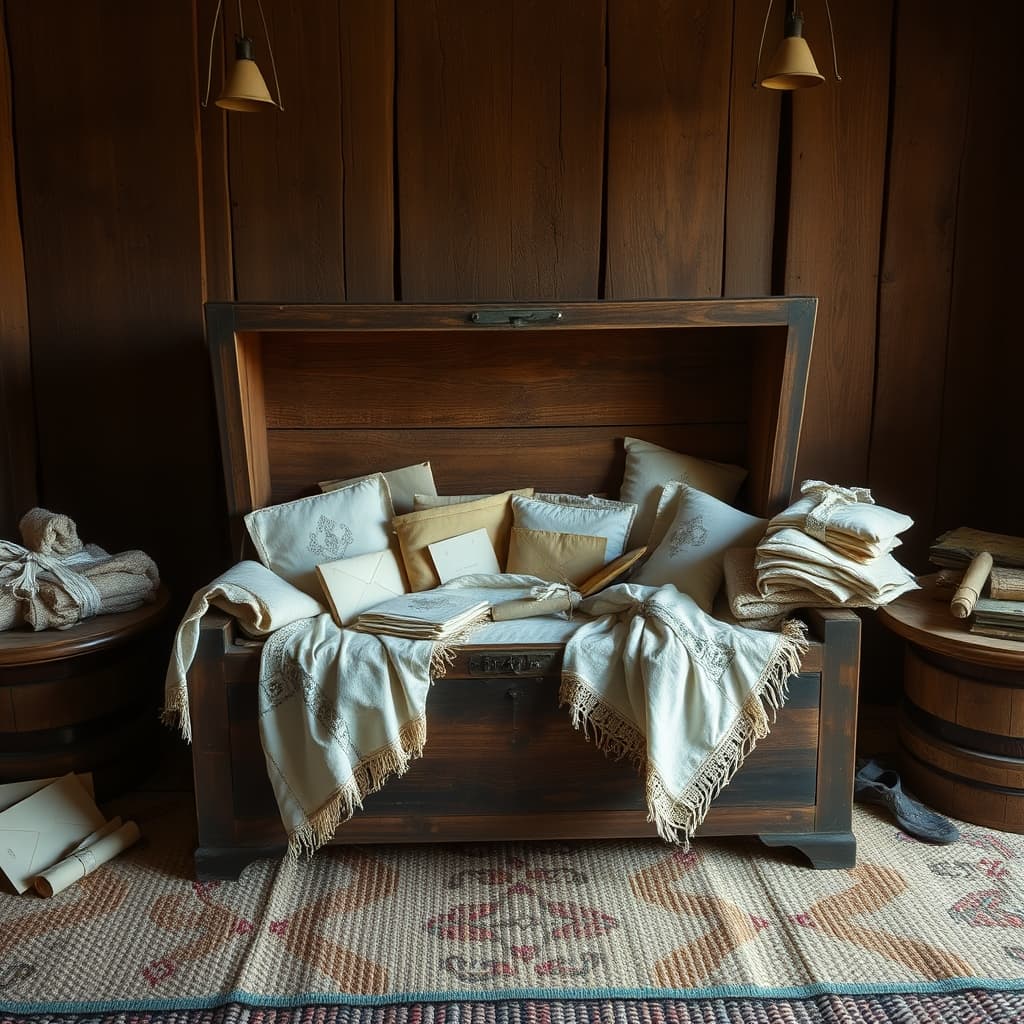
There was a time when the dowry chest stood visibly inside the home and yet kept its stories hidden with a kind of modest reserve. It rested in the corner of a room beneath a cover, not opened every day, remembered mostly during a special occasion or a deep round of cleaning. But when the lid was finally lifted, what appeared was not only lace bundles, embroidered cloths, or the familiar smell of mothballs. What surfaced was a sense of order patiently preserved, the visible trace of women’s labor, and the quiet lines of family discipline. Every object drawn from the bottom of the chest said more than something newly purchased ever could, because it contained accumulated time, patience, and the idea of preparing for a future still being imagined.
From the perspective of object history, the dowry chest is one of the strongest points where useful possession and emotional inheritance meet. The color of the wood, the sound of the metal lock, even the lavender or mothball scent caught beneath the lid are enough to describe an entire domestic aesthetic from another era. A chest does not merely store items. It stores a vision of life. Towels, edged scarves, bedcovers, small boxes, and sometimes letters placed inside it resemble the silent rehearsal of a home not yet fully formed. One reason it draws attention again today is exactly this. Against the rapid consumption of modern belongings, objects that have absorbed time feel more meaningful and more human.
The delicate story that rises from the bottom of such trunks often lies less in the objects themselves than in the voices that accompany them. “Your mother embroidered this when she was still a young girl,” someone says. Another adds, “She stayed up late to finish this before the holiday.” A faded photograph slips from between layers of cloth, and in an instant the object ceases to be merely functional. What is hidden at the bottom is in fact a humble yet powerful family archive. Each piece suggests who prepared it, with what patience it was kept, and with what tenderness it was saved. That is why people looking at these chests today are not responding only to vintage beauty. They are also responding to the slower tempo of a life assembled by hand.
Another reason for renewed interest is the way design culture has begun to see these pieces differently. Old chests are no longer regarded only as heavy boxes left in storage rooms. They are seen as objects that give character to living spaces and carry deep continuity. A trunk used as a coffee table, placed at the foot of a bed, or opened so that its textiles can be reintroduced into daily life allows the past to enter the present home as a guest rather than as a burden. Yet their deepest attraction does not lie merely in decorative usefulness. It lives in the marks of wear. A softened hinge, a small crack in the lid, an edge slightly rubbed down by years of hands all remind the viewer that the object has lived. To eyes exhausted by polished but memoryless surfaces, such signs feel precious.
For that reason, the renewed attention surrounding the dowry chest should not be read as a passing fashion. It expresses the desire for a slower, more touchable, and more respectful relation with the past. When people look today at cloths, boxes, and yellowed envelopes drawn from the bottom of these chests, they are not surrendering only to romance. They are trying to understand how labor, patience, and continuity once moved within family life. The delicate story at the bottom connects to the present precisely here: in an age when everything is quickly replaced, an object that has been preserved for decades and can still speak reminds us of a rhythm we may have lost.
The Dowry Chest and the Delicate Story Emerging from the Bottom of Old Trunks: Why Is It Drawing Attention Again Today?